



Description
Product Overview
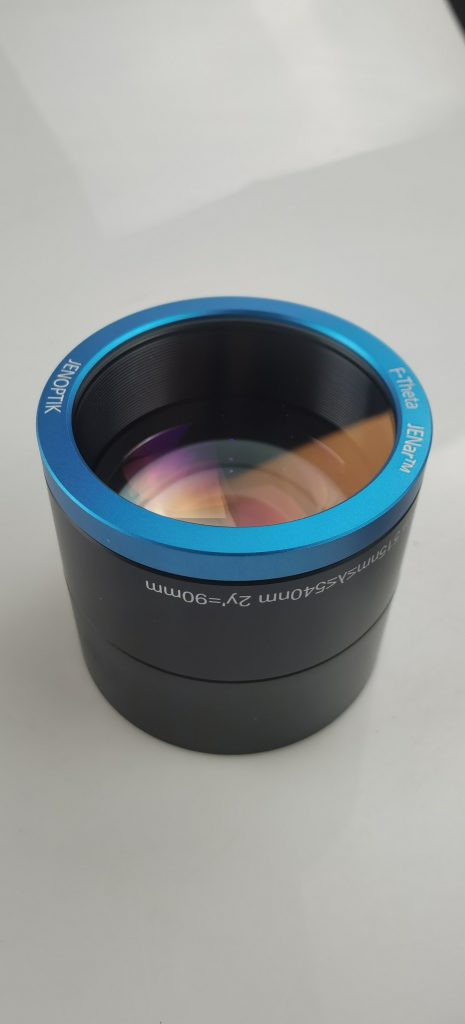
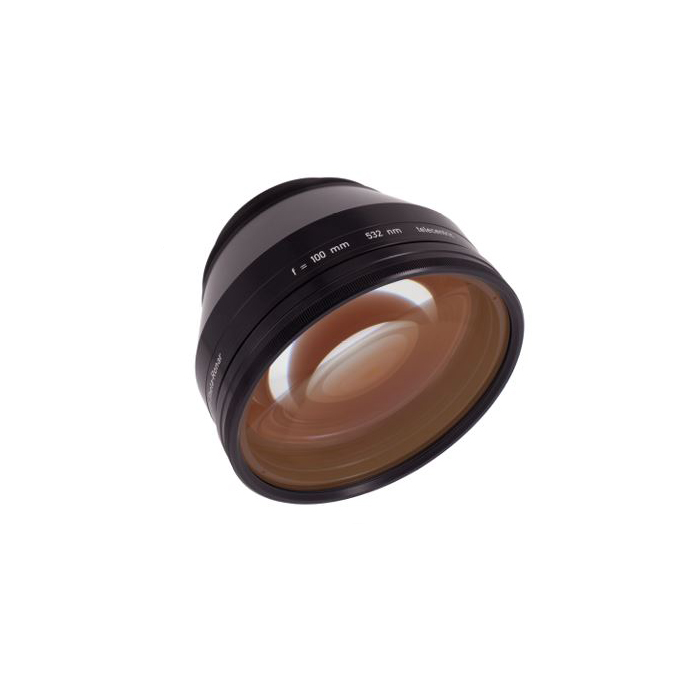
The achromatic F-Theta field lens with f=210mm is a dual-wavelength achromatic scanning field lens designed for 1064nm laser processing with 633nm coaxial vision monitoring. Through a special multi-element achromatic optical design it corrects aberrations at both the 1064nm processing laser and the 633nm visible light at the same time, so the laser focal plane and the plane imaged by the CCD camera coincide exactly. This delivers true coaxial vision: the same optical path both processes and observes, and the focus position seen by the camera is the focus position where the laser processes.
A conventional single-wavelength F-Theta field lens is optimized for 1064nm only, so 633nm visible light (used by the CCD camera) is shifted by chromatic aberration as it passes, and the position seen by the camera does not match the actual laser processing position, with vision positioning errors of several millimeters. An achromatic field lens uses a special combination of optical glasses (pairing glasses with different dispersion) to eliminate the chromatic difference between 1064nm and 633nm and make the two focal planes coincide, raising vision positioning accuracy from the millimeter level to the sub-pixel level and providing reliable vision guidance for high-precision laser processing.
The 210mm focal length with a 30mm entrance pupil beam diameter gives a Ø185mm (145×130mm) scan field, a scan angle of ±25° and a focused spot of about 13.7µm. The 233mm working distance leaves ample room for mounting a coaxial vision module (CCD camera, beam splitter and illumination). Mounting threads are available in M112×1 / M102×1 / M95×1 to suit large-aperture galvo scan heads.
Key Features
🔷 1064nm + 633nm Dual-Wavelength Achromatic Design
This is the core technical feature of the product. A precision multi-element achromatic design (pairing optical glasses with different dispersion, such as crown glass with flint glass) corrects aberrations at both 1064nm and 633nm simultaneously and removes the axial chromatic aberration between the two wavelengths. The result is that the focal planes of the 1064nm laser and the 633nm visible light coincide exactly: the focus the camera sees under 633nm illumination is the position where the 1064nm laser actually processes. This fundamentally solves the chromatic shift problem of conventional field lenses in vision-guided applications.
🔷 Coaxial Vision for Real-Time Process Monitoring
With a coaxial vision module (beam splitter, CCD/CMOS camera and ring illumination) the system supports: (1) pre-process positioning, observing the marking position on the workpiece through the camera and starting the laser only after confirmation; (2) in-process monitoring, watching the laser process in real time and catching anomalies immediately; (3) post-process inspection, capturing the processed result and detecting defects automatically. All of this happens along the same optical path, so vision and processing are coaxial with no offset, and no separate off-axis camera or position correction is needed.
🔷 30mm Large Entrance Pupil for High-Resolution Focusing
A 30mm entrance pupil beam diameter is the nominal design value of this achromatic field lens, and at this pupil the focused spot is about 13.7µm. The large pupil combined with the 210mm focal length gives a good balance between spot size and scan field. The 30mm pupil requires 14mm-aperture or 15mm-aperture galvo scanners (such as SCANLAB hurrySCAN-14/15) together with a 5x to 8x beam expander.
🔷 233mm Working Distance for Vision Module Integration
The 233mm working distance leaves ample space for a coaxial vision module between the galvo scanner and the field lens, or below the field lens. A typical coaxial vision module contains a beam splitter (introducing the 633nm illumination into the beam path), a CCD/CMOS camera (capturing the 633nm image) and an LED ring illuminator, with an overall height of about 50-100mm. The long working distance guarantees enough focusing margin after the vision module is installed.
Technical Specifications
| Parameter | Specification |
|---|---|
| Product Name | Achromatic F-Theta field lens |
| Design Wavelength | 1064nm + 633nm (dual-wavelength achromatic) |
| Lens Material | Achromatic optical glass combination |
| Effective Focal Length | 210mm |
| Working Distance (WD) | 232.3mm |
| Entrance Pupil Beam Diameter | 30mm |
| Scan Angle | ±25° |
| Scan Field | Ø185mm (145×130mm) |
| Focused Spot Diameter (1/e²) | Approx. 13.7µm (30mm pupil) |
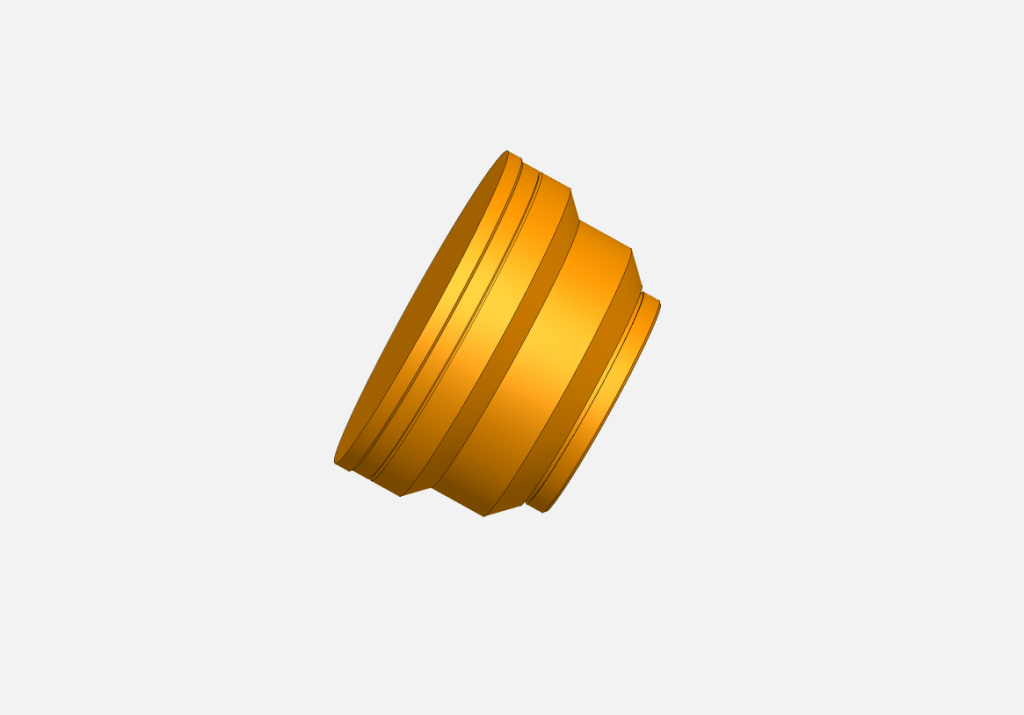
| Barrel Outer Diameter | Ø140mm |
| Mounting Thread | M112×1 / M102×1 / M95×1 available |
| Transmittance (1064nm) | >98% |
| Transmittance (633nm) | >95% |
Achromatic vs Standard Field Lens
| Characteristic | Standard F-Theta Field Lens | Achromatic F-Theta Field Lens ★ |
|---|---|---|
| Design Wavelength | Single wavelength (e.g. 1064nm) | Dual wavelength (1064nm + 633nm) |
| Chromatic Correction | Corrected at the design wavelength only | Corrected at both 1064nm and 633nm |
| 633nm Focus Offset | Several millimeters (severe) | Close to zero (exact coincidence) |
| Vision Positioning Accuracy | Millimeter level (software compensation needed) | Sub-pixel level (no compensation needed) |
| Coaxial Vision | Not usable (offset too large) | Fully supported |
| Number of Elements | Fewer (3 to 5) | More (5 to 7, achromatic design) |
| Price | Lower | Higher (achromatic design cost) |
| Typical Use | Standard marking and welding (no vision) | Vision-guided precision processing, in-line inspection |
Coaxial Vision System Architecture
The achromatic field lens is the core optical element of a coaxial vision system, but a complete system also needs the following components:
- Beam splitter: installed in the beam path behind the galvo scanner and in front of the field lens, it introduces the 633nm illumination into the path while transmitting the 1064nm laser
- CCD/CMOS camera: installed in the reflected path of the beam splitter, receiving the 633nm image returned through the field lens
- 633nm LED illumination: provides coaxial illumination so the camera can image the workpiece surface clearly
- Vision processing software: processes the captured image for target recognition, position location and process path planning
How the coaxial vision system works: (1) 633nm LED illumination is reflected by the beam splitter, travels down the beam path and lights the workpiece through the field lens; (2) light reflected from the workpiece travels back up through the field lens and, after passing the beam splitter, is received by the CCD camera; (3) the vision software analyzes the image and identifies the target position; (4) the 1064nm laser travels down the same path (through the beam splitter) and processes precisely at the position identified by vision. Because the achromatic field lens makes the 1064nm and 633nm focal planes coincide, vision positioning and laser processing match exactly.
Applications
1. Vision-Guided Precision Marking
Marking electronic components, IC chips and PCB boards requires precise positioning. The coaxial vision system recognizes alignment marks or pre-printed patterns on the chip, calculates the marking coordinates automatically and keeps the marking position identical on every part. The achromatic field lens guarantees zero offset between vision positioning and laser processing, with marking position accuracy up to ±10µm.
2. In-Line Processing on Automated Production Lines
On an automated line, parts arrive at the processing station by conveyor or robot and their position varies. The coaxial vision system identifies position and orientation in real time and compensates the offset before laser processing. Because the achromatic lens keeps the recognized position and the actual processing position identical, no extra position correction step is needed and line cycle time improves.
3. In-Line Quality Inspection of Laser Micromachining
In precision micro-drilling and micro-cutting, quality (hole diameter, kerf width and similar) must be checked immediately after processing. The coaxial vision system captures the result right after processing and judges pass or fail automatically through image analysis, while the achromatic field lens keeps the inspection field precisely aligned with the processed area.
4. Semiconductor Wafer Marking and Dicing
Chip marking and dicing on semiconductor wafers demand extremely high positioning accuracy. The coaxial vision system recognizes the alignment marks on the wafer and marks or dices after automatic alignment. The dual-wavelength coincidence of the achromatic field lens ensures that alignment accuracy is not affected by chromatic aberration.
5. Vision-Guided Tab Welding of Lithium Batteries
Tab welding of power battery cells requires very high weld position accuracy, since excessive deviation causes poor welds or even short circuits. The coaxial vision system identifies tab position in real time and guides the laser to weld precisely, and the achromatic field lens with 633nm coaxial illumination gives a clear image on metal surfaces.
Installation and Precautions
- Galvo matching: the 30mm pupil requires 14mm-aperture or 15mm-aperture galvo scanners (such as SCANLAB hurrySCAN-14/15) plus a 5x to 8x beam expander
- Mounting thread: the barrel outer diameter is Ø140mm with mounting threads available in M112×1 / M102×1 / M95×1, so confirm compatibility with your galvo interface
- Vision module mounting: the beam splitter goes in the beam path between the galvo scanner and the field lens and needs a dedicated bracket. Beam splitter specification: T>95% at 1064nm, R>90% at 633nm, mounted at 45°
- Camera selection: a 1/2 inch or 2/3 inch CMOS sensor with at least 2 megapixels is recommended, and the lens must match the 633nm focal length of the field lens
- Illumination: 633nm LED ring coaxial illumination gives the best result; a white LED with a 633nm bandpass filter is an alternative
- Calibration: after installation, calibrate vision-to-laser coaxiality by imaging a calibration target under 633nm illumination, then marking the same position with a low-power 1064nm laser and verifying that both positions agree
Why Choose Soar Laser?
Soar Laser (SOAR-LASER) is a professional supplier of achromatic F-Theta field lenses, offering a complete service from selection to vision system integration:
- ✅ Specialist achromatic supply: 1064nm + 633nm dual-wavelength achromatic field lenses with focal lengths from 100mm to 254mm
- ✅ Coaxial vision integration: beam splitters, cameras and illumination sources as a complete vision kit
- ✅ Galvo and field lens matching: we recommend the best combination of galvo scanner, beam expander and field lens for your process
- ✅ Technical support: vision system installation guidance, calibration training and image processing software support
📞 Achromatic Field Lens Technical Hotline
+86 159-2722-0467
Achromatic lens selection · Coaxial vision systems · Beam splitter matching · Calibration support
www.soar-laser.cn

Reviews
There are no reviews yet.