



Description
Product Overview
The BF12K and BF20K are the ultra-high power tier of the RayTools BF wobble welding head family and the current designations for the former BF390 series. The pair runs 12 kW and 20 kW through a 45 mm clear aperture, an oversized lens group that spreads the beam over a large area so the power density at the lens surface stays inside the coating’s comfort zone even at full output on a continuous duty cycle. That aperture is the whole point of the model: below it, a twenty-kilowatt beam starts to clip, the optics heat, focus shifts and the seam drifts with it.
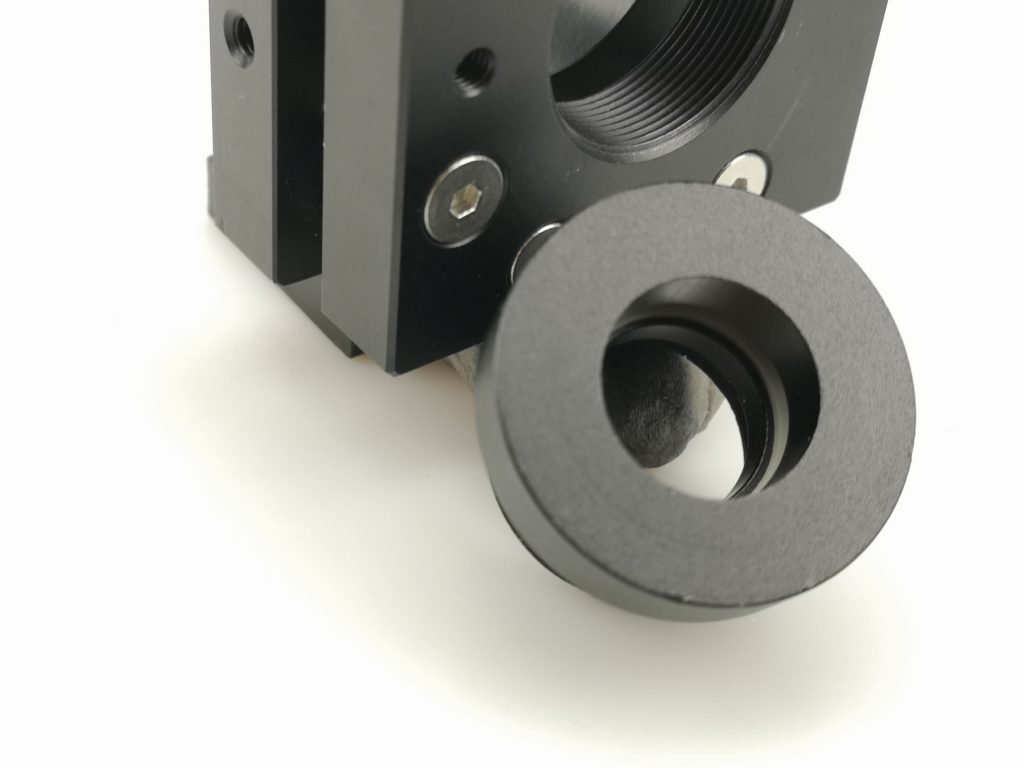
Two protective windows guard the lens group, so a spatter strike on the outer window is a consumable change rather than an optic repair. A coaxial CCD is available as an option, which lets the operator or the cell controller watch the keyhole and the seam while the weld is running, and turns the process into something that can be recorded for a procedure qualification. The body weighs about 7.5 kg, which is a deliberate trade: mass buys stiffness, and stiffness is what keeps the focus stable when a thick section pulls heat out of the melt pool. The head is offered in a handheld version and is also mounted on gantries, columns and robot stations, so the same optical assembly serves both the manual repair bay and the automated cell.
Key Features
- 12 kW and 20 kW tiers: one optical concept, two output classes, chosen by section thickness and by whether the seam has to be closed in a single pass
- 45 mm clear aperture: the large lens group keeps power density at the coating down and holds focus through long, hot welds
- Twin protective windows: two windows in series protect the lens group, and the outer one is the part that gets changed
- Coaxial CCD option: live view of the keyhole and the seam for the operator, the cell controller or a weld record
- About 7.5 kg body: stiff enough for thick-section work, and light enough for a robot in the ten to twenty kilogram payload class when the cable set is routed properly
- Successor to the BF390 series: 12 kW becomes BF12K and 20 kW becomes BF20K, with the heavy-duty role unchanged
- Built for automation: the same body is used on gantries, columns and robot stations as well as in the handheld configuration
Technical Specifications
| Brand | Empower / RayTools |
| Model | BF12K / BF20K (formerly BF390 series) |
| Type | Ultra-high power wobble laser welding head, handheld body that also mounts on automated platforms |
| Power | 12 kW / 20 kW |
| Clear Aperture | 45 mm |
| Protective Window | Dual window |
| Weight | approx. 7.5 kg |
| Monitoring | Coaxial CCD, optional |
Applications
This tier exists for heavy fabrication. Typical work is structural steel and thick-plate welding where the joint is deep, the parts are large and the weld has to be closed without a second pass; high-power automated welding on gantries and robot stations where the head travels a long seam at speed; and deep-penetration welding of thick sections in earth-moving equipment, crane and transport structures, pressure-retaining fabrications and heavy machinery frames. The 45 mm aperture also pays off in narrow-groove work, where the beam has to reach the bottom of a deep preparation without touching the side walls.
The pair is also used in the repair and reconditioning of large parts, where a portable head has to be brought to a component that cannot be moved, and in process development, where a 20 kW source is used to establish the window of parameters before a production cell is specified. If the work needs programmable seam patterns rather than a fixed weave, the BF12U in the same family provides that; if the section is smaller and 6 kW is enough, the BF04K and BF06K do the job with a 30 mm aperture and about 6.6 kg. Send us the material, the plate thickness and the joint preparation and we will confirm the tier, the optic set and the CCD option.
Selection Guide
- Choose the tier by the section, not by the laser: 12 kW covers thick-plate work where a single pass is enough, while 20 kW is specified when the seam is deeper still, when travel speed has to rise to keep the heat-affected zone tight, or when the same cell must handle the heaviest parts in the product range with margin.
- Treat the 45 mm aperture as the reason to buy: it is not a spare dimension. It keeps the beam away from the lens edges, lowers the power density on the coating and holds focus during long welds, which is exactly what fails first on a smaller head pushed to this power.
- Decide the CCD at the quotation stage: the coaxial camera is an option, and retrofitting it later costs more than ordering it with the head. Take it if the seam has to be monitored, recorded for a weld procedure, or tracked by the cell controller.
- Do not confuse the BF and BW lines: both are RayTools welding heads, but they are separate lines with different optical structures and different collimation and focusing arrangements. Pick the line that matches the process route already qualified in your shop, and change line only when the process changes.
- Match the laser and the interface: the head is used with continuous-wave fiber lasers of the corresponding power class, and the input interface is specified to suit the laser, QBH or QD. Tell us the laser model and we will confirm the connector, the cable set and the safety interlock wiring.
- Plan for the mass on the arm: about 7.5 kg for the body, plus the cable set and any wire feeder. Check the payload and the reach of the robot at the working attitude, not on the datasheet, before the cell layout is frozen.
Usage Precautions
- Never look into the beam or into specular reflections while the laser is running. Mark the working area with warning signs, fit protective screens and have everyone wear goggles rated for the wavelength in use.
- Use purified or deionised water in the cooling circuit and change it on schedule. If temperature or flow alarms, stop the machine, find the cause and only then restart.
- Electrical wiring and servicing must be carried out by a licensed electrician, with lock-out and tag-out after isolation. The equipment must be reliably earthed to prevent leakage and interference.
- Protect the equipment from moisture and dust in transport and storage; before long shutdowns drain the water circuit, disconnect power and cover the unit against dust.
- At this power level the reflected beam is as dangerous as the direct one. Enclose automated stations completely, interlock the doors, and treat any window in the enclosure as an optical component with a rated wavelength and power.
- Inspect both protective windows at every shift change and replace a marked or discoloured window rather than cleaning it. A damaged window on a twenty-kilowatt head can take the lens group with it, and that is a repair, not a consumable.
- Verify the focus position and the wobble settings on a scrap coupon before the first production part. At ultra-high power a small focus error turns into a wide, undercut seam or a cut-through that only appears after the part has cooled.
- If the coaxial CCD is fitted, keep the protection glass in front of the camera clean and check the image before the run; a blurred image is worse than no image, because the operator stops trusting the view and stops looking.
- On receipt, check the model nameplate against the accessory packing list. For help with installation and commissioning, contact Soar Laser technical support in Changsha (hotline +86 159-2722-0467) for remote or on-site assistance.
FAQ
Which model replaces the former BF390 series?
Under the current RayTools naming the 12 kW version is the BF12K and the 20 kW version is the BF20K. The heavy-duty role, the large aperture concept and the dual window protection carry over.
How does this differ from the BW12K?
BF and BW are two separate RayTools welding head lines with different optical structures and different collimation and focusing arrangements. Neither is a later version of the other; pick the line that matches the process route your shop has already qualified.
Which laser should be used with it?
A continuous-wave fiber laser of the corresponding power class. The input interface is specified to suit the laser, QBH or QD, so send us the laser model and we will confirm the connector and the interlock wiring.
Is the CCD included?
No, the coaxial CCD is an option. It is worth ordering with the head rather than retrofitting later, especially where the seam has to be recorded for a weld procedure or tracked by the cell controller.
Can it be used by hand?
The head is offered in a handheld version and the same body is mounted on gantries, columns and robot stations. For 20 kW work most customers run it in an enclosed automated station, and the safety enclosure is designed with the head’s working envelope in mind.
Series Comparison
| Model | BF12K | BF20K |
| Power | 12 kW | 20 kW |
| Clear Aperture | 45 mm | 45 mm |
| Protective Window | Dual window | Dual window |
| Weight | approx. 7.5 kg | approx. 7.5 kg |
| Monitoring | Coaxial CCD optional | Coaxial CCD optional |
| Former Designation | BF390 series, 12 kW | BF390 series, 20 kW |
| Typical Choice | thick plate closed in one pass | deepest sections, higher travel speed, full-range margin |
Disclaimer
The specifications on this page are compiled from the manufacturer’s public information and existing documents and are for selection reference only. Product specifications are subject to the actual product, the factory inspection report and the manufacturer’s latest datasheet; appearance and configuration may change with production batches, so please confirm with us before ordering. Reproduction of this page’s content without written permission is prohibited.
Selection advice: Soar Laser Equipment Co., Ltd., Changsha – hotline +86 159-2722-0467, www.soar-laser.cn, email 859818709@qq.com.



Reviews
There are no reviews yet.