


What Is a Polarising Coating? How Thin Films Control the Polarisation of Light
A polarising coating is an important concept in laser technology, widely used in industrial manufacturing, scientific research and healthcare. This article systematically introduces the core concepts, working principles, key parameters, main types and typical applications of polarising coatings, helping readers build a complete knowledge framework.
Table of Contents
- 1. What Is a Polarising Coating? Understanding the Core Concepts
- 2. Working Principle: How Is a Polarising Coating Applied?
- 3. Key Parameters: Understanding the Performance Indicators of Polarising Coatings
- 4. Main Types: What Kinds of Polarising Coating Exist?
- 5. Applications: Where Are Polarising Coatings Used?
- 6. Common Misconceptions: Pitfalls to Avoid
1. Core Concepts: What Is a Polarising Coating?
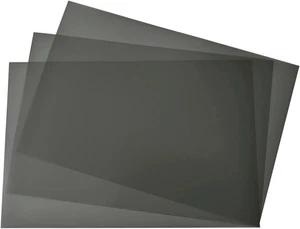
A polarising coating is a type of optical coating that separates or selects light according to its polarisation state. In simple terms, it lets light of one polarisation direction pass while blocking (reflecting) light of the other direction. The most common form of a polarising coating is the thin-film polariser (TFP), which uses the interference effect of a multilayer dielectric film to achieve polarisation splitting. Compared with polarisers based on birefringent crystals (such as Glan prisms), thin-film polarisers have the advantages of being made in large sizes, relatively low cost and suitability for mass production. In laser systems, polarising coatings are key components for obtaining linearly polarised light with a high extinction ratio, and are also core parts of optical isolators, optical switches and other devices.
2. Working Principle: How Is a Polarising Coating Applied?
The working principle of a polarising coating is based on polarisation-dependent interference effects. When light is incident at an angle onto a multilayer dielectric film, s-polarised light (electric field perpendicular to the plane of incidence) and p-polarised light (electric field parallel to the plane of incidence) have different reflection coefficients at each layer interface. Near the Brewster angle, p-polarised light undergoes almost no interface reflection, while s-polarised light still reflects significantly. A thin-film polariser exploits this difference: through multilayer design, s-polarised light gains very high reflectivity from the constructive interference of multiple reflections, while p-polarised light passes through with very low loss. The classic design is the MacNeille polarising cube—a polarising coating is deposited on the hypotenuse of two 45° prisms, which are then cemented into a cube, so that p-polarised light passes with almost no reflection and s-polarised light is reflected by 90°, achieving polarisation splitting.
💡 An analogy
A polarising coating is like lining light up in a queue—natural light is like a crowd running in all directions, vibrating every which way, while a polarising coating is like a fence that only allows light running in a particular direction to pass and stops all others. The light that comes out vibrates in a single direction, which has many important uses in laser technology.
In summary, polarising coatings involve the intersection of multiple disciplines including optics, materials science and precision manufacturing. Mastering their basic principles and key parameters is the foundation for properly selecting and using related products.
3. Key Parameters: Understanding the Performance Indicators of Polarising Coatings
Understanding polarising coatings requires mastering the following key parameters, which directly determine product performance and application scenarios:
| Parameter Name | Meaning | Why It Matters |
|---|---|---|
| Extinction Ratio | — The most important indicator of a polariser, divided into transmission extinction ratio (Tp/Ts) and reflection extinction ratio, usually expressed as 100:1, 1000:1 or in dB; the higher the better | The core indicator of polarisation purity; the higher the extinction ratio, the more thoroughly unwanted polarisation components are suppressed |
| Operating Wavelength Range | — Whether it is a single-wavelength narrowband or a broadband of tens to hundreds of nanometres | The effective working band of a polarising coating; broadband polarising coatings are more difficult to design |
| Angle of Incidence | — Usually designed for use at 45° or near the Brewster angle; deviation from the angle seriously affects performance | Polarising coatings are usually designed to work at a specific angle of incidence (such as the Brewster angle or 45°); deviation from that angle degrades performance |
| Transmission Loss | — The insertion loss of p-polarised light passing through the polariser | Directly affects laser performance and the choice of application scenarios |
| Damage Threshold | — Cemented polarising cubes typically have a damage threshold of about 1 J/cm² (nanosecond), and optical-contact types are higher | In high-power laser systems, the damage threshold of a polarising coating is a key parameter |
| Component Form | — A plate polariser or a polarising cube | Directly affects laser performance and the choice of application scenarios |
The above parameters are interrelated and mutually constrained. In actual selection, a comprehensive trade-off among performance, cost, reliability and other aspects is needed according to specific application requirements.
For more product parameters or selection advice, please contact the Soar Laser technical team.
4. Main Types: What Kinds of Polarising Coating Exist?
Polarising coatings come in several common forms: plate polarisers—a polarising coating deposited on a flat glass plate, simple in structure and usually used at the Brewster angle so that no anti-reflection coating is needed on the back, making them relatively inexpensive; polarising cubes—formed by cementing two 45° right-angle prisms, with the polarising coating on the hypotenuse and anti-reflection coatings on the entrance and exit faces, convenient to use and compact in optical path, the most commonly used type; MacNeille polarising cubes—a classic polarising cube design that uses the Brewster-angle condition to eliminate p-polarised reflection, enabling a relatively broad operating wavelength range but with small angular tolerance; interference polarising cubes—not relying on the Brewster angle but achieving polarisation splitting through pure interference effects, allowing more flexible material choice but usually a narrower passband; optical-contact polarising cubes—using direct optical contact without cement, with a damage threshold several times higher than cemented types, suitable for medium-to-high-power lasers.
5. Applications: Where Are Polarising Coatings Used?
Polarising coatings have a very wide range of applications, covering industrial manufacturing, scientific research, healthcare, communications and information, and many other fields. The following introduces several main aspects:
- Polarising coatings are widely used in laser and optoelectronic fields. In laser systems, polarisers are used to obtain high-purity linearly polarised output or for intracavity polarisation mode selection. In laser processing, polarisers combined with waveplates adjust the polarisation state of the laser, affecting the processing result. In optical communications, thin-film polarisers are the basis of polarisation-dependent devices, used in optical isolators, circulators and so on. In displays and projection, polarisers are used for polarisation control in optical paths. In optical measurement and sensing, polarisation splitting is the core function of equipment such as interferometers and ellipsometers. A key point for salespeople: when a customer says ‘polariser,’ ask whether they mean a thin-film polariser, a Glan prism or a sheet polariser (plastic film type)—these three differ enormously in price, performance and application.
Typical Application Scenarios in Detail
Scenario 1: Laser Systems
polarisers are used to control and purify the polarisation state of laser light, and are core components of optical isolators, circulators, optical switches and other devices.
Scenario 2: Liquid Crystal Displays
polarising coatings are key components of liquid crystal displays (LCDs), where two polarisers together with the liquid crystal layer achieve brightness control and image display.
Scenario 3: Optical Communications
polarisation beam splitters (PBS) and polarisation beam combiners are used for signal processing in optical fibre communication systems and are the basis of many optical devices.
Scenario 4: Photography and Imaging
polarising filters remove reflections and increase saturation, a common filter for landscape photography, and are also used for polarisation imaging in 3D cinema.
6. Common Misconceptions
Many people have somewhat plausible but mistaken notions about polarising coatings. See whether you fall into any of the following misconceptions:
Misconception 1: A polarising coating is the same as a polariser.
The everyday term ‘polariser’ often refers to a plastic polarising film (sheet polariser), while a polarising coating in optical thin films usually refers to a multilayer dielectric thin-film polariser; their performance and price are in completely different leagues.
Misconception 2: The higher the extinction ratio, the better—after all, higher is always better.
An excessively high extinction-ratio requirement means more complex design and higher cost; for many applications an extinction ratio of 100:1 or 500:1 is already sufficient.
Misconception 3: Polarising cubes can be used freely in high-power lasers.
The cement layer of a cemented polarising cube is very sensitive to laser light; under nanosecond pulses the damage threshold is typically only about 1 J/cm², so high-power applications must use optical-contact or plate types.
Misconception 4: Polarising coatings work at any angle.
Thin-film polarisers have a very small angular tolerance (usually only a few degrees); deviation from the use angle causes the extinction ratio to drop sharply.
The above are several common misconceptions about polarising coatings. In practical applications, comprehensive judgment is needed based on specific product parameters and use conditions. If in doubt, it is recommended to consult a professional technician.
Leave a Reply