


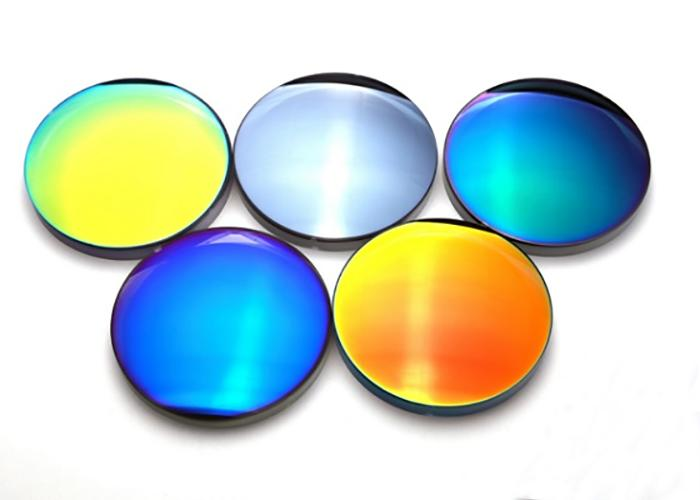
Figure 1: Common optical reflective mirror components
Introduction: What Is a Reflective Coating
Reflective coatings are among the most widely used optical thin films in optical systems. By depositing specific materials onto the surface of an optical substrate, incident light is reflected with high efficiency. Depending on the working principle and materials, reflective coatings fall into two main categories: metal reflective coatings and dielectric reflective coatings.
Metal reflective coatings exploit the high free-electron density of metals to achieve broadband reflection, offering advantages such as a wide spectral range and mature fabrication processes; dielectric reflective coatings use the interference effects of multilayer film stacks to achieve extremely high reflectance and are the first choice for high-performance laser systems.
In industrial laser and precision optics, the commonly used metal reflective coatings mainly include four types: aluminum, silver, gold, and copper. Dielectric reflective coatings, with their outstanding narrowband high reflectance, are widely used in high-power laser systems.
1. Aluminum Coating
Basic characteristics
Aluminum is one of the most abundant metal elements in the Earth’s crust and the first metal applied to optical reflective coatings. A freshly evaporated aluminum film maintains high reflectance across the wide spectral range from 200nm to 2000nm, and its reflectance in the ultraviolet band can even exceed 90%.
Applicable wavelength range
- Ultraviolet band: 200nm – 400nm (reflectance >90%)
- Visible band: 400nm – 700nm (reflectance 86%~92%)
- Near-infrared band: 700nm – 2000nm (reflectance gradually declines)
Advantages
- Broad spectral coverage: good reflectance from ultraviolet to near-infrared
- Excellent UV response: the highest UV reflectance of the four metal coatings
- Low cost: inexpensive material and mature fabrication processes
- Good environmental stability: the aluminum oxide layer provides protection
Disadvantages
- Prone to oxidation: an aluminum oxide layer forms on the film surface, affecting long-term stability
- Limited reflectance: overall reflectance is lower than silver and gold coatings
- Needs a protective layer: an additional protective coating is usually required
Typical applications
- UV-Visible spectrometers
- Educational optical instruments
- Mirrors for space probes
- Solar concentration systems
2. Silver Coating
Basic characteristics
Silver offers the highest visible-to-near-infrared reflectance of the four common metal coatings and is the preferred reflective coating material for high-performance optical systems. A pure silver film achieves 95%~99% reflectance across the band from 500nm to 20μm, approaching the theoretical limit.
Applicable wavelength range
- Visible band: 500nm – 700nm (region of highest reflectance)
- Near-infrared band: 700nm – 2500nm (reflectance 95%~99%)
- Mid-infrared band: 2.5μm – 20μm (reflectance still above 90%)
Advantages
- Highest visible reflectance: color-neutral imaging that reproduces true colors
- Broad infrared coverage: excellent performance from visible to mid-infrared
- Smooth spectral curve: suitable for wide-band applications
- Low absorption loss: high laser damage threshold
Disadvantages
- Tarnishes readily: sulfides in the air cause surface discoloration
- Protective layer mandatory: a protective coating must be applied in practice
- Poor UV performance: UV reflectance falls short of aluminum coatings
Typical applications
- High-reflectivity mirrors for laser resonators
- Precision optical imaging systems
- Fiber-optic communication equipment
- High-end projectors
3. Gold Coating
Basic characteristics
Gold has the best infrared performance of the four common metal reflective coatings. In the infrared band above 700nm, a gold film keeps its reflectance above 98% at all times, and with excellent chemical stability it undergoes almost no oxidation in air.
Applicable wavelength range
- Red end of the visible band: 650nm – 700nm (reflectance begins to rise)
- Near-infrared band: 700nm – 2500nm (reflectance >98%)
- Mid-to-far-infrared band: 2.5μm – 20μm (reflectance stable above 98%)
Advantages
- Highest infrared reflectance: unrivaled performance in the infrared band
- Best chemical stability: long-term stable use without a protective layer
- Strong corrosion resistance: suitable for harsh environments
- No absorption in the infrared: the best choice for thermal radiation applications
Disadvantages
- Low visible reflectance: a distinctly yellow appearance that affects color reproduction
- Highest cost: gold is an expensive material
- Poor UV performance: unsuitable for ultraviolet applications
Typical applications
- High-reflectivity mirrors for CO₂ lasers (10.6μm)
- Infrared thermal imaging systems
- Infrared spectrometers
- Thermal radiation detectors
4. Copper Coating
Basic characteristics
Copper is the least used of the four common metal reflective coatings. Copper has a certain reflectivity from visible to infrared, but its overall performance falls between aluminum and silver, and its chemical stability is relatively poor.
Applicable wavelength range
- Visible band: 500nm – 700nm (reflectance about 60%~70%)
- Near-infrared band: 700nm – 2000nm (reflectance rises gradually)
- Mid-infrared band: 2μm – 10μm (reflectance above 90%)
Advantages
- Acceptable infrared reflectance: reasonable performance in the mid-infrared band
- Lower cost: moderately priced material
- Good thermal conductivity: beneficial for heat dissipation
Disadvantages
- Oxidizes and discolors easily: a copper oxide film readily forms on the surface
- Lower reflectance: overall performance inferior to silver and gold coatings
- Poor stability: requires better protective measures
Typical applications
- Certain specific infrared laser applications
- Cost-sensitive infrared optical systems
- Large-aperture mirrors (for cost reasons)
5. Dielectric Reflective Coating
What is a dielectric reflective coating
A dielectric reflective coating (also called an all-dielectric mirror, Dielectric Mirror) is a multilayer film stack formed by alternately stacking high- and low-refractive-index dielectric materials. By precisely controlling the optical thickness of each layer and using the principle of multi-beam interference, it achieves extremely high reflectance.
Compared with metal reflective coatings, dielectric reflective coatings can achieve higher reflectance (>99.9%) with extremely low absorption loss, making them core components of high-power laser systems.
Working principle
The working principle of dielectric reflective coatings is based on the multilayer-film interference effect:
- Quarter-wavelength stacking: the optical thickness of each layer is 1/4 (λ/4) of the design wavelength
- High/low index alternation: high-refractive-index layers and low-refractive-index layers are stacked alternately
- Constructive interference: the light reflected at all interfaces adds in phase, forming strong reflection
- Bragg reflection: similar to a one-dimensional photonic crystal, forming a photonic bandgap over a specific band
Common materials
High-refractive-index materials:
- TiO₂ (titanium dioxide): refractive index about 2.4
- Ta₂O₅ (tantalum pentoxide): refractive index about 2.1
- HfO₂ (hafnium dioxide): refractive index about 2.0
- ZrO₂ (zirconia): refractive index about 2.0
Low-refractive-index materials:
- SiO₂ (silica): refractive index about 1.46
- MgF₂ (magnesium fluoride): refractive index about 1.38
- Al₂O₃ (alumina): refractive index about 1.63
Characteristics of dielectric reflective coatings
Advantages:
- Extremely high reflectance: above 99.9%, even 99.999%
- Extremely low absorption loss: <0.1%, far better than metal coatings
- High laser damage threshold: suitable for high-power laser systems
- Good environmental stability: hard, wear-resistant films
Disadvantages:
- Narrow working band: must be designed for a specific wavelength, with a bandwidth usually of only tens of nanometers
- Angle-sensitive: angular deviation causes reflectance to drop
- High cost: complex process and long fabrication cycle
- Thick films: accumulated stress may affect the surface figure of the substrate
Typical applications
- Laser resonator mirrors
- High-power laser systems
- Spectrometers and interferometers
- Fiber-optic communication devices
- Gravitational-wave detectors (LIGO mirrors)
6. Metal Reflective Coating Comparison Summary
| Comparison item | Aluminum coating | Silver coating | Gold coating | Copper coating |
|---|---|---|---|---|
| Applicable wavelength | 200nm-2000nm | 500nm-20μm | 700nm-20μm | 500nm-10μm |
| Visible reflectance | 86%~92% | 95%~99% | 60%~70% | 60%~70% |
| Infrared reflectance | 86% (2000nm) | 95%~99% | >98% | 90% (10μm) |
| UV reflectance | >90% | Poor | Poor | Fair |
| Chemical stability | Moderate (needs protection) | Poor (tarnishes easily) | Excellent | Poor (oxidizes easily) |
| Cost | Low | Medium-high | High | Medium |
| Main advantage | Good UV performance | High reflectance across all bands | Best infrared performance | Moderate cost |
| Main drawback | Limited reflectance | Needs a protective layer | Color shift in visible light | Poor stability |
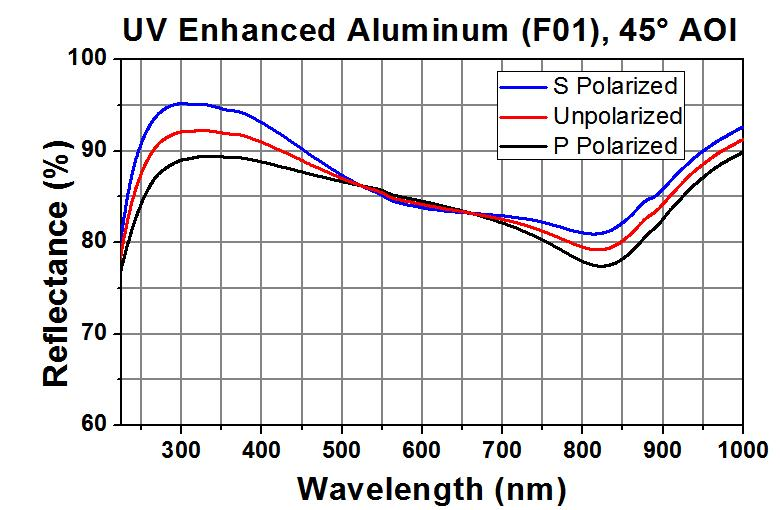
Figure 2: Reflectance of metal reflective coatings as a function of wavelength
7. Metal vs Dielectric Coating Comparison
| Comparison dimension | Metal reflective coating | Dielectric reflective coating |
|---|---|---|
| Reflectance | 90%-98% | Up to 99.9%+ |
| Working band | Broadband (UV to IR) | Narrowband (customized) |
| Absorption loss | Intrinsic absorption (5-10%) | Extremely low (<0.1%) |
| Incidence-angle sensitivity | Low (insensitive to angle) | High (angle deviation matters a lot) |
| Polarization | Little effect on polarization | Affects the polarization state |
| Laser damage threshold | Lower | High |
| Environmental stability | Needs a protective film, oxidizes easily | Stable, high hardness |
| Number of layers | Single layer or a few layers | Multilayer stack (10-40 layers) |
| Cost | Low | High |
| Fabrication | Simple, short cycle | Complex, long cycle |
8. How to Choose the Right Reflective Coating
When to choose a metal reflective coating
Choose a metal coating when:
- Broadband applications: white-light imaging, multi-wavelength systems, illumination systems
- Varying incidence angles: situations where the angle cannot be precisely controlled
- Cost-sensitive projects: large-area mirrors with limited budgets
- Teaching experiments: classroom demonstrations and basic laboratory research
- UV requirements: deep ultraviolet and UV-visible combined systems
- Infrared requirements (>2μm): CO₂ lasers, infrared thermal imaging
When to choose a dielectric reflective coating
Choose a dielectric coating when:
- Single-wavelength high-power lasers: high-power laser resonators, high-energy laser processing
- Extreme reflectance requirements: gravitational-wave detection, precision interferometers
- Low-absorption requirements: high-stability systems that avoid photothermal effects
- Polarization control: optical systems that must preserve or control the polarization state
- Long-duty industrial applications: continuously operating, high-reliability industrial laser equipment
Selection recommendation table
| Application area | Recommended coating | Selection rationale |
|---|---|---|
| Laser processing equipment (general purpose) | Silver/gold coating | High reflectance, low absorption loss |
| UV-Visible spectrometer | Aluminum coating | Good UV response, broad spectrum |
| Infrared spectrometer | Gold coating | Best infrared reflectance |
| Medical laser equipment | Silver/gold coating | Stable and reliable, long service life |
| Teaching experiments | Aluminum coating | Low cost, good results |
| CO₂ laser | Gold coating | Best infrared performance |
| High-power laser welding | Dielectric reflective coating | Low absorption, high damage threshold |
| Fiber laser | Narrowband high-reflectance coating | Precise wavelength matching |
| Precision interferometer | Low group-delay dispersion mirror | Precise phase control |
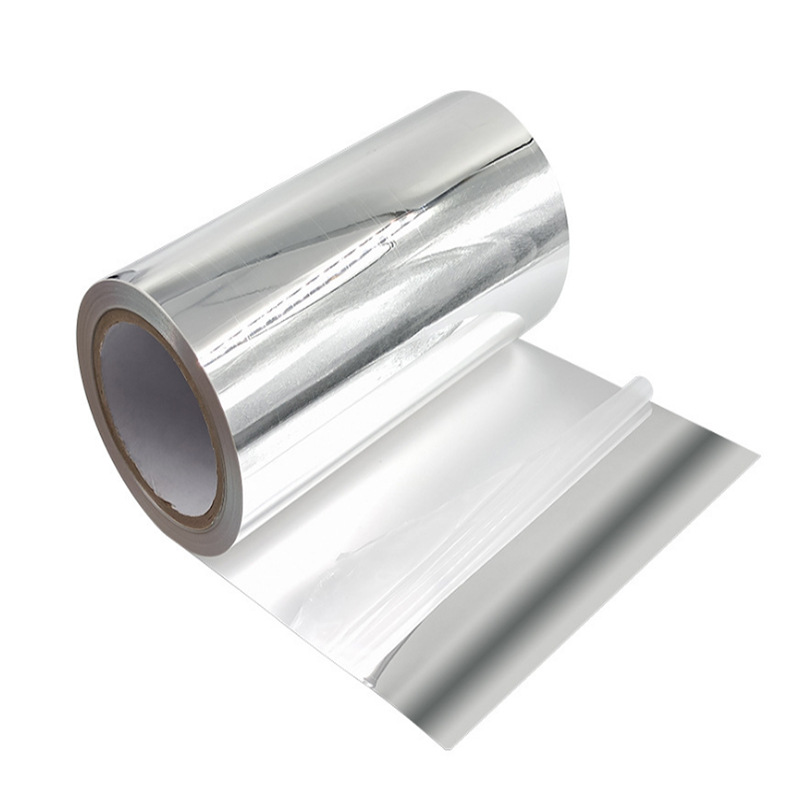
Figure 3: Metal reflective coating optics for laser systems
Conclusion
Metal and dielectric reflective coatings each have strengths and weaknesses; there is no absolute “best” choice, only the solution best suited to a specific application.
Metal reflective coatings, with their broadband coverage, cost advantages, and stable performance, are the ideal choice for everyday optical systems and multi-wavelength applications; dielectric reflective coatings, with their extreme reflectance and ultra-low absorption loss, are the core components of high-power laser and precision optical systems.
In actual selection, it is advisable to weigh the working wavelength, power requirements, angular tolerance, cost budget, and operating environment together. For special requirements, consult a professional optical coating supplier for targeted technical support and customized solutions.
This article is compiled and published by Soar Laser (Changsha), dedicated to one-stop supply of laser components.
Related reading
Dielectric reflective coating special: core components of high-power laser systems
Leave a Reply