


Description
Product Overview
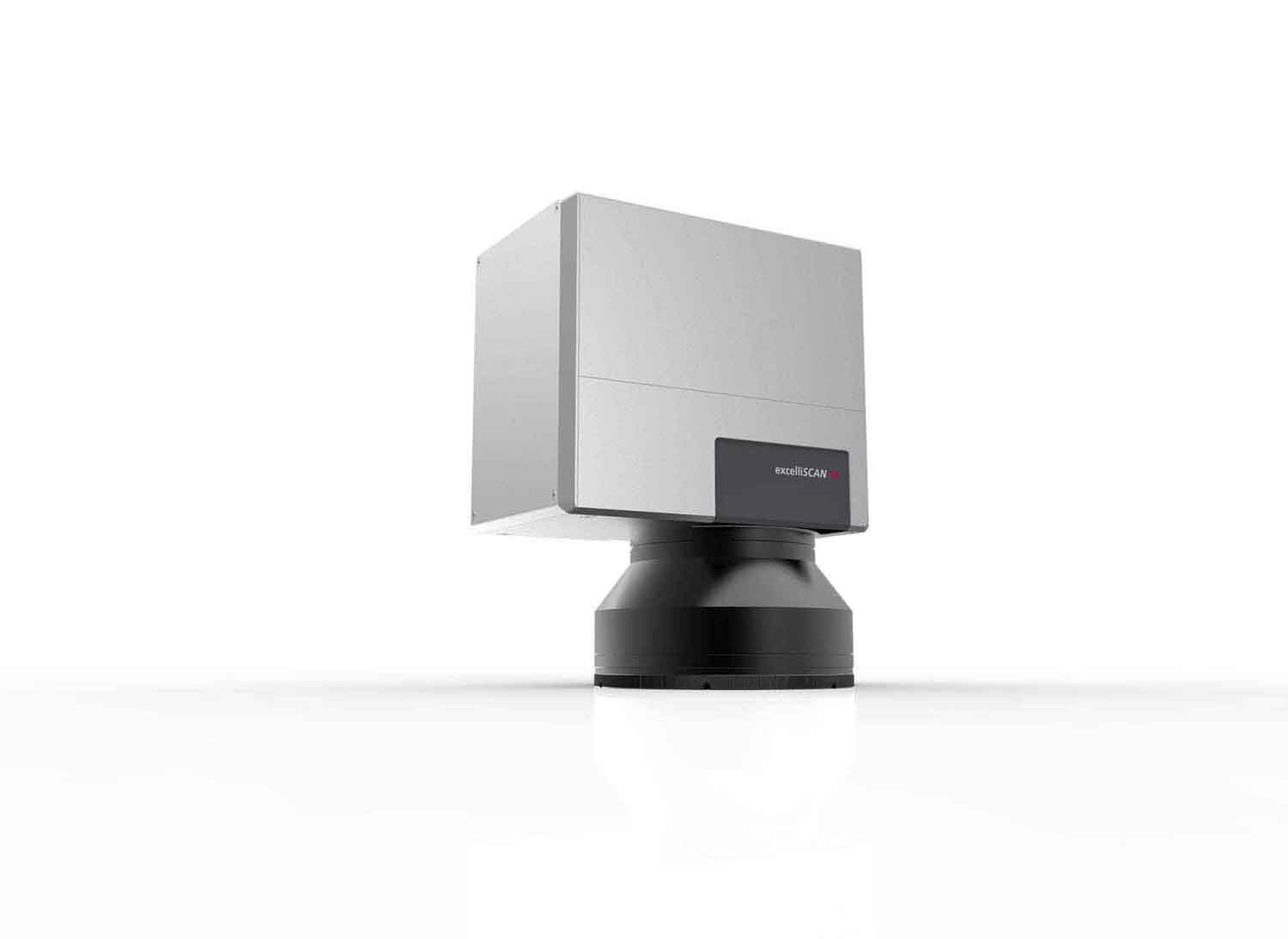
The excelliSCAN 30 is a flagship digitally encoded scanning galvanometer from SCANLAB (Germany), supplied in China by Changsha Soar Laser Equipment Co., Ltd. The scanner has a 30 mm clear aperture, a scan angle of ±0.35 rad, repeatability below 0.4 μrad, non-linearity below 0.5 mrad/44°, a marking speed below 2 m/s and a positioning speed below 11.2 m/s. It uses digital encoder position feedback and supports SCANahead feed-forward control technology, and is widely used in laser marking, welding, cutting and other industrial applications.
Key Features
⚡ High-Speed Scanning Performance
The marking speed reaches 2 m/s and the positioning speed 11.2 m/s, with a tracking error of only 0 ms. With SCANahead feed-forward control the scanner always runs at maximum acceleration with no deceleration reserve required, keeping extremely high contour accuracy during high-speed scanning, eliminating the corner-rounding effect on arcs, and making it especially suitable for high-speed vector marking and filling.
🎯 High-Precision Positioning
Repeatability (RMS) is below 0.4 μrad and non-linearity below 0.5 mrad/44°. High-resolution digital encoder position feedback and closed-loop control eliminate the drift and hysteresis errors inherent in open-loop systems. Gain drift is below 5 ppm/K, zero drift below 10 μrad/K and 8-hour thermal drift below 20 μrad (after a 30-minute warm-up). Precision optical sensors and advanced automatic thermal drift compensation maintain excellent positioning stability and process consistency during long continuous operation.
🌡️ Ultra-Low Thermal Drift
Refined optoelectronic sensor technology and an advanced automatic thermal drift compensation algorithm effectively overcome the thermal drift problem of scan heads. Zero-point thermal drift is only below 10 μrad/K, gain thermal drift below 5 ppm/K and 8-hour long-term drift below 20 μrad, meeting the stability requirements of most long-duration, large-volume marking and welding applications. Consistent processing quality is maintained even when the ambient temperature fluctuates by ±10 °C.
🔧 dynAXIS Series Digital Encoder Galvo Motors
The scanner uses the latest SCANLAB dynAXIS se digital encoder galvo motors with a built-in 20-bit high-resolution encoder that provides 0.4 μrad positioning resolution. The encoder reads the rotor angular position directly, eliminating the noise and drift inherent in analog position detectors and enabling true closed-loop servo control. Motor peak torque is high and response fast, so sub-microradian positioning accuracy is maintained even under full load.
📡 Digital Servo Driver Board
A SCANLAB digital servo control board works with the 20-bit high-resolution encoder to provide fully digital closed-loop servo control. The driver board supports SCANahead feed-forward control, greatly improving dynamic performance and processing accuracy while providing comprehensive diagnostic and protection functions.
🔌 Interface Compatibility
The scanner supports the SL2-100 standard communication protocol. SL2-100 provides 20-bit digital resolution (0.76 μrad) while XY2-100 provides 16-bit resolution (12 μrad), making the unit compatible with the vast majority of laser control cards on the market (such as the JCZ EZCAD series, SCANLAB RTC series and RAYLASE SP-ICE series). Plug-and-play integration keeps system setup fast and efficient. Power requirement is 30 V DC / 6 A, and the interface cable is shielded to suppress external electromagnetic interference.
❄️ Efficient Cooling System
Air cooling or water cooling is available. The water circuit covers the galvo block and the entrance aperture and other core heat zones, effectively controlling lens temperature rise and preventing beam drift and focus shift caused by thermal lensing. Under high-power, long-duration continuous operation the water cooling system keeps the scanner at its optimum working temperature and guarantees consistent processing quality.
🛡️ High-Reliability Design
SCANLAB products strictly follow German manufacturing standards, and every unit undergoes full quality inspection and long-term burn-in verification before shipment. Encoder versions support the iDRIVE extended diagnostic function for real-time monitoring of operating status, temperature, position deviation and other key parameters, which facilitates predictive maintenance. Protection class is IP50/IP56 depending on model, ensuring long-term reliable operation in industrial environments.
Technical Specifications
| Optical Parameters | |
|---|---|
| Clear aperture | 30 mm |
| Scan angle | ±0.35 rad |
| Maximum input power | 3000 W |
| Mirror coating wavelength | Full range of coatings available |
| Scanning Parameters | |
|---|---|
| Non-linearity | <0.5 mrad/44° |
| Tracking time | 0 ms |
| Repeatability (RMS) | <0.4 μrad |
| Marking speed | <2 m/s |
| Positioning speed | <11.2 m/s |
| Gain drift | <5 ppm/K |
| Zero drift | <10 μrad/K |
| 8-hour thermal drift (after 30 min warm-up) | <20 μrad |
| Electrical Parameters | |
|---|---|
| Power supply | 30 V DC / 6 A |
| Input signal protocol | SL2-100 |
| Cooling method | Air or water cooled |
| Mechanical Parameters | |
|---|---|
| Operating temperature | 25 ± 10 °C |
| Dimensions (L × W × H) | 230 x 180 x 200 mm |
| Weight | 7.5 kg |
Operating Principle
A laser galvo scanning system is a high-precision beam positioning device based on the principle of electromagnetic deflection. Two orthogonally mounted galvo motors drive the X-axis and Y-axis mirrors independently, directing the incoming laser beam to any position on the work plane and forming a two-dimensional scan field. A galvo motor is essentially a limited-rotation servo motor: when the driver board feeds control current into the motor coil, electromagnetic torque drives the rotor and mirror to the commanded angle, while a position sensor (an analog position detector, APD, or a digital encoder) continuously reads the rotor angle and compares it with the command to form a closed-loop servo system. Scanning speed depends on the dynamic response of the motor, and tracking time, which describes how far the scanner lags behind the command signal, is the key indicator of high-speed performance.
Applications
Laser marking
Suited to marking text, patterns, 2D codes and serial numbers on metal and non-metal surfaces with high precision, high speed and durable results. Widely used in electronic components, hardware tools, medical devices and other industries.
Laser welding
Used for precision welding such as lap welding and spot welding of thin sheets, with a small heat-affected zone and low distortion, ideal for precision components.
Laser cutting
Combined with a laser of suitable power, it provides precision cutting of thin metal and non-metal materials with a narrow kerf, high speed and good edge quality.
3D printing / additive manufacturing
Used for laser scanning in SLM/SLS metal additive manufacturing, precisely controlling energy distribution and scan path to ensure the sintering quality of every layer.
Precision micromachining
Suited to precision micro-structure processing in semiconductors, microelectronics and photonics, such as micro-drilling, micro-channel etching and thin-film patterning.
Laser cleaning
Combined with a high-power pulsed laser, it selectively removes oxide layers, coatings and contamination from metal surfaces without damaging the substrate.
Research and education
Suited to laser processing experiments in universities and research institutes, and a common laboratory tool in optical engineering, materials science and advanced manufacturing.
Selection Guide
When choosing a scan head, first determine the clear aperture from the laser power: 8-10 mm below 100 W, 10-14 mm for 100-500 W and 20-30 mm above 500 W. Then choose the scanner class according to the accuracy requirement: the economical 10C meets 90% of routine marking needs, the high-precision 14AW-III-Pro suits precision marking and welding, and for high-end applications German-imported scan heads offer higher accuracy and stability, with the excelliSCAN series combining digital encoders and SCANahead control for the most demanding precision work. Scan speed and dynamic performance depend on the application: marking is judged mainly by marking speed and writing speed, while welding is judged by welding speed and tracking error.
Model Comparison
| Model | Clear aperture | Tracking error | Marking speed | Positioning speed | Repeatability | Position feedback | Reference price (CNY) |
|---|---|---|---|---|---|---|---|
| excelliSCAN 14 | 14 mm | 0 ms | <4 m/s | <30 m/s | <0.4 μrad | Digital encoder | Request a quote |
| excelliSCAN 20 | 20 mm | 0 ms | <2.5 m/s | <16 m/s | <0.4 μrad | Digital encoder | Request a quote |
| excelliSCAN 30 | 30 mm | 0 ms | <2 m/s | <11.2 m/s | <0.4 μrad | Digital encoder | Request a quote |
About the Brand
SCANLAB of Germany is a leading global manufacturer of laser scan head systems, founded in 1990 and headquartered in Munich. Its product line spans the entire range from the entry-level basiCube to the flagship excelliSCAN, and is widely used in laser marking, welding, cutting, micromachining and additive manufacturing. With its innovative SCANahead control technology and dynAXIS series digital encoder galvo motors, SCANLAB continues to lead the industry, with accuracy, stability and dynamic performance recognized worldwide.
Contact Us
For more product information, a quotation or technical advice, please contact us:
📞 Hotline: +86 159-2722-0467
We provide professional scan head selection advice and complete system integration solutions. You are welcome to call us.

Reviews
There are no reviews yet.