


What Is MPE (Maximum Permissible Exposure)? The Baseline of Laser Safety
What Is MPE (Maximum Permissible Exposure)? The Baseline of Laser Safety – this article systematically introduces the core concepts, working principles, key parameters, main types, application scenarios and common misconceptions of MPE, helping you fully understand this important topic in laser safety.
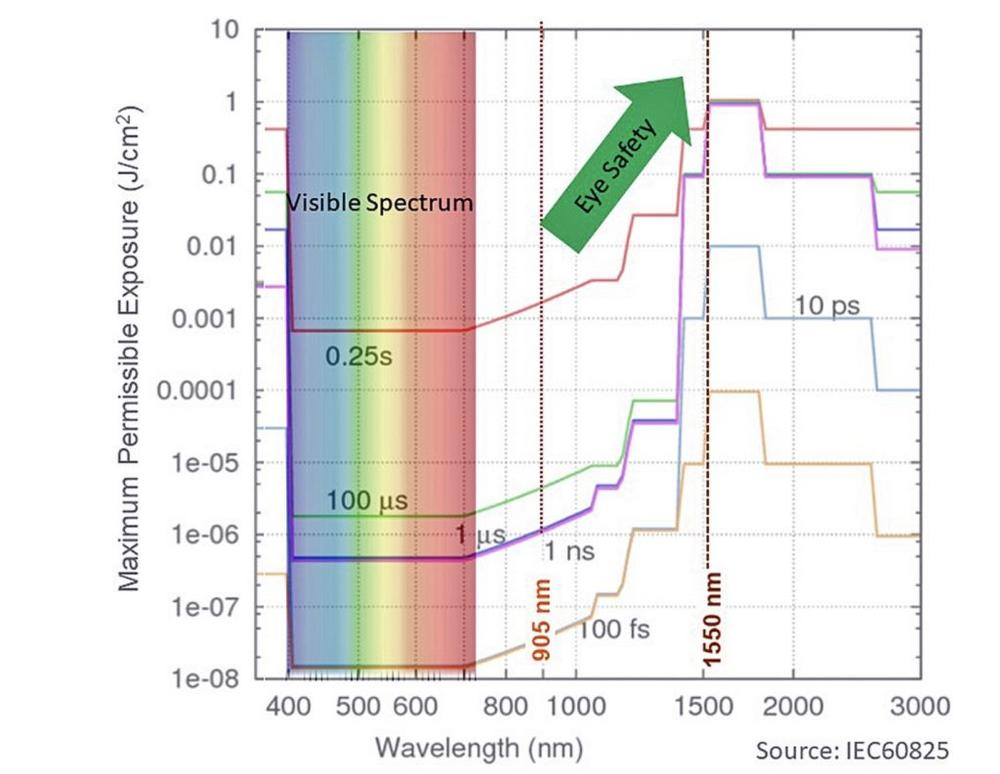
Table of Contents
- I. What Is MPE (Maximum Permissible Exposure)? Clarifying the Core Concept
- II. How Is MPE Established?
- III. Key Parameters and Metrics
- IV. Main Types: What Kinds of MPE Exist?
- V. Application Scenarios: Where Is MPE Used?
- VI. Common Misconceptions: Pitfalls to Avoid
I. Core Concept: What Is MPE (Maximum Permissible Exposure)?
Maximum Permissible Exposure (MPE) is the maximum level of laser radiation that a person (eye or skin) can be exposed to under normal circumstances without producing harmful health effects. It is the “safety red line” in laser safety – the ultimate goal of all protective measures is to ensure that the radiation a person receives stays below the MPE. For salespeople, MPE is a hard-core professional concept, but explaining it clearly to customers in plain language greatly enhances professional credibility. The customer’s frequent question “is this laser safe?” is essentially asking “will my exposure exceed the MPE?”
II. How Is MPE Established?
To understand how MPE works, it can be broken down into several key steps or mechanisms. Its core mechanism can be understood at the following levels:
MPE is established from large amounts of biomedical research data. Scientists determine radiation thresholds that cause tissue damage under various conditions through animal experiments and epidemiological studies, then multiply by a safety factor (usually with a considerable margin) to derive the “safe” upper limit. MPE is not a fixed number but a function that varies with conditions: it differs by wavelength (MPE in the retinal hazard region is far lower than in the corneal absorption region); by exposure time (shorter pulses allow lower total energy but higher peak power – actually the energy threshold is lower for short pulses because heat has no time to diffuse); and by irradiated tissue (eye vs skin). It can be said that MPE is the cornerstone of laser safety calculations – laser classification, NOHD calculation and goggles OD selection all revolve around MPE.
III. Key Parameters and Metrics
To understand MPE, knowing concepts and principles is not enough – you must also understand its key parameters. The following are the core parameters and their significance:
| Parameter name | Meaning | Why it matters |
|---|---|---|
| Wavelength | The primary factor: in the retinal hazard region of 400-1400 nm, MPE is extremely low (e.g. MPE for 0.25 s visible-light exposure is on the order of microwatts per square centimetre) | The primary factor in MPE calculation; MPE in the retinal hazard region is far lower than in the corneal absorption region |
| Exposure duration | The second key variable: for thermal damage mechanisms, shorter exposure means lower MPE (lower total-energy threshold) | Directly affects the MPE value; shorter exposure means a lower allowable total-energy threshold |
| Irradiated site | Also important – the eye’s MPE is usually far lower than the skin’s | Eye MPE is far lower than skin MPE; protection standards differ, with eye protection the focus |
| Emission type (CW / pulsed) | Pulsed lasers require consideration of single-pulse and pulse-train cumulative effects, with different MPE calculation methods | Pulsed-laser MPE is calculated by single-pulse energy, also considering thermal accumulation from pulse repetition frequency |
IV. Core Points in Detail
MPE can be divided by irradiated subject into eye MPE and skin MPE, the former usually stricter and the control focus in most scenarios. By wavelength region: retinal hazard region MPE (400-1400 nm), the lowest value with the highest protection requirement; corneal hazard region MPE (UV and mid-to-far IR), relatively higher but still requiring protection. By calculation basis: irradiance MPE (power per unit area, W/cm², for CW or long pulses) and radiant exposure MPE (energy per unit area, J/cm², for short pulses). In practice, MPE values must be looked up in standard tables (e.g. IEC 60825-1 Annex A or detailed tables in ANSI Z136.1); MPE values may differ slightly between standards.
V. Application Scenarios: Where Is MPE Used?
- MPE has several applications in real sales. In goggles selection, the minimum required optical density (OD) is derived from the ratio of incident intensity to MPE – the core calculation logic for recommending the right goggles. In NOHD (Nominal Ocular Hazard Distance) calculation, MPE is the criterion for safe distance, used to delimit hazard zones. In laser class classification, the Accessible Emission Limit (AEL) is calculated from MPE and worst-case assumptions. In risk assessment, comparing actual possible exposure levels with MPE determines whether additional protective measures are needed. For sales, mastering the derivation chain “MPE → OD value → goggles model” upgrades you from “selling products” to “providing solutions.”
👉 Want to learn more about real-world MPE applications? Visit Soar Laser’s application case page, or contact our technical team directly for professional advice.
VI. Common Misconceptions
Many people have fuzzy ideas about MPE. See if you fall into any of these traps:
Myth 1: “MPE is a fixed safety value”
Wrong. MPE varies with wavelength, exposure time and irradiated site; talking about MPE without conditions is meaningless.
Myth 2: “Exceeding MPE will definitely cause injury”
Not necessarily. MPE already includes a large safety factor; it is “the upper limit that produces no harmful effects,” not a threshold “above which injury occurs.” But in safety management, MPE must be strictly followed – no complacency.
Myth 3: “Power divided by area is MPE”
Wrong. For visible and near-IR light, what truly determines retinal damage is radiance, not simple incident irradiance. Because the eye focuses light, the intensity entering the cornea is not the same as the intensity reaching the retina.
Reference source:RP Photonics Encyclopedia
Leave a Reply