


What Is Laser Eye Injury? Why the Eyes Are Most Vulnerable to Laser
What Is Laser Eye Injury? Why the Eyes Are Most Vulnerable to Laser – this article systematically introduces the core concepts, working principles, key parameters, main types, application scenarios and common misconceptions of laser eye injury, helping you fully understand this important topic in laser safety.
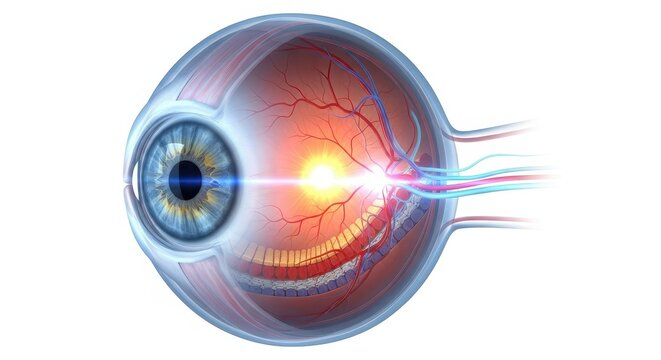
Table of Contents
- I. What Is Laser Eye Injury? Clarifying the Core Concept
- II. How Does Laser Eye Injury Occur?
- III. Key Parameters and Metrics
- IV. Main Types: What Kinds of Laser Eye Injury Exist?
- V. Application Scenarios: Where Is Eye-Injury Risk Relevant?
- VI. Common Misconceptions: Pitfalls to Avoid
I. Core Concept: What Is Laser Eye Injury?
Laser eye injury refers to damage caused by laser radiation to the various structures of the eyeball, the hazard type of greatest concern in laser safety. Because the human eye is the body’s organ most sensitive to light and vision loss is usually irreversible, laser eye protection is always the top priority of laser safety. For salespeople, clearly explaining “why lasers harm the eye, where the damage occurs and how serious it is” is the most direct entry point for promoting protective products and safety solutions – only when customers truly understand the risk will they be willing to invest in safety.
II. How Does Laser Eye Injury Occur?
To understand how laser eye injury works, it can be broken down into several key steps or mechanisms. Its core mechanism can be understood at the following levels:
The mechanism by which laser light damages the eye depends on wavelength – light of different wavelengths is absorbed by different parts of the eyeball, causing completely different injuries. Visible and near-IR light (400-1400 nm) is the most dangerous band, called the “retinal hazard region” – light passes through the cornea and lens and is finally focused onto the retina, forming an extremely small high-intensity spot that causes retinal burns, hemorrhage and even perforation. UV light (<400 nm) is mainly absorbed by the cornea and lens, causing photokeratitis and cataracts; XeCl excimer lasers have even been jokingly called “cataract machines.” Mid-IR light (>1400 nm, especially near 3 μm and 10 μm) is strongly absorbed by the corneal surface, causing painful corneal burns. Notably, although near-IR lasers are invisible, like visible light they can reach the retina and do not trigger the blink reflex, making them more insidious.
III. Key Parameters and Metrics
To understand laser eye injury, knowing concepts and principles is not enough – you must also understand its key parameters. The following are the core parameters and their significance:
| Parameter name | Meaning | Why it matters |
|---|---|---|
| Radiance | The core metric, describing optical power per unit area per unit solid angle – this is the physical quantity that determines spot intensity on the retina, not simple total power | The core physical quantity determining the degree of retinal damage, reflecting real hazard better than total power |
| Exposure duration | Equally critical: a pulsed laser’s single-pulse energy may be small, but peak power is extremely high, and nanosecond pulses can cause irreversible damage | Affects damage mechanism and severity; shorter pulses mean higher peak power, and nanosecond pulses can cause irreversible damage |
| Wavelength | Determines the damage site and MPE threshold: the retinal hazard region has extremely low MPE, while the corneal absorption region has relatively higher MPE | Determines where in the eyeball damage occurs; the retinal hazard region (400-1400 nm) is most hazardous |
| Pulse width / peak power | A pulsed laser’s single-pulse energy may be small, but peak power is extremely high; nanosecond and femtosecond pulses can cause photomechanical and photochemical damage | Shorter pulses mean higher peak power; besides thermal effects, photomechanical and photochemical damage may occur, making mechanisms more complex |
IV. Main Types: What Kinds of Laser Eye Injury Exist?
By damage site there are four types: retinal injury is the most common and most serious, caused by visible and near-IR lasers, manifesting as retinal burns and enlarged blind spots; damage to central vision severely affects quality of life; corneal injury is caused by UV and mid-IR lasers, manifesting as severe pain, photophobia and tearing; the superficial cornea can regenerate, but deep (endothelial) damage is irreversible; lens injury is mainly caused by long-term cumulative UV exposure, leading to cataracts, usually with delayed onset; vitreous and other structure injuries are less common and mostly caused by extremely high-power lasers. By damage mechanism there are thermal injury (high-temperature burning), photochemical injury (photons breaking chemical bonds, mainly UV) and mechanical injury (shock waves, from ultrashort pulses or extremely high power).
V. Application Scenarios: Where Is Eye-Injury Risk Relevant?
- Different application scenarios have different eye-injury risk characteristics. In research laboratories there are many open beams and frequent alignment, with stray reflections the main risk source – sales should focus on recommending suitable goggles and beam dumps
- Industrial processing sites mostly use kilowatt-class Class 4 lasers, emphasising the necessity of area isolation and active safety systems
- Medical aesthetics requires dedicated eye protection for patients (such as eye shields), while operators also face reflection risks
- Outdoor LiDAR / rangefinding requires attention to NOHD (Nominal Ocular Hazard Distance) to ensure public safety. Sales can introduce corresponding typical injury cases and protection schemes tailored to the customer’s application scenario, enhancing persuasiveness.
👉 Want to learn more about real-world laser eye injury cases? Visit Soar Laser’s application case page, or contact our technical team directly for professional advice.
VI. Common Misconceptions
Many people have fuzzy ideas about laser eye injury. See if you fall into any of these traps:
Myth 1: “Low power won’t hurt the eyes”
Wrong. A few milliwatts of visible laser, after being focused by the eye, can produce power density on the retina over 100,000 times the incident value – enough to cause permanent blind spots.
Myth 2: “Infrared lasers are invisible, so they’re not dangerous”
Quite the opposite. Near-IR lasers such as 1064 nm can likewise be focused onto the retina, and because they are invisible people do not instinctively look away – often they are injured without even realising what happened.
Myth 3: “You’ll know right away if your eye is injured”
Not necessarily. Damage to the peripheral retina may not be noticed immediately; blind spots may only be discovered months or even years later, by which time the damage is long since irreversible.
Reference source:RP Photonics Encyclopedia
Leave a Reply