


What Is Laser Safety? Essential Safety Knowledge for Laser Use
What Is Laser Safety? Essential Safety Knowledge for Laser Use – this article systematically introduces the core concepts, working principles, key parameters, main types, application scenarios and common misconceptions of laser safety, helping you fully understand this important topic in laser safety.
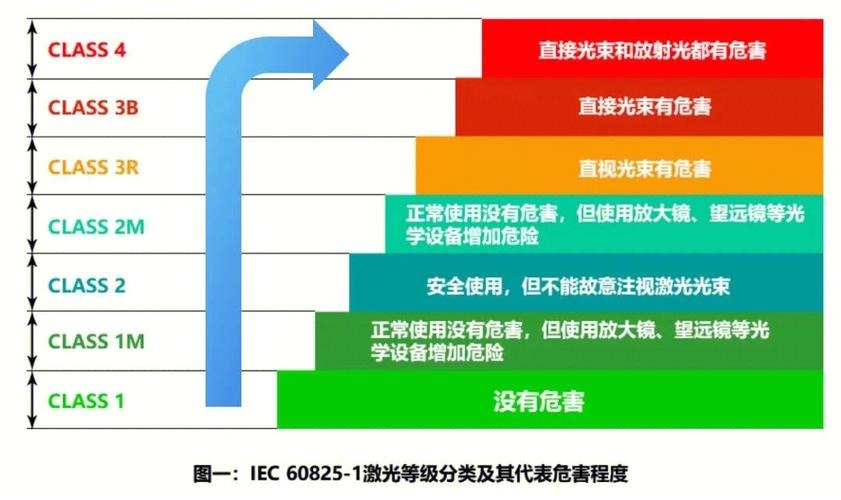
Table of Contents
- I. What Is Laser Safety? Clarifying the Core Concept
- II. How Is Laser Safety Achieved?
- III. Key Parameters and Metrics
- IV. Main Types: What Kinds of Laser Safety Measures Exist?
- V. Application Scenarios: Where Is Laser Safety Relevant?
- VI. Common Misconceptions: Pitfalls to Avoid
I. Core Concept: What Is Laser Safety?
Laser safety is the discipline studying how to protect personnel from harm during the use of laser equipment, covering direct-radiation protection for the eyes and skin as well as control of indirect hazards such as fire, electric shock and toxic fumes. Its core goal is to keep laser radiation exposure within safe thresholds through three levels of measures: engineering controls, administrative controls and personal protection. For salespeople, understanding laser safety is not only a mark of professionalism but the key to conveying the value of “safety and compliance” to customers – what a customer buys is not just a laser but an entire solution that can be used safely.
II. How Is Laser Safety Achieved?
To understand how laser safety works, it can be broken down into several key steps or mechanisms. Its core mechanism can be understood at the following levels:
The root of laser danger lies in its high radiance. Ordinary light sources emit in all directions, whereas a laser is a highly collimated coherent beam; even at only a few milliwatts, after being focused by the eye’s lens it forms a spot about 20 micrometres in diameter on the retina, amplifying energy density tens of thousands of times and causing permanent burns in an instant. This “focusing amplification effect” is the core hazard mechanism distinguishing lasers from ordinary light sources. Damage occurs via two paths: thermal effects (high-temperature burning of tissue) and photochemical effects (photons directly breaking molecular bonds, such as UV lasers causing cataracts).
III. Key Parameters and Metrics
To understand laser safety, knowing concepts and principles is not enough – you must also understand its key parameters. The following are the core parameters and their significance:
| Parameter name | Meaning | Why it matters |
|---|---|---|
| Wavelength | Determines damage site and type (400-1400 nm reaches the retina, >1.4 μm is absorbed by the cornea, UV damages cornea and lens) | Determines which part of the eye the laser damages, directly affecting protection scheme selection and risk-level assessment |
| Output power / pulse energy | Determines the severity of injury | The core determinant of injury severity; higher power and pulse energy cause more serious damage |
| Beam divergence angle | Affects hazard propagation distance | Determines how far the laser hazard travels; smaller divergence means longer hazard distance and larger protection scope |
IV. The Three-Level Protection System
Laser safety protection has three lines of defence: the first level is engineering controls, including fully enclosed beam paths, interlocks, beam dumps and protective enclosures – the most reliable measure; the second level is administrative controls, including hazard-area designation, access control, standard operating procedures (SOPs) and the Laser Safety Officer (LSO) system; the third level is personal protective equipment (PPE), mainly laser safety goggles. The priority decreases across the three levels – what can be solved by engineering should not rely on administration; what can be handled by administration should not rely entirely on employees remembering to wear goggles.
V. Application Scenarios: Where Is Laser Safety Relevant?
- Different industries have very different laser-safety priorities. In research laboratories, beam paths are frequently adjusted and many are open, so attention should focus on stray reflections and goggles use
- Industrial processing (cutting, welding) uses kilowatt-class Class 4 lasers, with the core being area isolation and active safety systems (sensors detect beam leakage and trigger an interlock shutdown)
- Medical aesthetics requires protecting both patient and operator, and involves compliance review
- Outdoor / security scenarios (laser rangefinding, LiDAR) require attention to eye-safe wavelength selection and Nominal Ocular Hazard Distance (NOHD) calculation. When selling, safety configuration schemes can be recommended based on the customer’s industry scenario.
👉 Want to learn more about real-world laser safety cases? Visit Soar Laser’s application case page, or contact our technical team directly for professional advice.
VI. Common Misconceptions
Many people have fuzzy ideas about laser safety. See if you fall into any of these traps:
Myth 1: “Low power means safe”
Wrong. The danger of a laser lies in energy concentration; a few milliwatts of visible laser focused onto the retina can reach power densities of hundreds of watts per square centimetre – enough to cause permanent damage.
Myth 2: “If you can’t see it, it’s harmless”
Quite the opposite. Near-IR lasers (such as 1064 nm) are invisible but can likewise be focused onto the retina, and they do not trigger the blink reflex – making them more dangerous.
Myth 3: “Once you wear goggles, everything is fine”
Goggles have wavelength and OD (optical density) limits; the wrong wavelength is no better than wearing none; high-power direct beams may puncture the lens; femtosecond pulses may cause dye saturable bleaching, dropping OD instantaneously. Goggles are the last line of defence, not a universal solution.
Reference source:RP Photonics Encyclopedia
Leave a Reply