


An optical soliton is a special pulse that keeps its shape while propagating in fibre—not a component but the result of a precise balance between dispersion and nonlinearity, so it resists broadening over long distances. This article covers the principles, key parameters, main types and typical applications.
Table of Contents
- 1. What Is an Optical Soliton? Understanding the Core Concepts
- 2. Working Principle: How Do Optical Solitons Form?
- 3. Key Parameters: Understanding Optical Soliton Performance Indicators
- 4. Main Types: What Kinds of Optical Solitons Exist?
- 5. Applications: Where Are Optical Solitons Relevant?
- 6. Common Misconceptions: Pitfalls to Avoid
1. Core Concepts: What Is an Optical Soliton?
< A soliton is a special optical pulse that keeps its shape while propagating in a dispersive medium. Dispersion normally broadens a pulse and nonlinear effects also change its shape, but under specific conditions the two exactly cancel, leaving the pulse’s temporal and spectral shape unchanged. Optical solitons overturn the common belief that ‘a pulse travelling in fibre must distort’—when conditions are met, it can travel long distances without changing shape.
An optical soliton is a special pulse that keeps its shape in fibre by balancing dispersion against nonlinearity—not a component but a self-sustained propagation mode, so it resists broadening over long distances.
2. Working Principle: How Do Optical Solitons Form?
Understanding optical solitons can be broken down into several key steps or mechanisms. Let us look at them one by one:
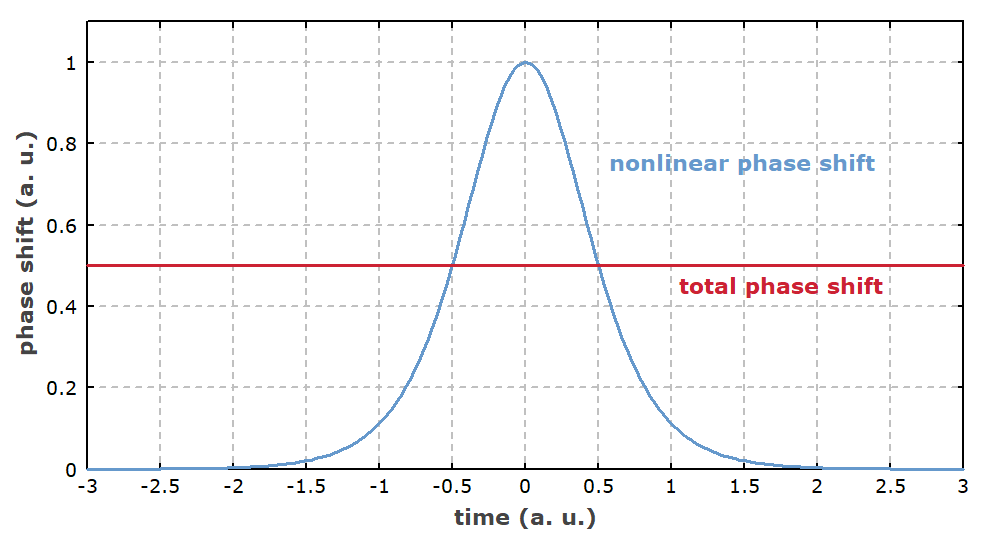
An optical soliton results from the precise balance of group-velocity dispersion and the Kerr nonlinearity. In the anomalous-dispersion regime, dispersion produces down-chirp while self-phase modulation produces up-chirp. When the pulse energy and shape meet the condition, the two opposite chirps cancel exactly and the pulse propagates unchanged. A fundamental soliton has a sech² shape, with energy inversely proportional to width—shorter pulses need higher energy. Solitons also show ‘elastic collisions’—they can pass through one another and emerge unchanged.
3. Key Parameters: Understanding Optical Soliton Performance Indicators
| Parameter Name | Meaning | Why It Matters |
|---|---|---|
| Soliton Order N | Fundamental N = 1 keeps its shape; higher order N > 1 evolves periodically. | Determines soliton shape and stability: N = 1 is a shape-preserving fundamental soliton; higher-order solitons evolve periodically during propagation. |
| Soliton Energy | Fundamental-soliton pulse energy is inversely proportional to width. | Energy of a fundamental soliton relates to width and dispersion—a key parameter for soliton laser design and soliton communication systems. |
| Soliton Width | FWHM is about 1.76 times the characteristic width. | The pulse width of a soliton, directly tied to the dispersion–nonlinearity balance, determining its applications and propagation behaviour. |
| Soliton Period | The characteristic length of periodic evolution for higher-order solitons. | The propagation distance a higher-order soliton needs to return to its initial shape—a key length for understanding soliton interactions and effects. |
| Soliton Self-Frequency Shift | Stimulated Raman scattering shifts the soliton toward longer wavelengths. | A red shift of the soliton’s centre frequency caused by stimulated Raman scattering, limiting soliton use in long-distance high-speed communication. |
These parameters are not isolated; they are interrelated and mutually constrained. For an optical soliton, width, peak power, fibre dispersion and nonlinearity constrain one another: to maintain the soliton condition, dispersion and nonlinearity must be precisely balanced, and changing either affects propagation stability.
If you are not familiar with these parameters, that is fine—Soar Laser’s product pages have detailed descriptions, and you can also consult our technical engineers directly to help you select.
4. Main Types: What Kinds of Optical Solitons Exist?
Optical solitons can be classified in several ways, and different dimensions help us understand them from different angles. The common classification methods are introduced below:
By Type
Fundamental and Higher-Order Solitons
Fundamental solitons keep their shape completely and are most stable; higher-order solitons change shape periodically.
Bright and Dark Solitons
A bright soliton is an intensity pulse on a continuous background (the usual soliton), formed in the anomalous-dispersion regime; a dark soliton is an intensity dip on a continuous-wave background, formed in the normal-dispersion regime.
Temporal and Spatial Solitons
Temporal solitons are self-sustained in the time dimension; spatial solitons are self-trapped in space.
By Mechanism
Kerr solitons (the classic type); Bragg solitons; dissipative solitons (formed in gain–loss systems).
Different optical solitons have their own advantages and disadvantages; there is no absolute ‘best,’ only ‘most suitable.’ Selection should consider your specific application, power requirements, budget and other factors. For example, for high-power industrial applications fibre lasers may be more suitable; for research with ultrashort-pulse needs, Ti:sapphire may be preferable.
5. Applications: Where Are Optical Solitons Relevant?
Optical solitons have a very wide range of applications, from industrial manufacturing to healthcare, from communication networks to scientific research—almost everywhere lasers are used. A few fields are briefly described below:
- The most direct application is the soliton mode-locked laser—many femtosecond lasers (especially fibre and Ti:sapphire lasers) work by soliton mode locking, with dispersion and SPM balancing to sustain a stable circulating femtosecond pulse. In fibre communication, solitons were once seen as the ideal scheme for long-distance high-speed transmission. In microresonators, dissipative Kerr solitons are the core mechanism of on-chip optical frequency combs. The soliton concept is also widely used in other areas of physics.
Typical Application Scenarios in Detail
Scenario 1: the most direct application of solitons is the soliton mode-locked laser
Many femtosecond lasers (especially fibre and Ti:sapphire lasers) work by soliton mode locking, with dispersion and SPM balancing to sustain a stable circulating femtosecond pulse. In fibre communication, solitons were once seen as the ideal scheme for long-distance high-speed transmission. In microresonators, dissipative Kerr solitons are the core mechanism of on-chip optical frequency combs. The soliton concept is also widely used in other areas of physics.
👉 Want to learn more about practical applications of optical solitons? Please visit Soar Laser’s application-case page, or contact our technical team directly for professional advice.
6. Common Misconceptions
Many people have somewhat plausible but mistaken notions about optical solitons. See whether you fall into any of the following:
Misconception 1: ‘Solitons are a special kind of pulse that only certain lasers can produce.’
a soliton is essentially a propagation mode, not a particular pulse species—any pulse meeting the conditions can propagate as a soliton in a suitable medium
Misconception 2: ‘A soliton can propagate forever without changing shape.’
in theory a fundamental soliton in an ideal medium propagates unchanged indefinitely, but in practice fibre loss reduces soliton energy and broadens it, and Raman scattering causes self-frequency shift
Misconception 3: ‘All mode-locked lasers are soliton mode-locked.’
soliton mode locking is only one mechanism; high-energy femtosecond fibre lasers often operate in the similariton or dissipative-soliton regime
Misconception 4: ‘A soliton needs no dispersion management at all.’
solitons rely on a precise dispersion–nonlinearity balance; changes in fibre dispersion or nonlinearity break the balance and destabilize propagation, so dispersion still must be managed
Of course, there are far more misconceptions about optical solitons than these. Laser technology develops rapidly, with new materials and processes constantly emerging, so some previous ‘common knowledge’ may already be outdated. If you have other questions, please leave a comment and we will answer them one by one.
Leave a Reply