


Beam quality measures how well a laser beam can be focused and propagated—it directly affects machining precision, coupling efficiency and working distance, a core metric of any laser system. This article covers the principles, key parameters, evaluation methods and typical applications.
Table of Contents
- 1. What Is Beam Quality? Understanding the Core Concepts
- 2. Working Principle: How Is Beam Quality Determined?
- 3. Key Parameters: Understanding Beam Quality Performance Indicators
- 4. Main Types: What Kinds of Beam Quality Exist?
- 5. Applications: Where Is Beam Quality Relevant?
- 6. Common Misconceptions: Pitfalls to Avoid
1. Core Concepts: What Is Beam Quality?
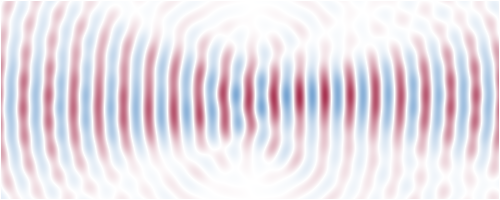
< Beam quality is a comprehensive indicator describing a laser beam’s ‘focusing ability’—simply put, how small a spot a beam can potentially be focused to. Better beam quality means, under the same conditions, a smaller focused spot and higher energy density. It is one of the most important performance parameters of a laser, directly determining its practical effect in many applications. Essentially, beam quality reflects how regular the wavefront is—the smoother the wavefront, the higher the beam quality.
Beam quality describes how well a beam can be focused and propagated; it is not set by any single component but shaped jointly by cavity design, gain medium and optics, directly affecting machining precision and coupling efficiency.
2. Working Principle: How Is Beam Quality Determined?
Understanding beam quality can be broken down into several key steps or mechanisms. Let us look at them one by one:
The physical essence of beam quality is the phase correlation among points across the beam cross-section. An ideal Gaussian beam has a perfectly smooth wavefront (spherical, planar at the waist) and focuses to the diffraction-limited minimum spot. Real beams, due to aberrations, thermal effects, mode competition and other factors, have distorted wavefronts and degraded focusability. This is quantified by the ‘beam-parameter product (BPP)’—the product of waist radius and far-field divergence angle; a smaller BPP means higher quality. A more common metric is the M² factor, the ratio of a real beam’s BPP to that of a diffraction-limited Gaussian beam at the same wavelength.
3. Key Parameters: Understanding Beam Quality Performance Indicators
| Parameter Name | Meaning | Why It Matters |
|---|---|---|
| M² Factor | The most common beam-quality metric: M² = 1 is ideal diffraction-limited, larger is worse | The internationally accepted beam-quality standard—M² closer to 1 means better quality, directly determining focused-spot size and working distance. |
| Beam-Parameter Product (BPP) | Waist radius × far-field half-angle, usually in mm·mrad | The product of waist radius and far-field divergence—an absolute beam-quality parameter, wavelength-independent for easy comparison across systems. |
| Radiance | Power per unit area per unit solid angle, depending on both output power and beam quality | Power per unit area per solid angle, combining beam quality and power; determines focusability and propagation efficiency. |
| ISO 11146 Standard | The international beam-quality measurement specification, requiring caustic-curve fitting | Specifies measurement methods for M² and other parameters, ensuring comparable results across devices and labs. |
These parameters are not isolated; they are interrelated and mutually constrained. For example, there is often a trade-off between beam quality and output power—a laser designed for extremely high beam quality may be limited in power or efficiency, and vice versa. So to evaluate quality, you must consider the parameters together rather than one alone.
If you are not familiar with these parameters, that is fine—Soar Laser’s product pages have detailed descriptions, and you can also consult our technical engineers directly to help you select.
4. Main Types: What Kinds of Beam Quality Exist?
Beam quality can be classified in several ways, and different dimensions help us understand it from different angles. The common classification methods are introduced below:
By Type
Diffraction-Limited Beam
M² ≈ 1, common in low-power single-mode solid-state lasers, single-mode fibre lasers and He-Ne lasers
Near-Diffraction-Limited Beam
M² ≈ 1.1–2, most medium-to-high-power quality lasers
Moderate Beam Quality
M² ≈ 5–20, some high-power lasers, adequate for most industrial processing
Low Beam Quality
M² > 100 or even thousands, common in high-power diode bars and multimode lasers
Different beam qualities have their own advantages and disadvantages; there is no absolute ‘best,’ only ‘most suitable.’ Selection should consider your specific application, power requirements, budget and other factors. For example, for high-power industrial applications fibre lasers may be more suitable; for research with ultrashort-pulse needs, Ti:sapphire may be preferable.
5. Applications: Where Is Beam Quality Relevant?
Beam quality has a very wide range of applications, from industrial manufacturing to healthcare, from communication networks to scientific research—almost everywhere lasers are used. A few fields are briefly described below:
- Precision Cutting / Drilling: needs high beam quality for a small spot and long working distance
- Marking / Printing: high beam quality ensures marking clarity and fineness
- Laser Welding: lower beam quality suffices, but remote welding still needs good quality
- Interferometry / Lidar: needs near-diffraction-limited quality for coherence
- Fibre Delivery: beam quality determines coupling efficiency into fibre and the usable core diameter
Typical Application Scenarios in Detail
Scenario 1: Precision Cutting / Drilling
Precision cutting and drilling need high beam quality for a small spot and longer working distance; the closer M² is to 1, the sharper the machined edge.
Scenario 2: Marking / Printing
In laser welding, high beam quality gives more concentrated energy and a deeper melt pool, improving seam consistency and reducing the heat-affected zone.
Scenario 3: Laser Welding
In marking and engraving, beam quality sets resolution and clarity—a good mode makes fine lines and small characters crisper.
Scenario 4: Interferometry / Lidar
In fibre coupling and medical lasers, beam quality affects coupling efficiency and precision and must be weighed in system design.
Scenario 5: Fibre Delivery
In ultrafast micromachining, high beam quality combined with short pulses enables cold ablation, reducing thermal damage and improving microstructure precision.
👉 Want to learn more about practical applications of beam quality? Please visit Soar Laser’s application-case page, or contact our technical team directly for professional advice.
6. Common Misconceptions
Many people have somewhat plausible but mistaken notions about beam quality. See whether you fall into any of the following:
Misconception 1: ‘Higher power always gives better processing results.’
in fact a high-power laser with poor beam quality often cannot focus effectively, giving lower energy density
Misconception 2: ‘Beam quality is about how good the beam looks.’
a small M² does not guarantee a smooth intensity profile, and a smooth profile does not guarantee a small M²
Misconception 3: ‘A lens can improve beam quality.’
an ideal lens changes only the waist and divergence magnitudes; their product (beam quality) stays the same
Misconception 4: ‘Beam quality is a fixed laser parameter.’
in reality beam quality varies with pump power, operating temperature and cavity misalignment
Misconception 5: ‘Beam quality is determined only by M².’
M² is important, but intensity profile, wavefront error and stability also affect real-world performance and must be considered together
Of course, there are far more misconceptions about beam quality than these. Laser technology develops rapidly, with new materials and processes constantly emerging, so some previous ‘common knowledge’ may already be outdated. If you have other questions, please leave a comment and we will answer them one by one.
Leave a Reply