


What Is Laser Material Processing? The Optical Processing Revolution in Manufacturing
Laser material processing is an important concept in laser technology, widely used in industrial manufacturing, scientific research and healthcare. This article systematically introduces the core concepts, working principles, key parameters, main types and typical applications of laser material processing, helping readers build a complete knowledge framework.
Table of Contents
- 1. What Is Laser Material Processing? Understanding the Core Concepts
- 2. Working Principle: How Is Laser Material Processing Achieved?
- 3. Key Parameters: Understanding the Performance Indicators of Laser Material Processing
- 4. Main Types: What Kinds of Laser Material Processing Exist?
- 5. Applications: Where Is Laser Material Processing Used?
- 6. Common Misconceptions: Pitfalls to Avoid
1. Core Concepts: What Is Laser Material Processing?
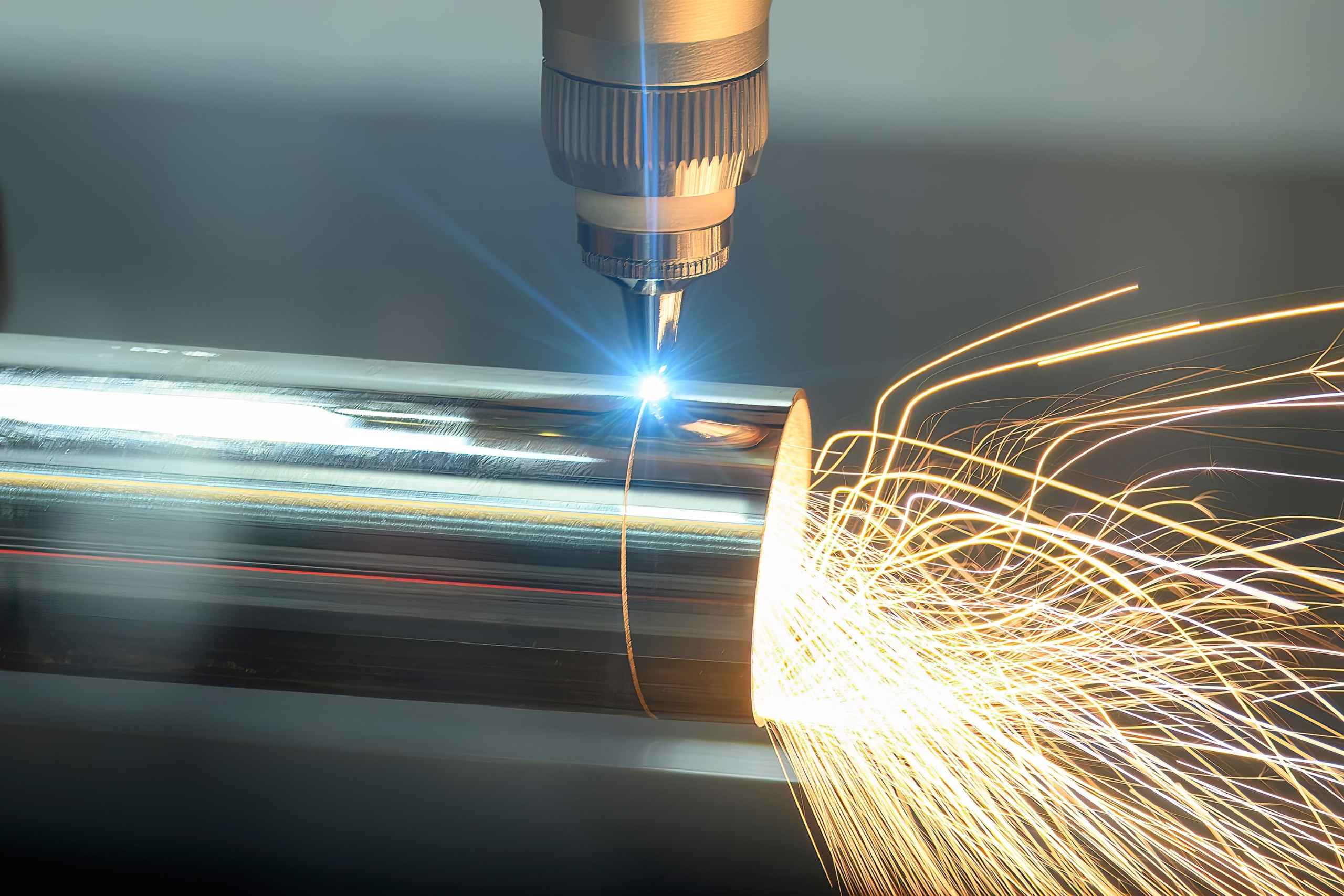
Laser material processing refers collectively to the use of laser-material interaction to achieve various industrial manufacturing processes, also called ‘laser-assisted manufacturing’ or ‘laser manufacturing.’ It is one of the areas of laser application with the greatest economic impact, covering scenarios from large-scale mass production to high-precision special processing. Almost all common industrial materials—metals, ceramics, glass, plastics, wood, textiles, leather and so on—can be processed with lasers. Compared with traditional machining, laser processing is a non-contact process that causes no tool wear or material contamination.
2. Working Principle: How Is Laser Material Processing Achieved?
The core of laser material processing is that absorbed laser radiation is converted into different forms of energy, triggering a series of physical and chemical changes. Depending on the laser intensity and interaction time, the material goes through different stages from heating to melting to vaporization. At lower energy density, the laser mainly produces thermal effects that raise the material temperature, usable for surface modification or hardening; as energy density rises further, the material melts, used in melt-blow processes in welding and cutting; when the intensity is high enough, the material vaporizes directly or undergoes photochemical decomposition—this is laser ablation, the basis of precision micromachining. In addition, laser processing is often accompanied by complex phenomena such as plasma generation and multiphoton absorption, which in turn affect the processing.
💡 An analogy
Laser material processing is like a Transformers of light—the same laser, with adjusted power density and mode of action, can perform completely different tasks such as cutting, welding, marking, surface treatment and additive manufacturing. It is a universal light tool that can cut, weld and engrave.
In summary, laser material processing involves the intersection of optics, materials science and precision manufacturing. Mastering its basic principles and key parameters is the foundation for properly selecting and using related products.
3. Key Parameters: Understanding the Performance Indicators of Laser Material Processing
Understanding laser material processing requires mastering the following key parameters, which directly determine product performance and application scenarios:
| Parameter Name | Meaning | Why It Matters |
|---|---|---|
| Laser Wavelength | Determines how efficiently the material absorbs light; different materials have different optimal wavelengths. Metals usually absorb near-infrared well, while polymers suit the 10.6 μm wavelength of CO₂ lasers. | Different materials absorb different wavelengths at different rates, directly affecting processing efficiency and quality |
| Output Power and Pulse Energy | Macro processing (such as thick-plate cutting) needs several kilowatts or more, while micromachining focuses on pulse peak energy. | Directly affects laser performance and the choice of application scenarios |
| Pulse Width | From continuous wave to femtosecond pulses; the shorter the pulse, the smaller the heat-affected zone and the higher the precision. | Continuous lasers suit deep-penetration welding and thick-plate cutting, pulsed lasers suit precision marking and drilling, and ultrashort pulses suit micromachining |
| Beam Quality (M² Factor) | Determines the focusing ability of the beam; a high-quality beam can be focused to a smaller spot, giving higher precision and intensity. | Determines how small the spot can be focused, affecting processing precision and power density |
| Pulse Repetition Rate | Affects processing speed and the pulse-stacking effect per unit area. | Directly affects laser performance and the choice of application scenarios |
The above parameters are interrelated and mutually constrained. In actual selection, a comprehensive trade-off among performance, cost, reliability and other aspects is needed according to specific application requirements.
For more product parameters or selection advice, please contact the Soar Laser technical team.
4. Main Types: What Kinds of Laser Material Processing Exist?
Laser material processing can be classified in many ways, and different dimensions help us understand its characteristics from different angles. The following introduces the common classification methods one by one:
Removal (Subtractive Processing)
Including laser cutting, laser drilling, laser milling, laser marking/engraving and laser cleaning, removing material by ablation or melting.
Joining
Including laser welding and laser brazing, joining materials by melting or filler.
Surface Modification
Including laser hardening, laser alloying, laser cladding and laser texturing, changing the mechanical or chemical properties of the material surface.
Additive Manufacturing
Including selective laser melting, selective laser sintering and stereolithography, building three-dimensional structures by adding material layer by layer.
Different types of laser material processing have their own characteristics and suitable scenarios. Actual selection requires comprehensive consideration of specific application needs, performance requirements and budget constraints. If in doubt, you can contact the Soar Laser technical team for professional selection advice.
5. Applications: Where Is Laser Material Processing Used?
Laser material processing has a very wide range of applications, covering industrial manufacturing, scientific research, healthcare, communications and information, and many other fields. The following introduces several main aspects:
- Laser material processing is deeply integrated into every aspect of modern manufacturing. In the automotive industry, lasers are used for body welding, gear cutting and part marking
- in aerospace, precision laser processing is used for turbine-blade drilling and lightweight structure manufacturing
- in electronics, lasers play an irreplaceable role in PCB cutting, chip dicing and micro-joining
- in medicine, lasers process stents, implants and microfluidic chips. In addition, lasers are widely used in photovoltaic-cell production, textile cutting, food-packaging marking, jewelry processing and many other industries. With the advance of Industry 4.0, laser processing is ever more tightly integrated with robots and automated production lines.
Typical Application Scenarios in Detail
Scenario 1: Cutting and Blanking
laser cutting is the mainstream process for metal and non-metal sheet processing, with high precision, good cut quality and strong flexibility, widely used in sheet metal, automotive, electronics and other industries.
Scenario 2: Welding and Joining
laser welding has a large aspect ratio, small heat-affected zone and little deformation, irreplaceable in precision welding in automotive, electronics, medical and aerospace fields.
Scenario 3: Surface Treatment
surface-modification technologies such as laser quenching, laser cladding and laser alloying can significantly improve the wear resistance, corrosion resistance and service life of parts.
Scenario 4: Additive Manufacturing
3D-printing technologies such as selective laser melting (SLM) and selective laser sintering (SLS) use lasers to melt powder layer by layer, manufacturing parts with complex structures.
6. Common Misconceptions
Many people have somewhat plausible but mistaken notions about laser material processing. See whether you fall into any of the following misconceptions:
Misconception 1: Laser processing is a ‘universal process.’
in fact, different materials and processes have specific requirements for laser wavelength, power and pulse width; one machine cannot do everything
Misconception 2: The higher the power, the better the processing result.
for precision micromachining, excessive power actually enlarges the heat-affected zone, reduces quality and may even damage the material. The key is matching energy density and pulse width, not simply pursuing high power
Misconception 3: Laser processing has no consumables and no cost at all.
although there is no tool wear, the laser itself has a limited life, and high-power equipment needs substantial electricity and cooling systems; initial investment and operating costs are often not low
Misconception 4: The faster laser processing, the better.
in fact, speed and quality often need balancing; too-fast processing causes rough cuts, much dross and weak welds. Each material and thickness has an optimal speed range; parameters need adjusting to process requirements, and blindly pursuing speed reduces yield.
The above are several common misconceptions about laser material processing. In practical applications, comprehensive judgment is needed based on specific product parameters and use conditions. If in doubt, it is recommended to consult a professional technician.
Leave a Reply