


What Is Laser Ranging? How to Measure Distance Precisely with Light
Laser ranging is an important concept in laser technology, widely used in industrial manufacturing, scientific research and healthcare. This article systematically introduces the core concepts, working principles, key parameters, main types and typical applications of laser ranging, helping readers build a complete knowledge framework.
Table of Contents
- 1. What Is Laser Ranging? Understanding the Core Concepts
- 2. Working Principle: How Is Laser Ranging Achieved?
- 3. Key Parameters: Understanding the Performance Indicators of Laser Ranging
- 4. Main Types: What Kinds of Laser Ranging Exist?
- 5. Applications: Where Is Laser Ranging Used?
- 6. Common Misconceptions: Pitfalls to Avoid
1. Core Concepts: What Is Laser Ranging?
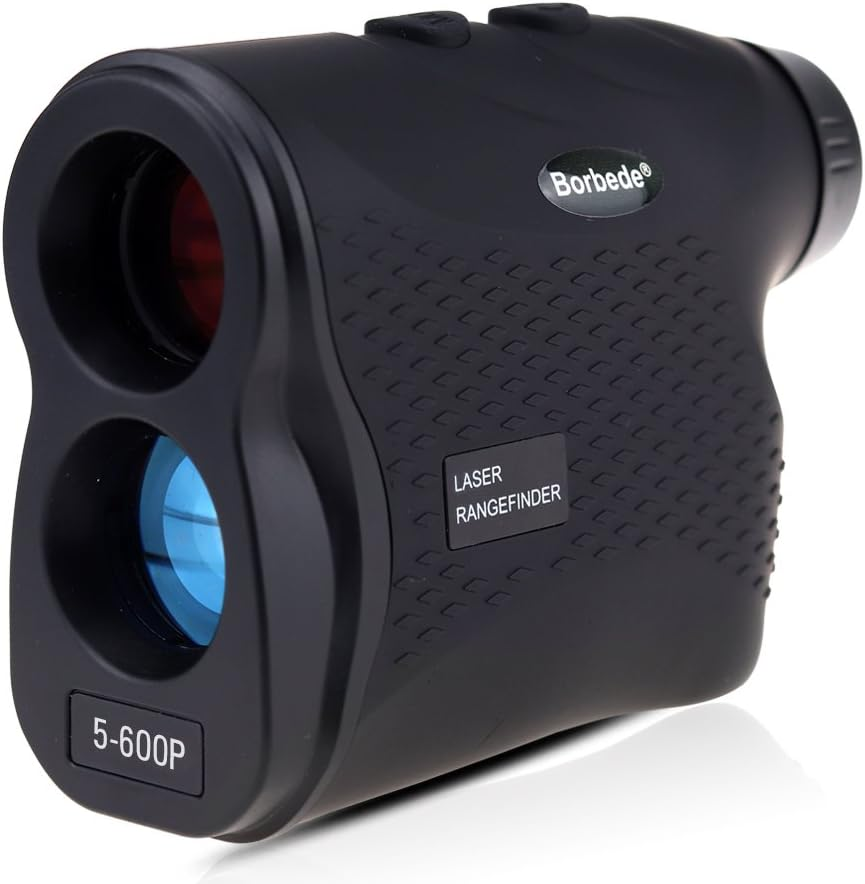
Laser ranging is the technology of using lasers to precisely measure the distance between two points. It is one of the earliest practical applications of lasers and the foundation of many applications such as lidar, laser guidance and industrial measurement. Compared with traditional ultrasonic and electromagnetic-wave ranging, laser ranging has significant advantages such as high precision, high speed, good directionality and small size. From handheld laser rangefinders used every day, to total stations used in surveying, to long-range artillery ranging in the military, laser ranging has permeated every aspect of production and life.
2. Working Principle: How Is Laser Ranging Achieved?
The most core method of laser ranging is the time-of-flight method: emit a laser pulse at the target, then precisely measure the time from emission to reflection back from the target, and calculate the distance from the speed of light. Since the speed of light is extremely fast (about 300,000 km per second), achieving millimetre-level or higher precision places extremely high demands on the timing circuit—measuring a 1 mm distance difference requires only about 6.7 picoseconds of time resolution. Besides pulsed time-of-flight, there is also phase-based ranging: emit a continuous amplitude-modulated laser and calculate the distance by comparing the phase difference between the emitted and returned waves; the precision can be very high, but the range is usually limited. There is also interferometric ranging, which uses the coherence of laser light to measure tiny displacements through changes in interference fringes, reaching nanometre-level precision but with a limited range.
💡 An analogy
Laser ranging is like measuring the echo of a sound with a stopwatch—you shout, and the time until you hear the echo, multiplied by the speed of sound and divided by two, gives the distance to the wall. Laser ranging works similarly, except it uses light that travels extremely fast, so its precision and range far exceed ultrasonic ranging.
In summary, laser ranging involves the intersection of optics, materials science and precision manufacturing. Mastering its basic principles and key parameters is the foundation for properly selecting and using related products.
3. Key Parameters: Understanding the Performance Indicators of Laser Ranging
Understanding laser ranging requires mastering the following key parameters, which directly determine product performance and application scenarios:
| Parameter Name | Meaning | Why It Matters |
|---|---|---|
| Measurement Range | From a few centimetres at close range to tens of kilometres or more; different applications vary greatly. | Determines how far the instrument can measure, from industrial ranging of a few metres to geodetic surveying of tens of kilometres |
| Measurement Accuracy | From millimetre level (handheld rangefinders) to micrometre or even nanometre level (precision interferometry). | Directly affects the reliability of measurement results; high-precision rangefinders can reach millimetre or even sub-millimetre level |
| Measurement Time / Rate | Time required for a single measurement; high-speed ranging can reach hundreds of thousands of times per second or more. | Directly affects laser performance and the choice of application scenarios |
| Laser Wavelength | Common ones are 635 nm (red, visible, easy to aim), 905 nm and 1550 nm (infrared, higher eye-safety class). | Directly affects laser performance and the choice of application scenarios |
| Spot Size | Determines the illuminated area on the target; a small spot can measure smaller targets. | Directly affects laser performance and the choice of application scenarios |
| Target Reflectivity Adaptability | Whether it can measure both highly reflective targets (such as mirrors) and low-reflectivity targets (such as black surfaces) stably. | Targets of different materials and colours vary greatly in reflectivity, directly affecting the effective measurement distance and accuracy |
The above parameters are interrelated and mutually constrained. In actual selection, a comprehensive trade-off among performance, cost, reliability and other aspects is needed according to specific application requirements.
For more product parameters or selection advice, please contact the Soar Laser technical team.
4. Main Types: What Kinds of Laser Ranging Exist?
Laser ranging can be classified in many ways, and different dimensions help us understand its characteristics from different angles. The following introduces the common classification methods one by one:
Pulsed Laser Rangefinders
Based on the pulsed time-of-flight principle, with a large range (up to several or even tens of kilometres) and accuracy usually at the centimetre-to-decimeter level; the most common type.
Phase-Based Laser Rangefinders
Based on continuous-wave phase-difference measurement, with higher accuracy (up to millimetre level) but a relatively shorter range, mostly used indoors and for engineering measurement.
Laser Interferometric Rangefinders
Using the principle of laser interference, with extremely high accuracy (up to nanometre level), mainly used for displacement measurement in precision machining and semiconductor equipment.
Triangulation Laser Ranging
Based on the triangulation principle, shining the laser obliquely at the target and calculating the distance by measuring the spot position with an imaging sensor; suitable for close-range high-precision measurement.
Frequency-Modulated Continuous-Wave (FMCW) Laser Ranging
Emits a continuously laser with linearly modulated frequency, calculates distance from the beat frequency, can measure speed at the same time, and has strong anti-interference capability.
Handheld Laser Rangefinders
Portable type, typically with a range of tens to hundreds of metres and millimetre-level accuracy, widely used in construction, decoration and real-estate measurement.
Different types of laser ranging have their own characteristics and suitable scenarios. Actual selection requires comprehensive consideration of specific application needs, performance requirements and budget constraints. If in doubt, you can contact the Soar Laser technical team for professional selection advice.
5. Applications: Where Is Laser Ranging Used?
Laser ranging has a very wide range of applications, covering industrial manufacturing, scientific research, healthcare, communications and information, and many other fields. The following introduces several main aspects:
- The application scenarios of laser ranging are extremely wide. Construction and engineering survey is the largest application area, with handheld rangefinders and total stations widely used in construction surveying, area calculation, decoration positioning and so on
- in industrial automation, laser displacement sensors are used for online dimensional inspection, flatness measurement and level monitoring
- in surveying and geographic information, laser ranging combined with a scanning mechanism forms lidar for terrain mapping and 3D modeling
- in military and security, laser rangefinders are used in fire-control systems of artillery, tanks and sniper rifles, as well as border monitoring
- in consumer electronics, the ToF cameras in mobile phones also use the laser ranging principle for 3D sensing and autofocus
- and in sports, laser ranging is used to measure results in events such as long jump and throwing.
Typical Application Scenarios in Detail
Scenario 1: Industrial Measurement and Inspection
used in manufacturing for part dimension inspection, positioning and alignment, thickness measurement and so on, with accuracy up to the micrometre level, a core means of non-contact precision measurement.
Scenario 2: Construction and Civil Engineering
widely used in house measurement, road setting-out, terrain mapping and other scenarios; laser rangefinders are several times more efficient than traditional tape measures and theodolites.
Scenario 3: Military and Security
laser rangefinders are standard equipment in fire-control systems and sniper weapons, precisely determining target distance at several kilometres to provide ballistic parameters for firing.
Scenario 4: Aerospace and Remote Sensing
satellite laser ranging (SLR) can precisely measure satellite orbits, and airborne laser ranging is used for terrain mapping and 3D modeling, with accuracy up to the centimetre level.
6. Common Misconceptions
Many people have somewhat plausible but mistaken notions about laser ranging. See whether you fall into any of the following misconceptions:
Misconception 1: The accuracy of laser ranging depends only on the laser itself.
in fact, ranging accuracy is affected by many factors, including target surface characteristics, atmospheric conditions, timing-circuit precision and optical-system quality; mirror and diffuse targets can perform very differently
Misconception 2: The greater the range, the more accurate.
range and accuracy are two different indicators; long-range rangefinders often have lower accuracy and may have a ‘blind zone’ at short distances
Misconception 3: All laser rangefinders are unsafe for the human eye.
most civilian handheld rangefinders use Class 1 or Class 2 lasers with extremely low power and are safe for the eyes in normal use. Only high-power military or industrial long-range rangefinders require special protection
Misconception 4: The farther laser ranging goes, the less accurate it is.
not necessarily. Laser ranging has many error sources, including timer precision, atmospheric refraction and target reflection characteristics. Over ranges of a few to tens of kilometres, both phase and pulse laser ranging can achieve millimetre-to-centimetre accuracy. What truly limits long-range accuracy is often atmospheric turbulence and target surface characteristics, not distance itself.
The above are several common misconceptions about laser ranging. In practical applications, comprehensive judgment is needed based on specific product parameters and use conditions. If in doubt, it is recommended to consult a professional technician.
Leave a Reply