


What Is Laser Display? Why Does Laser Projection Deliver Better Image Quality?
Laser display is an important concept in laser technology, widely used in industrial manufacturing, scientific research and healthcare. This article systematically introduces the core concepts, working principles, key parameters, main types and typical applications of laser display, helping readers build a complete knowledge framework.
Table of Contents
- 1. What Is Laser Display? Understanding the Core Concepts
- 2. Working Principle: How Is Laser Display Achieved?
- 3. Key Parameters: Understanding the Performance Indicators of Laser Display
- 4. Main Types: What Kinds of Laser Display Exist?
- 5. Applications: Where Is Laser Display Used?
- 6. Common Misconceptions: Pitfalls to Avoid
1. Core Concepts: What Is Laser Display?
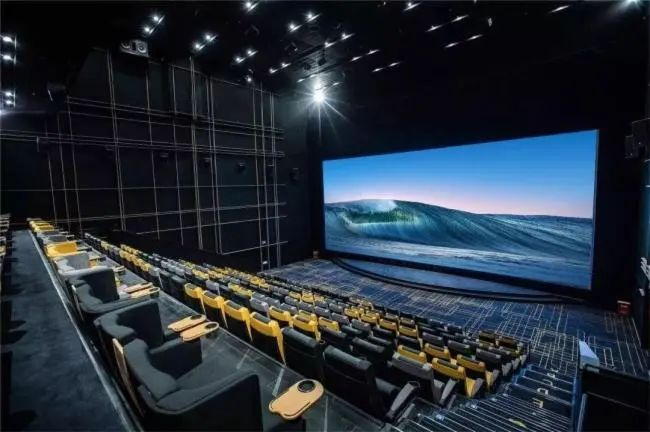
Laser display and projection refers to display and projection technology that uses lasers as the light source, a new generation of display technology after CRT, LCD and LED. It uses red, green and blue primary-colour lasers as the light source and generates all colours through additive colour mixing to display images and video. Compared with traditional lamp-based projectors, laser projection has outstanding advantages such as a wide colour gamut, high brightness, long life, low power consumption and high colour saturation, and has been hailed as ‘a revolution in the history of human vision.’ Laser display includes front projection (such as cinema and engineering projection), as well as new forms such as laser TV and laser AR/VR displays.
2. Working Principle: How Is Laser Display Achieved?
The core principle of laser display is additive colour mixing: by precisely controlling the intensity ratios of the red (R), green (G) and blue (B) laser beams, almost all colours perceivable by the human eye can be mixed. Because the spectral linewidth of lasers is extremely narrow (close to monochromatic light), the colour purity of the three primaries is very high, occupying a large triangular area on the CIE chromaticity diagram, so the reproducible colour range (gamut) far exceeds that of traditional light sources. In terms of imaging methods, there are several main technical paths: one is the scanning type, which uses galvanometers to rapidly move the laser beam to scan point by point and form an image (similar to the way a CRT works); another is the light-valve type, in which the laser serves as an illumination source shining on a spatial light modulator such as a DMD, LCoS or LCD, and the modulator controls the on/off or grayscale of each pixel to form the image; there are also newer methods such as holographic display.
💡 An analogy
Laser display is like painting on a canvas with a brush—the red, green and blue lasers are like the three purest pigments; by precisely controlling the intensity of each colour, you can mix far richer colours than traditional light sources, making the image more vivid and realistic.
In summary, laser display involves the intersection of optics, materials science and precision manufacturing. Mastering its basic principles and key parameters is the foundation for properly selecting and using related products.
3. Key Parameters: Understanding the Performance Indicators of Laser Display
Understanding laser display requires mastering the following key parameters, which directly determine product performance and application scenarios:
| Parameter Name | Meaning | Why It Matters |
|---|---|---|
| Brightness / Light Output | Usually expressed in lumens (lm); cinema-grade projectors can reach tens of thousands of lumens, while home laser TVs are typically a few thousand lumens. | Affects image visibility under different ambient light conditions; laser projection can reach several thousand or even tens of thousands of lumens |
| Colour Gamut | A measure of the number of colours that can be displayed; laser displays can usually cover wide-gamut standards such as BT.2020, far exceeding traditional displays. | Determines the richness and realism of image colours; laser displays can reach over 90% of BT.2020, far surpassing LED and LCD |
| Contrast Ratio | The ratio between the brightest and darkest parts of the image; laser displays can achieve very high native contrast. | Determines the light-dark gradation and detail of the image; laser projection typically reaches over 10,000:1 |
| Resolution | From 1080p to 4K and 8K, depending on the capability of the imaging chip or scanning system. | Affects image clarity and fineness; common specifications include 1080p, 4K and 8K |
| Laser Wavelength | The specific wavelength choice of the RGB primaries affects the colour gamut, brightness efficiency and colour performance. | Directly affects laser performance and the choice of application scenarios |
| Speckle Contrast | A measure of the severity of laser speckle, a key indicator unique to laser display. | Determines the light-dark gradation and detail of the image; laser projection typically reaches over 10,000:1 |
The above parameters are interrelated and mutually constrained. In actual selection, a comprehensive trade-off among performance, cost, reliability and other aspects is needed according to specific application requirements.
For more product parameters or selection advice, please contact the Soar Laser technical team.
4. Main Types: What Kinds of Laser Display Exist?
Laser displays can be classified in many ways, and different dimensions help us understand their characteristics from different angles. The following introduces the common classification methods one by one:
By Imaging Technology
DLP Laser Projection
Uses a DMD digital micromirror device as the imaging core; currently the most mainstream laser projection technology solution.
3LCD Laser Projection
Uses three liquid-crystal panels, with good colour performance, widely used in the mid-to-high-end market.
LCoS Laser Projection
Reflective liquid crystal on silicon technology, with a high pixel fill factor and fine images, mostly used in high-end products.
Laser Scanning Projection
Uses MEMS galvanometers to directly scan the laser beam to form an image; the system can be made very compact.
By Light-Source Scheme
Pure Three-Primary-Colour Lasers
All RGB colours are lasers, giving the widest colour gamut and best effect but the highest cost.
Laser + Phosphor
A blue laser excites a phosphor to produce yellow light, which is then colour-separated; lower cost and the mainstream ‘laser TV’ solution.
Laser + LED Hybrid Light Source
Combines the advantages of laser and LED, striking a balance between cost and performance.
By Application Scenario
Cinema-Grade Laser Projection
High brightness and high image quality, used in digital cinema.
Engineering Laser Projection
Suitable for large venues, exhibitions and displays, outdoor lighting and other scenarios.
Home Laser TV / Projection
A new choice for large-screen display in the living room.
AR/VR Laser Display
An important technical direction for near-eye displays.
Different types of laser display have their own characteristics and suitable scenarios. Actual selection requires comprehensive consideration of specific application needs, performance requirements and budget constraints. If in doubt, you can contact the Soar Laser technical team for professional selection advice.
5. Applications: Where Is Laser Display Used?
Laser display has a very wide range of applications, covering industrial manufacturing, scientific research, healthcare, communications and information, and many other fields. The following introduces several main aspects:
- The application scenarios of laser display are expanding rapidly. Digital cinema was the first high-end market laser projection broke into; the high brightness and wide gamut of laser projectors bring audiences a brand-new viewing experience
- home laser TVs are becoming the new favorite for large-screen displays in the living room; compared with traditional LCD TVs, they can easily achieve a 100-inch or even larger picture
- in engineering projection, laser engineering projectors are widely used in large venues, cultural-tourism night tours, outdoor projection shows, museum exhibitions and other scenarios
- in the automotive field, laser headlights and vehicle HUDs (head-up displays) are becoming new technology hotspots
- in AR/VR, laser micro-projection is considered an important technical route for the next generation of near-eye displays, promising thinner and higher-quality displays.
Typical Application Scenarios in Detail
Scenario 1: Home Theater and High-End Living Rooms
with high brightness, large size and excellent colour performance, laser projection has become the preferred solution for home theaters and high-end living-room entertainment, easily achieving pictures over 100 inches.
Scenario 2: Commercial and Education
laser projectors are widely used in classrooms, conference rooms, exhibition halls and other scenarios, with clear advantages over traditional lamp projectors in long life and low maintenance cost.
Scenario 3: Digital Cinema
laser cinema projectors have become the mainstream in theaters; high brightness, wide gamut and long life bring a better viewing experience and lower operating costs.
Scenario 4: Engineering and Rental
large venues, outdoor advertising and stage performances have extremely high requirements for brightness and reliability, and laser projection is the main solution in the engineering and rental market.
6. Common Misconceptions
Many people have somewhat plausible but mistaken notions about laser display. See whether you fall into any of the following misconceptions:
Misconception 1: Everything called a ‘laser TV’ is pure laser.
many so-called ‘laser TVs’ on the market are actually a ‘blue laser + phosphor’ scheme; strictly speaking only one colour is a true laser, and the colour gamut falls short of a pure three-primary laser scheme, so buyers need to tell them apart
Misconception 2: A laser display image is always much better than an LED one.
although lasers have theoretical advantages in gamut and brightness, the actual display effect is also affected by the imaging chip, optical system, calibration level and other factors, so it cannot be generalized
Misconception 3: Laser speckle cannot be solved.
laser speckle is indeed an inherent challenge of laser display, but there are now many technical means (such as increasing linewidth, vibrating the screen and multi-wavelength) to effectively suppress it; in mature commercial products speckle has been controlled to a level the human eye hardly notices
Misconception 4: Laser projection just means high brightness.
the advantages of laser display are not only high brightness, but more importantly a wide gamut, long life and precise colours. The spectrum of a laser source is very narrow and can cover over 90% of the colours the human eye can recognise (far beyond LED and lamp sources); the colour saturation and realism of the image are incomparable with traditional projection.
The above are several common misconceptions about laser display. In practical applications, comprehensive judgment is needed based on specific product parameters and use conditions. If in doubt, it is recommended to consult a professional technician.
Leave a Reply