


What Is Laser Medicine? Medical Applications from Vision Surgery to Cosmetics
Laser medicine is an important concept in laser technology, widely used in industrial manufacturing, scientific research and healthcare. This article systematically introduces the core concepts, working principles, key parameters, main types and typical applications of laser medicine, helping readers build a complete knowledge framework.
Table of Contents
- 1. What Is Laser Medicine? Understanding the Core Concepts
- 2. Working Principle: How Is Laser Medicine Implemented?
- 3. Key Parameters: Understanding the Performance Indicators of Laser Medicine
- 4. Main Types: What Kinds of Laser Medicine Exist?
- 5. Applications: Where Is Laser Medicine Used?
- 6. Common Misconceptions: Pitfalls to Avoid
1. Core Concepts: What Is Laser Medicine?
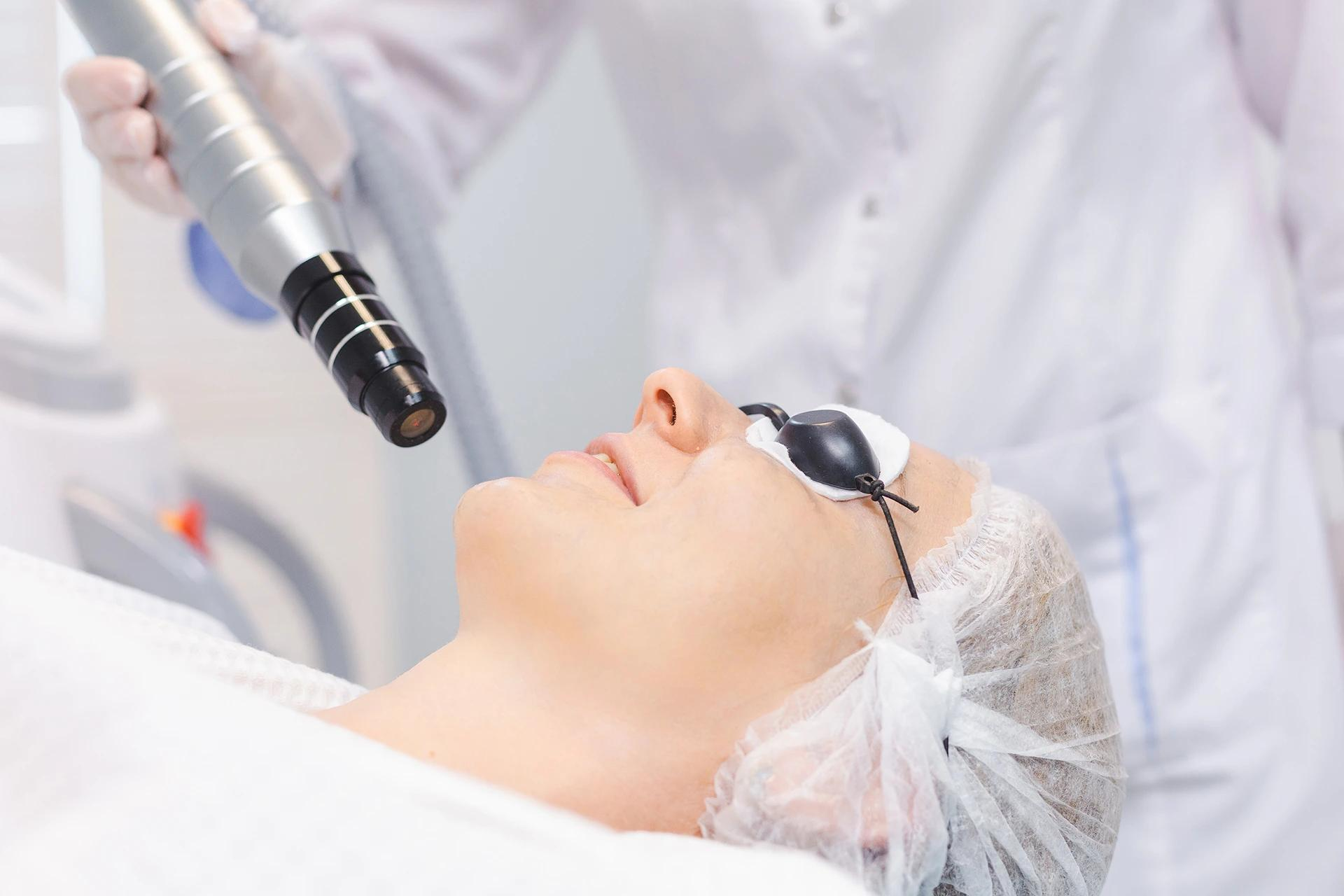
Laser medical applications refer collectively to the use of laser technology in medical diagnosis, treatment and aesthetics, and are one of the most important civil application areas of lasers. Because lasers have unique advantages such as good monochromaticity, strong directionality, concentrated energy and a wide selectable wavelength range, they can act precisely on specific tissues of the human body, achieving therapeutic effects difficult to reach with traditional surgical methods. From LASIK eye surgery to laser spot removal in dermatology, from dental treatment to the laser scalpel in surgery, lasers have become an indispensable tool in modern medicine.
2. Working Principle: How Is Laser Medicine Implemented?
The core of laser medicine is the interaction between laser light and biological tissue. Depending on the laser wavelength, power density and pulse width, the mechanisms are mainly divided into the following categories: photothermal effects are the most common mechanism—laser energy is absorbed by chromophores in tissue (such as hemoglobin, melanin and water) and converted into heat, and depending on the degree of temperature rise can achieve tissue coagulation, vaporization or cutting; photochemical effects use the high photon energy of ultraviolet lasers to directly break molecular bonds, precisely removing tissue with minimal thermal damage, the principle behind corneal refractive surgery; photomechanical effects use ultrashort pulses or Q-switched lasers to produce rapid thermal expansion and shock waves, mechanically shattering the target (such as stones or tattoo pigment particles) without damaging surrounding tissue; photodynamic effects involve first injecting a photosensitizer into the patient, then using a laser of a specific wavelength to activate it, producing toxic free radicals that kill diseased cells.
💡 An analogy
Laser medicine is like a precise light scalpel—an ordinary scalpel cuts through and damages surrounding tissue, while a laser scalpel can precisely control the depth and extent of its action, even treating deep lesions without breaking the skin surface, achieving minimally invasive or even non-invasive treatment.
In summary, laser medicine involves the intersection of optics, materials science and precision manufacturing. Mastering its basic principles and key parameters is the foundation for properly selecting and using related products.
3. Key Parameters: Understanding the Performance Indicators of Laser Medicine
Understanding laser medicine requires mastering the following key parameters, which directly determine product performance and application scenarios:
| Parameter Name | Meaning | Why It Matters |
|---|---|---|
| Laser Wavelength | Determines the absorption characteristics and penetration depth of the laser in tissue; different treatment targets need different wavelengths. | Light of different wavelengths has different absorption depths and mechanisms in tissue, directly determining treatment effectiveness and safety |
| Output Power / Energy | Determines the intensity of the action, from milliwatt-level diagnostic lasers to hundred-watt-level surgical lasers. | Affects treatment depth and intensity; too much power may damage normal tissue, too little gives insufficient effect |
| Pulse Width | Continuous-wave lasers suit cutting and coagulation, short pulses suit precise ablation, and ultrashort pulses enable ‘cold’ processing. | The shorter the pulse, the smaller the heat-affected zone; ultrashort-pulse lasers enable precise cutting with no thermal damage |
| Spot Size | Affects the size of the treatment area and the energy density; fine procedures need a small spot. | Affects the precision and extent of the treatment area; fine procedures need a small spot |
| Irradiation Time | Controls the extent of heat diffusion; short irradiation reduces thermal damage to surrounding normal tissue. | Directly affects laser performance and the choice of application scenarios |
The above parameters are interrelated and mutually constrained. In actual selection, a comprehensive trade-off among performance, cost, reliability and other aspects is needed according to specific application requirements.
For more product parameters or selection advice, please contact the Soar Laser technical team.
4. Main Types: What Kinds of Laser Medicine Exist?
Laser medicine can be classified in many ways, and different dimensions help us understand its characteristics from different angles. The following introduces the common classification methods one by one:
Ophthalmic Lasers
The earliest mature medical laser application, including excimer-laser corneal refractive surgery (LASIK, PRK, etc.), femtosecond laser flap creation and retinal photocoagulation, exploiting the good accessibility of eye tissue to light.
Dermatological Lasers
Extremely widely used, including tattoo removal, hair removal, spot removal, broken-capillary treatment, wrinkle removal and acne/scar treatment; selective photothermolysis is the core principle.
Surgical Laser Surgery
Laser used as a ‘light scalpel’ for tissue cutting and coagulation hemostasis, such as CO₂ laser scalpels and laser prostatectomy, characterised by less bleeding and high precision.
Dental Lasers
Used for drilling and grinding hard tooth tissue, soft-tissue surgery, root-canal treatment and teeth whitening.
Photodynamic Therapy (PDT)
Combines a photosensitizer and laser to treat certain cancers and skin diseases.
Diagnostic Lasers
Such as optical coherence tomography (OCT) and laser confocal microscopy, used for non-invasive imaging and examination.
Different types of laser medicine have their own characteristics and suitable scenarios. Actual selection requires comprehensive consideration of specific application needs, performance requirements and budget constraints. If in doubt, you can contact the Soar Laser technical team for professional selection advice.
5. Applications: Where Is Laser Medicine Used?
Laser medicine has a very wide range of applications, covering industrial manufacturing, scientific research, healthcare, communications and information, and many other fields. The following introduces several main aspects:
- Laser medicine has penetrated every clinical department. In ophthalmology, excimer and femtosecond laser surgery has helped tens of millions of people take off their glasses
- in dermatology, lasers of various wavelengths can treat almost all common skin and beauty problems
- in urology, holmium laser lithotripsy has become one of the standard treatments for urinary stones
- in cardiology, lasers are used for ablation of atherosclerotic plaque
- in oncology, laser interventional therapy and photodynamic therapy offer new treatment options for certain cancers. In addition, lasers play unique roles in gynecology, ENT, general surgery, neurosurgery and many other departments. Aesthetic medicine has further driven the continuous growth of the laser-equipment market.
Typical Application Scenarios in Detail
Scenario 1: Ophthalmic Treatment
excimer and femtosecond lasers are used for vision correction (LASIK, SMILE), and lasers are also used to treat glaucoma, cataracts, retinal diseases and other eye conditions.
Scenario 2: Skin Aesthetics
various laser devices are used for spot, mole and hair removal, wrinkle reduction and skin rejuvenation; the principle of selective photothermolysis acts precisely on the target tissue.
Scenario 3: Surgical Operations
laser scalpels are used for precise cutting and hemostasis, widely used in neurosurgery, ENT, dentistry and other fields, with less bleeding and high precision.
Scenario 4: Tumor Treatment
photodynamic therapy (PDT) and laser interstitial thermal therapy (LITT) are used for tumor treatment, causing little damage to surrounding normal tissue and precisely targeting the lesion.
6. Common Misconceptions
Many people have somewhat plausible but mistaken notions about laser medicine. See whether you fall into any of the following misconceptions:
Misconception 1: All laser treatments are ‘non-invasive.’
although many laser treatments are minimally invasive or even non-invasive, high-power surgical lasers also cause tissue damage; it is just that the trauma is relatively smaller and recovery faster
Misconception 2: Laser aesthetics has no risks.
if parameters are set improperly or procedures are not standardised, laser aesthetics can cause burns, hyperpigmentation, hypopigmentation or even scars; choosing a reputable medical institution and an experienced operator is very important
Misconception 3: The longer the wavelength, the deeper the penetration and the better the effect.
penetration depth is only one dimension of laser selection; more important is the selective absorption of the target tissue at a specific wavelength. Choosing the wrong wavelength not only gives a poor effect but may also damage normal tissue
Misconception 4: All laser medicine is non-invasive.
laser medicine has many modes, from non-invasive therapy to minimally invasive surgery to high-power laser surgery requiring an incision; the degree of trauma varies greatly. For example, vision surgery does not require a cut but actually removes corneal tissue, an invasive operation; laser spot removal also destroys the target tissue through selective photothermolysis, with a scabbing period afterward.
The above are several common misconceptions about laser medicine. In practical applications, comprehensive judgment is needed based on specific product parameters and use conditions. If in doubt, it is recommended to consult a professional technician.
Leave a Reply