


What Is Gain Fibre? The Special Fibre That Amplifies Light
Table of Contents
- 1. What Is Gain Fibre? Understanding the Core Concepts
- 2. Working Principle: How Does Gain Fibre Work?
- 3. Key Parameters: Understanding Gain Fibre Performance Indicators
- 4. Main Types: What Kinds of Gain Fibre Exist?
- 5. Applications: Where Is Gain Fibre Relevant?
- 6. Common Misconceptions
1. Core Concepts: What Is Gain Fibre?
Gain fibre, also called active fibre, is a special optical fibre whose core is doped with laser-active rare-earth ions (such as Yb, Er, Tm). It is both the laser gain medium and the optical waveguide—this “transmission and amplification in one” characteristic is gain fibre’s most unique advantage.
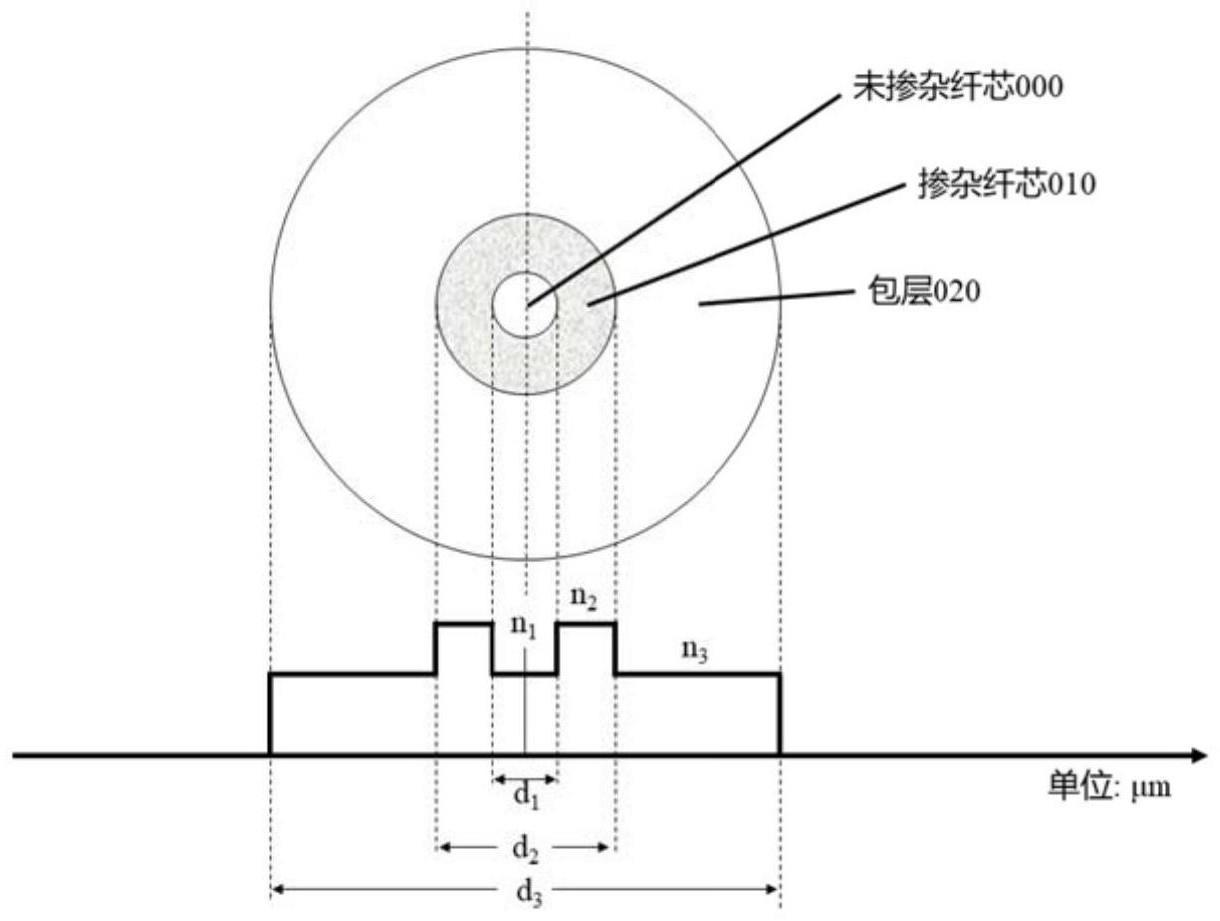
Gain fibre is the core component of fibre lasers and fibre amplifiers. Over the past two decades, fibre lasers, with their high efficiency, high beam quality, excellent heat dissipation and maintenance-free operation, have become the mainstream technology route in the industrial laser market—and the foundation of all this is the maturity of gain-fibre technology.
2. Working Principle: How Does Gain Fibre Work?
1. At the waveguide level—how light is confined
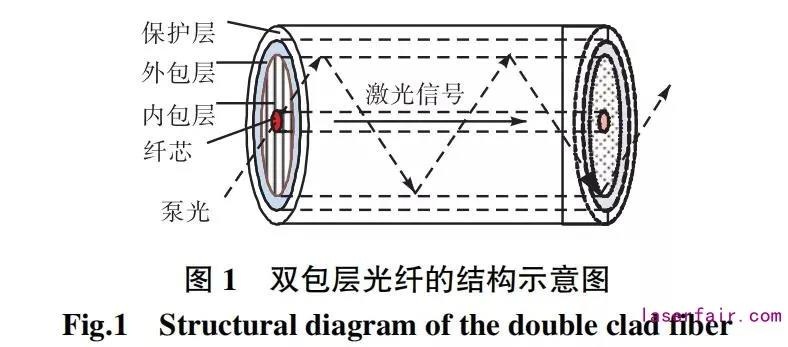
Gain fibre is essentially a special optical fibre, relying on total internal reflection to confine light in the core. In ordinary fibre the core and cladding are pure silica or similar materials, while gain fibre’s core is doped with rare-earth ions. For high-power fibre lasers a double-clad structure is usually used—the inner cladding guides pump light and the core guides signal light; as pump light propagates it repeatedly crosses the core and is absorbed by the doped ions.
2. At the gain level—how light is amplified
1. Pump light (usually a semiconductor laser) is coupled into the fibre and absorbed by rare-earth ions in the core, exciting them to higher levels. 2. The excited ions relax rapidly to the metastable upper level, forming population inversion. 3. As signal light (or spontaneous photons) propagates in the core, it stimulates upper-level ions to emit photons of the same frequency and phase as the signal, achieving amplification. Gain fibre’s greatest advantage lies in its elongated geometry: on one hand, the slender structure means an enormous surface-area-to-volume ratio and extremely efficient heat dissipation, naturally suited to high-power operation; on the other, gain can accumulate over a very long fibre length, so even with low gain per unit length the overall gain can be very large.
3. Key Parameters: Understanding Gain Fibre Performance Indicators
The core parameters are described below:
| Parameter Name | Meaning |
|---|---|
| Dopant Ion Species | Determines the operating wavelength. Yb³⁺ doping for 1 μm high-power lasers; Er³⁺ for 1.55 μm communication amplifiers; Tm³⁺ for the 2 μm band. |
| Doping Concentration | The number of active ions per unit volume. High concentration shortens fibre length, but too high causes concentration quenching and aggravates photodarkening. |
| Core Diameter and Numerical Aperture (NA) | Determine whether the fibre is single-mode or multimode and the beam quality. Single-mode cores are usually a few micrometres, with near-diffraction-limited beam quality; large-mode-area (LMA) fibres have thicker cores to raise power handling. |
| Cladding Size | In double-clad fibre, the inner-cladding size determines how much pump light can be coupled in—a key parameter for power scaling. |
| Absorption Coefficient | The fraction of pump light absorbed per unit length, directly affecting the required fibre length. |
| Gain Coefficient | The gain signal light acquires per unit length, depending on doping concentration, emission cross section and pump intensity. |
| Photodarkening Resistance | Measures how fast loss increases during long-term operation, an important factor in fibre lifetime. Phosphate-glass and Ce-co-doped fibres usually show weaker photodarkening. |
4. Main Types: What Kinds of Gain Fibre Exist?
Gain fibre can be classified in several ways, and different dimensions help us understand it from different angles. The common classification methods are introduced below:
By Dopant Ion
Yb-doped fibre
The absolute mainstream of high-power fibre lasers, operating at 1000–1100 nm, with high quantum efficiency and low thermal load
Er-doped fibre
The core amplifier of optical communications (EDFA), operating at 1530–1565 nm (C band)
Er/Yb co-doped fibre
Uses Yb as sensitizer to enhance Er’s pump absorption, for higher-power 1.5 μm lasers
Tm-doped fibre
Operates at 1.9–2.1 μm, an eye-safe band, used in medicine and sensing
Ho-doped fibre
Operates around 2.1 μm, eye-safe, suited to mid-infrared applications
Nd-doped fibre
An early fibre laser medium, now less commonly used
By Host Material
Silica-based fibre
Most mainstream, high mechanical strength, low loss and mature processing
Phosphate-glass fibre
High rare-earth solubility, enabling high-concentration short-length doping, with low nonlinearity
Fluoride fibre (e.g. ZBLAN)
Low phonon energy, suited to upconversion lasers and mid-infrared fibre lasers
Single-crystal fibre
A combination of crystal and fibre, with both the high thermal conductivity of crystal and the waveguide advantage of fibre
By Structure
Single-clad fibre
Low power, core-pumped
Double-clad fibre
High power, cladding-pumped, the current mainstream
Large-mode-area (LMA) fibre
Enlarged core area to raise the nonlinear threshold
Photonic crystal fibre
Air-hole structure allowing flexible design of mode field and dispersion
5. Applications: Where Is Gain Fibre Relevant?
Main application areas:
- Industrial cutting and welding: ten-kilowatt-class Yb-doped fibre lasers are the mainstay of the metal-processing market, replacing many traditional CO₂ and YAG lasers.
- Optical fibre communications: the erbium-doped fibre amplifier (EDFA) is the “signal refueling station” of optical communication systems; without EDFA, today’s long-haul fibre communications would be impossible.
- Laser marking and engraving: low-to-medium-power fibre lasers for marking, engraving and surface treatment of various materials.
- Medical field: Tm-doped fibre lasers for surgery (such as prostatectomy); Er-doped fibre lasers for dentistry and ophthalmology.
- Research and defence: ultrafast fibre lasers for scientific research; narrow-linewidth fibre lasers for coherent communications, sensing and LiDAR.
- 3D printing and additive manufacturing: high-power fibre lasers are one of the core light sources for metal 3D printing (SLM) equipment.
6. Common Misconceptions
Here are a few common misconceptions:
Misconception 1: ‘The longer the gain fibre, the higher the output power.’
longer is not always better. Excessive fibre length aggravates nonlinear effects (such as stimulated Brillouin and Raman scattering), limiting power and beam quality. Practical design must find the optimal balance among gain, nonlinearity and thermal management
Misconception 2: ‘Fibre lasers naturally have good beam quality.’
only single-mode or few-mode fibres guarantee diffraction-limited beam quality. Multimode fibre lasers have higher power but degraded beam quality. A trade-off remains between high power and high beam quality—LMA fibres exist to balance the two
Misconception 3: ‘Gain fibre can only be pumped by semiconductor lasers.’
in fact there is more than one pumping method. Although the vast majority of fibre lasers use semiconductor laser pumping today, some are pumped by other lasers, and early fibre amplifiers were pumped by other fibre lasers. Nevertheless, electrically pumped semiconductor lasers have become the absolute mainstream for their efficiency and low cost
Misconception 4: ‘All gain fibres are made of silica.’
silica fibre is the most common but not the only one. Phosphate-glass fibre, with high rare-earth solubility, has advantages in short-cavity single-frequency lasers and high-pulse-energy amplifiers; fluoride fibre, with low phonon energy, is essential for upconversion fibre lasers and some mid-infrared fibre lasers
Leave a Reply