


What Are Laser Safety Glasses? How to Read Optical Density (OD) and Choose Correctly – this article systematically introduces the core concepts of laser safety glasses, how they work, OD calculation and selection, main types, application scenarios and common misconceptions, helping you understand laser eye protection in one read.
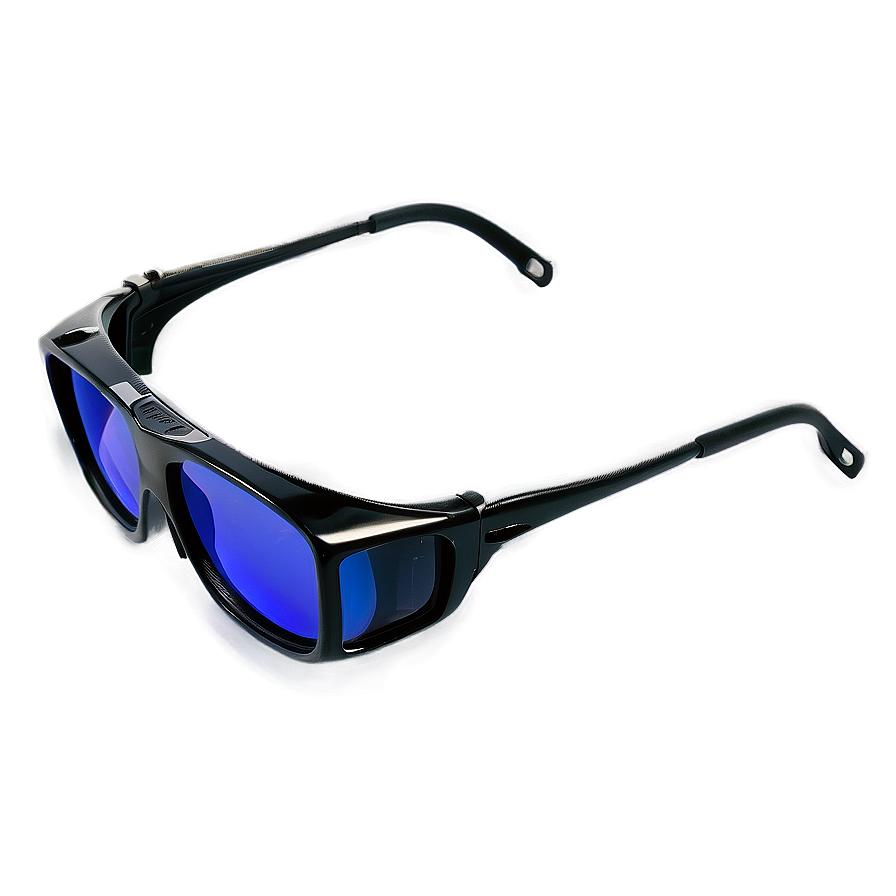
Table of Contents
- I. What Are Laser Safety Glasses? Clarifying the Core Concept
- II. How They Work: How Do Safety Glasses Block Laser Light?
- III. Optical Density (OD): The Core Metric of Protection
- IV. Key Parameters: Understanding Performance Specs
- V. Main Types: What Kinds of Laser Safety Glasses Exist?
- VI. How to Choose: Calculating Required OD from Laser Parameters
- VII. Application Scenarios: Matching Goggles to Different Settings
- VIII. Common Misconceptions: Pitfalls to Avoid
I. Core Concept: What Are Laser Safety Glasses?
Laser safety glasses are the most commonly used personal protective equipment in laser safety. Through special filter materials they absorb or reflect laser light at specific wavelengths, attenuating incident intensity to a safe level (below the MPE), thereby protecting the eyes from laser injury. They are the last line of defence in laser safety’s three-level protection – when engineering controls and administrative measures cannot fully eliminate risk, goggles are the ultimate safeguard of vision.
For salespeople, goggles are the highest-volume and highest-repeat-purchase product in the laser safety category, and an important lever for maintaining ongoing customer contact. Selling lasers is a one-time deal; selling goggles is a long-term business. And the most core skill in choosing goggles is understanding and calculating optical density (OD).
II. How They Work: How Do Safety Glasses Block Laser Light?
The core of laser safety glasses is the filter lens, which attenuates laser light mainly through two mechanisms:
- Absorptive type: specific dyes are added to glass or plastic; dye molecules selectively absorb photons at the target wavelength, converting light energy into heat that is dissipated. Advantage: insensitive to incidence angle – light from the side is also effectively blocked.
- Reflective type: uses multilayer dielectric films (dielectric coatings) based on Bragg reflection, so light at a specific wavelength undergoes constructive interference in the film layers and is reflected back. It handles higher power density, but the drawback is that protection depends on incidence angle – if the angle is off, the reflected wavelength shifts and protection weakens.
Real products often combine both technologies, balancing wide-angle and high-power tolerance. Whether absorptive or reflective, the final protective capability is measured by the same metric – optical density (OD).
III. Optical Density (OD): The Core Metric of Protection
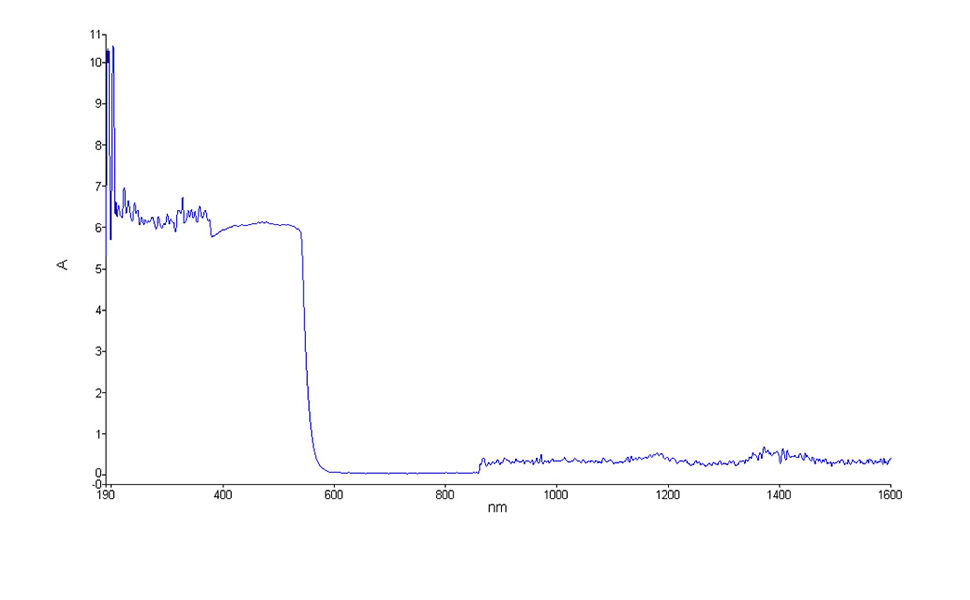
Optical Density (OD) is a logarithmic measure of how strongly an optical material attenuates light, and the most core performance parameter of laser protection products. Simply put, OD tells us “how many times this lens can weaken the light.”
3.1 The OD Definition Formula
The OD definition formula is:
OD = log₁₀(Pin / Pout)
That is, the base-10 logarithm of the ratio of incident to transmitted optical power. Because it is a logarithmic scale, every increase of 1 in OD reduces transmitted light to one-tenth.
| OD value | Transmittance | Attenuation factor | Protection level |
|---|---|---|---|
| OD 1 | 10% | 10× | Low protection (for alignment) |
| OD 2 | 1% | 100× | Low protection |
| OD 3 | 0.1% | 1,000× | Medium protection |
| OD 4 | 0.01% | 10,000× | Medium-high protection |
| OD 5 | 0.001% | 100,000× | High protection |
| OD 6 | 0.0001% | 1,000,000× | High protection |
| OD 7 | 0.00001% | 10,000,000× | Very high protection |
The greatest benefit of the logarithmic representation is additivity: stacking two OD 3 filters gives a theoretical total OD of 6, i.e. one million-fold total attenuation – very convenient for calculation.
3.2 Three Key Characteristics of OD
- Wavelength dependence: an OD value always applies to a specific wavelength. A pair of goggles rated OD 7+ at 1064 nm may be only OD 1 or lower at 532 nm. Goggles with the wrong wavelength are no better than wearing none.
- Incidence-angle effect: for dielectric-film reflective filters, if the incidence angle is off, the reflection peak wavelength shifts and OD drops accordingly. Oblique-incidence scenarios must confirm the actual OD at the given angle.
- Pulse-duration effect: for ultrashort pulses (femtosecond/picosecond), some absorbing dyes exhibit saturable absorption (photobleaching), so the actual OD may be lower than the nominal value and requires special verification. Femtosecond lasers require dedicated goggles validated for ultrashort pulses.
💡 Note the distinction: the term “OD” also has a completely different meaning – in refractive optics, the “optical density” of an “optically dense medium” also uses the word optical density, but that refers to refractive index and has nothing to do with attenuation. Don’t confuse them.
IV. Key Parameters: Understanding Performance Specs
| Parameter name | Meaning | Why it matters |
|---|---|---|
| Protection wavelength | The wavelength range over which the lens provides effective attenuation | The most critical parameter; must precisely match the customer’s laser wavelength – a difference of a few tens of nanometres can drop OD by orders of magnitude |
| Optical density (OD) | Logarithmic metric of attenuation capability | Core metric of protection, calculated from incident intensity and MPE |
| Visible light transmission (VLT) | The fraction of visible light transmitted | Affects wearing comfort and work efficiency; too low VLT (e.g. <20%) darkens the field of view and increases accident risk |
| Damage threshold | Maximum power density the lens can withstand | Above this value the lens may crack, melt or even be punctured; must be checked for high-power scenarios |
| Protection level standard | Certifications such as EN 207, ANSI Z136 | Certification marks are a quality guarantee of protection performance and a compliance requirement |
V. Main Types: What Kinds of Laser Safety Glasses Exist?
By filtering principle:
- Absorptive type: dye glass or plastic, angle-insensitive, for low-to-medium power
- Reflective type: dielectric film, for high power but angle-sensitive
- Combined type: absorption + reflection, balancing wide angle and high-power tolerance
By lens material:
- Glass filter: heat-resistant, scratch-resistant, high visible transmission, but heavy and fragile
- Plastic filter: polycarbonate etc., light and impact-resistant, but easily scratched, poor heat resistance, dyes may age
By function:
- Full-protection type: provides complete OD protection; never look directly at the laser
- Alignment goggles: lower OD (usually OD 1-3), attenuating only to Class 2 or 3R level, for beam alignment of visible beams, requiring LSO approval
- Prescription goggles: custom made with corrective lens power
- Fitover style: can be worn over ordinary eyeglasses
VI. How to Choose: Calculating Required OD from Laser Parameters
Choosing goggles is not about the highest OD – calculate how much OD you actually need from the real laser parameters, then pick a model that just meets it with the highest possible VLT. The steps:
- Step 1: Determine laser parameters – wavelength, power/energy, beam diameter, pulse width, repetition rate
- Step 2: Determine exposure conditions – distance (determines spot size), exposure duration, incidence angle
- Step 3: Look up the MPE value – find the maximum permissible exposure at the corresponding wavelength and exposure time from the standard (e.g. EN 207 / ANSI Z136)
- Step 4: Calculate required OD – OD ≥ log₁₀(incident irradiance / MPE), rounded up
- Step 5: Check damage threshold – confirm the lens withstands that power density without being punctured
- Step 6: Select the style – among products meeting OD and wavelength requirements, choose the highest VLT and most comfortable
Example: a 1064 nm fibre laser, 50 W power, 5 mm beam diameter, 30 cm working distance. First compute irradiance, then look up MPE; assuming incident intensity is 5000 times the MPE, log₁₀(5000) ≈ 3.7, so at least OD 4 goggles are needed.
💡 Sales tip: proactively help customers calculate the required OD – plug in laser parameters (wavelength, power, beam diameter) and use conditions (distance, exposure time), compute the MPE, then derive the OD. Such a recommendation is both professional and credible, and hard for the customer to refuse.
VII. Application Scenarios: Matching Goggles to Different Settings
- Research laboratories: often multiple wavelengths in use together, needing multi-band protection goggles; frequent optical alignment makes comfort and VLT important – uncomfortable goggles get secretly removed, increasing risk
- Industrial processing workshops: harsh environment, needing high damage threshold, scratch-resistant, well-sealed goggles to prevent side light leakage
- Medical aesthetics: both operator and patient need protection – eye masks or shields for the patient, goggles for the operator, considering aesthetics and patient experience
- Outdoor use: anti-fog, UV-resistant, light and comfortable styles
VIII. Common Misconceptions
Many people have fuzzy ideas about laser safety glasses and OD values. See if you fall into any of these traps:
Myth 1: “One pair of goggles protects against all lasers”
Wrong. Goggles are wavelength-specific; a pair for 1064 nm may offer almost no protection at 532 nm. You must choose strictly by laser wavelength.
Myth 2: “The higher the OD, the darker the lens”
Not necessarily. OD applies to a specific protection wavelength; visible-band transmission (VLT) has no necessary relation to OD at the protection wavelength. Good goggles can achieve “OD 7+ at the laser wavelength while still bright in visible light.”
Myth 3: “OD 6 marked means OD 6 at all times”
Wrong. OD depends on wavelength, incidence angle and pulse width. Nominal values are measured under specific conditions; change the conditions and OD changes.
Myth 4: “The higher the OD, the better”
No. Enough OD is sufficient; excessive OD lowers visible transmission, impairs vision and actually increases accident risk. The best choice is “just meeting safety requirements with VLT as high as possible.”
Myth 5: “Two OD 3 together make OD 6”
Theoretically yes, but in practice reflection, scattering and other factors may make it slightly less than 6. And if stacking the same filter, consider thermal effects and damage threshold – two stacked lenses concentrate heat and may fail faster.
Myth 6: “Goggles protect against any laser power”
Dead wrong. All goggles have a damage threshold; direct kilowatt-class laser light can instantly puncture the lens. In high-power scenarios goggles only protect against diffuse reflection and stray light – main-beam protection must rely on engineering isolation.
Myth 7: “Femtosecond and ordinary lasers use the same goggles”
Wrong. Ultrashort pulses can cause saturable absorption (photobleaching) in dyes, making OD drop instantaneously. Femtosecond lasers require dedicated goggles validated for ultrashort pulses.
📚 Reference sources:
- RP Photonics Encyclopedia: Laser Safety Goggles – principles and selection of laser safety glasses
- RP Photonics Encyclopedia: Optical Density – optical density definition and characteristics
📚 This article draws on professional content from RP Photonics Encyclopedia, rewritten in Chinese by the Soar Laser team.
🔗 Related products:
Fibre lasers | Photodetectors | Ultrafast lasers
📖 More knowledge:
Back to Laser Encyclopedia home
Leave a Reply