


The Difference Between IEC and GB Laser Safety Standards
The Difference Between IEC and GB Laser Safety Standards – this article systematically introduces the core concepts, working principles, key parameters, main types, application scenarios and common misconceptions of laser safety standards, helping you fully understand this important topic in laser safety.
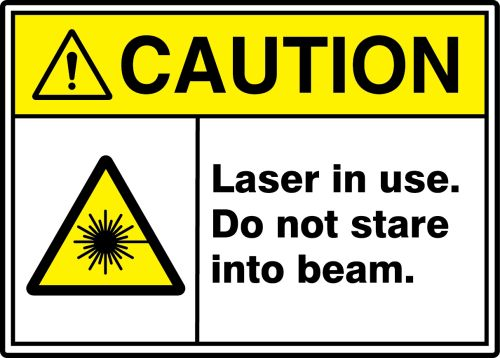
Table of Contents
- I. What Are Laser Safety Standards? Clarifying the Core Concept
- II. Working Principle: How Are Laser Safety Standards Implemented?
- III. Key Parameters and Metrics
- IV. Main Types: What Kinds of Laser Safety Standards Exist?
- V. Application Scenarios: Where Are Laser Safety Standards Used?
- VI. Common Misconceptions: Pitfalls to Avoid
I. Core Concept: What Are Laser Safety Standards?
II. Core Content and Mechanism
To understand how laser safety standards work, it can be broken down into several key steps or mechanisms. Its core mechanism can be understood at the following levels:
The logic behind laser safety standards is: derive MPE (Maximum Permissible Exposure) from biomedical research, then combine it with worst-case use assumptions (distance from eye to aperture, exposure duration, whether optical instruments are used, etc.) to calculate AEL (Accessible Emission Limit), then classify lasers by AEL, and finally specify corresponding safety measures, marking requirements and test methods for each class. Standards are developed by international / national standardisation organisations, published after broad consultation and expert review, and usually updated every few years to incorporate the latest scientific findings and technological advances. A standard is not itself law, but many countries turn its content into mandatory requirements through legislation, giving it legal force.
III. Key Parameters and Metrics
To understand laser safety standards, knowing concepts and principles is not enough – you must also understand its key parameters. The following are the core parameters and their significance:
| Parameter name | Meaning | Why it matters |
|---|---|---|
| Laser classification system | Defines how many classes exist, the AEL of each class and how testing determines class | Different standards use different classes and naming systems, directly affecting product safety marking and use requirements |
| Safety marking requirements | Specifies the style, size, colour and text content of warning signs, and the information that must appear on product labels (wavelength, power, class, etc.) | Warning signs are the first visual cue of risk and an intuitive reflection of product compliance; labeling requirements differ among standards |
| Protective measure requirements | Specifies requirements for engineering controls, interlocks, protective enclosures, etc. for different classes | Signs are an intuitive reflection of product compliance; differing requirements mean different label and manual content |
| Test methods | Specifies how to measure laser output parameters and how to determine class, ensuring comparable results across manufacturers | Determines test conditions and procedures for class assessment, affecting result consistency and comparability |
| User guide | Specifies the safety information that should be included in product documentation | A standardised user guide is a prerequisite for safe use, reduces misuse risk and is a necessary part of product compliance |
IV. Core Points in Detail
The three most mainstream standard systems worldwide. IEC 60825 series (International Electrotechnical Commission): the internationally accepted standard, of which IEC 60825-1 is the most core “Safety of laser products – Equipment classification and requirements”; the current version is IEC 60825-1:2014 Edition 3, using the seven-level classification 1/1M/2/2M/3R/3B/4. Europe adopts it directly as EN 60825. ANSI Z136 series (American National Standards Institute): the US standard for safe laser use, with Z136.1 being the core “American National Standard for Safe Use of Lasers,” latest version Z136.1-2022, aimed at users rather than manufacturers and focused more on safety management in use. FDA/CDRH (US Food and Drug Administration): the US product regulation, see 21 CFR 1040.10, using the older I/IIa/II/IIIa/IIIb/IV classification, but has partially accepted IEC 60825-1 through Laser Notice No. 56. There are also sub-standards for specific applications, such as IEC 60825-2 (optical fibre communication) and ISO 11553 (laser processing machinery).
V. Application Scenarios: Where Are Laser Safety Standards Used?
- Knowledge of standards has many applications in sales. Export-oriented customers care most about which country’s standard their product complies with – for example, export to Europe requires CE certification (based on IEC/EN 60825), and export to the US requires FDA certification. Industrial customers, when doing safety assessments, need to build a safety management system based on ANSI Z136 or national standards. Medical customers face stricter regulation and have the highest compliance requirements. Salespeople can proactively provide standard-compliance explanations and supporting documents based on the customer’s target market and industry – often the key to winning the order. Moreover, when a customer worries “are your products compliant,” presenting an IEC 60825-1 test report or CE certificate is more convincing than saying “we are safe” a hundred times.
👉 Want to learn more about real-world applications of laser safety standards? Visit Soar Laser’s application case page, or contact our technical team directly for professional advice.
VI. Common Misconceptions
Many people have fuzzy ideas about laser safety standards. See if you fall into any of these traps:
Myth 1: “Compliance with IEC 60825 means global acceptance”
Not necessarily. Regulations differ by country – IEC standards are adopted directly in Europe, but the US has additional FDA requirements, China has GB 7247.1, and Japan has JIS; it cannot be generalized.
Myth 2: “The standard version doesn’t matter”
It matters a lot. Standards are updated and classification limits and requirements may differ between old and new versions. When a customer asks “which standard do you comply with,” state the version number too – e.g. “complies with IEC 60825-1:2014.”
Myth 3: “Laser classes are globally unified”
Not entirely. Although the IEC system is widely accepted, the US FDA still has its own Roman-numeral classification (I/II/III/IV) that does not correspond exactly to IEC’s Arabic-numeral system (1/2/3/4) and cannot be equated directly.
Reference source:RP Photonics Encyclopedia
Leave a Reply