


Imagine using a laser to drill a perfect microhole in a glass thinner than a human hair, with edges as smooth as a mirror and no crack or burn mark around it – this is not science fiction, but something ultrafast lasers do every day.
From cutting phone screen glass to precision drilling of cardiac stents, from ophthalmic surgery to chip failure analysis, ultrafast lasers are redefining the boundaries of precision manufacturing with “cold processing.” Today we talk about the “fastest” member of the laser family – the ultrafast laser.
Table of Contents
- I. Core Concepts: What Is an Ultrafast Laser?
- II. How It Works: How Are Femtosecond Pulses Generated?
- III. Key Parameters: 8 Metrics to Check When Selecting
- IV. Types: Which Members Are in the Ultrafast Laser Family?
- V. Applications: Where Are Ultrafast Lasers Used?
- VI. Common Misconceptions: Beliefs That May Be Wrong
I. Core Concepts: What Is an Ultrafast Laser?
An ultrafast laser is a pulsed laser whose output pulse width is on the order of picoseconds (ps, 10^-12 s) to femtoseconds (fs, 10^-15 s), or even attoseconds (as, 10^-18 s). The relationship among the three is: 1 picosecond = 1000 femtoseconds = 1,000,000 attoseconds. Its “ultrafast” meaning is not that light travels faster, but that the pulse duration is extremely short – one femtosecond is a quadrillionth of a second, and light travels only 30 micrometres in 100 femtoseconds.
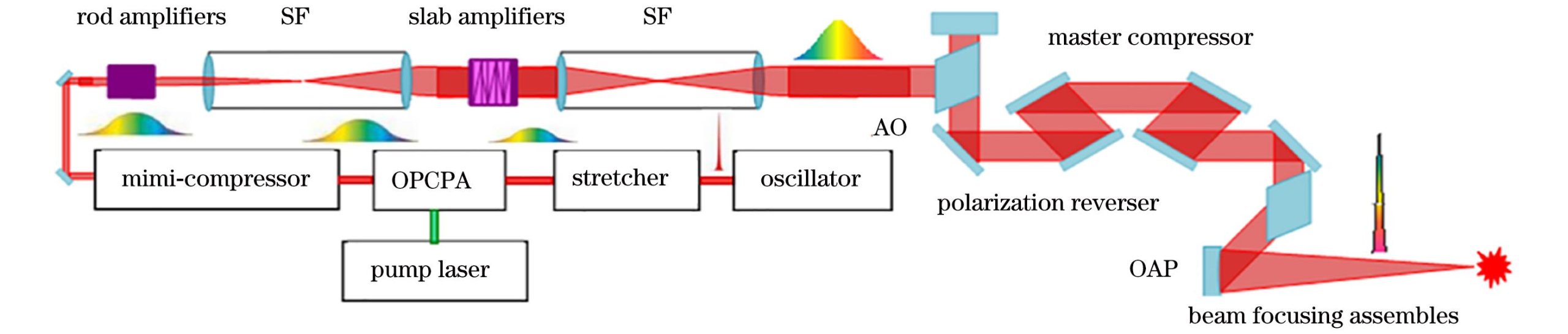
Ultrafast lasers have two most essential characteristics:
- Extremely high peak power: although pulse energy is small (microjoules to millijoules), because the time is extremely short, peak power can reach the megawatt (MW) or even terawatt (TW) level, enough to trigger various nonlinear optical effects.
- Extremely broad spectral bandwidth: by the uncertainty relation of the Fourier transform, the narrower in the time domain, the broader in the frequency domain. A 100-femtosecond pulse at 1064 nm corresponds to a spectral width of about 12-17 nm (transform limit about 15 nm for Gaussian pulses, about 12 nm for sech2 pulses), and a 10-fs pulse can reach tens of nanometres.
The core technology of ultrafast lasers is mode locking, which forces the longitudinal modes in the resonator to lock in phase, making millions of frequencies of light “march in step” and superpose into an extremely short pulse. To obtain high-energy femtosecond pulses, chirped pulse amplification (CPA) is also needed – first stretch, then amplify, then compress, to avoid high peak power damaging optical components.
II. How It Works: How Are Femtosecond Pulses Generated?
1. Mode Locking: The “Source” of Ultrashort Pulses
Mode locking is the fundamental mechanism for generating ultrashort pulses. A resonator contains many longitudinal modes (frequency spacing = c/2L); in free running their phases are random and the output is continuous light. Mode-locking technology forces these modes to maintain a fixed phase relationship, so they coherently superpose in the time domain, forming an extremely short pulse every cavity round-trip time.
- Active mode locking: uses an acousto-optic modulator (AOM) or electro-optic modulator (EOM) to periodically modulate cavity loss, producing ps-level pulses. Pulse width is limited by the modulator response speed, usually tens of picoseconds.
- Passive mode locking: uses a saturable absorber or Kerr-lens effect to achieve self-starting mode locking, producing femtosecond pulses. The advantage of passive mode locking is that “the shorter the pulse, the faster the modulation,” with no limit from electronics speed. Two mainstream techniques: (1) SESAM (semiconductor saturable absorber mirror): a mirror with a semiconductor quantum-well structure, whose absorption saturates and transmittance rises at high intensity, achieving passive mode locking. Advantages are reliable startup, simple structure, high stability, making it the mainstream scheme for industrial ultrafast lasers. (2) KLM (Kerr-lens mode locking): uses the Kerr nonlinearity of the gain medium to form an equivalent “fast saturable absorber,” with extremely fast response (femtosecond level), producing shorter pulses. Ti:sapphire femtosecond lasers commonly use KLM, but it needs careful cavity alignment and is sensitive to the environment.
- Hybrid mode locking: uses active and passive methods together, balancing stability and short pulse width.
2. Chirped Pulse Amplification (CPA): The Key to High-Energy Ultrashort Pulses
CPA technology, invented in 1985 by Donna Strickland and Gérard Mourou (Nobel Prize in Physics 2018), solved the problem of opticalcomponent damage caused by directly amplifying femtosecond pulses.
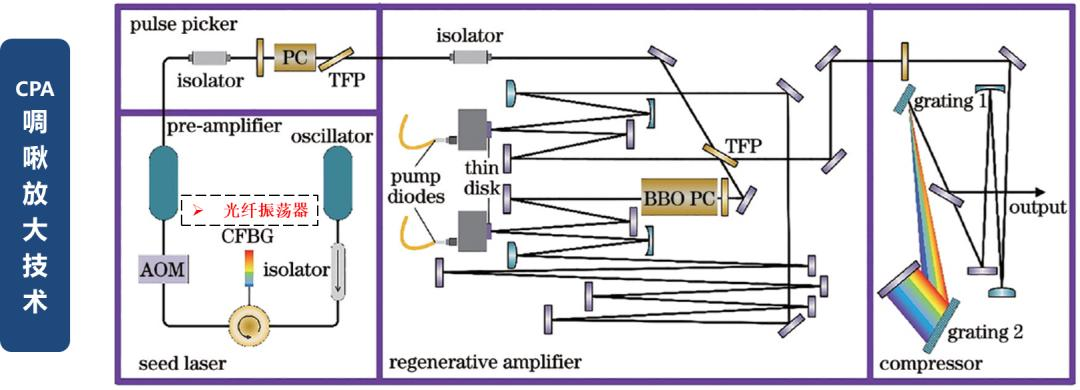
Classic three-stage architecture:
- Stretcher: uses dispersive elements (grating pair or chirped fibre Bragg grating) to stretch the femtosecond pulse in time to hundreds of ps or ns, lowering peak power by hundreds to tens of thousands of times.
- Amplifier: safely amplifies pulse energy at low peak power, commonly using Yb-doped fibre amplifiers or crystal amplifiers.
- Compressor: uses elements with dispersion opposite to the stretcher to recompress the pulse back to the femtosecond level, restoring high peak power.
3. Typical Ultrafast Laser System Composition
A complete industrial ultrafast laser system usually includes: mode-locked seed source (oscillator) → pulse picker → pre-amplifier → main amplifier (regenerative or multipass amplifier) → pulse compressor → output coupling and diagnostics module.
III. Key Parameters: 8 Metrics to Check When Selecting
| Parameter | Typical Range | Description |
|---|---|---|
| Pulse width | 50fs~50ps | Shorter pulse means smaller heat-affected zone, but a more complex system |
| Repetition rate | 10kHz~100MHz | Low frequency with high energy suits drilling/cutting; high frequency suits surface treatment |
| Average power | 1 W to 100 W (industrial) | Core metric determining processing efficiency |
| Single-pulse energy | nJ~mJ | Determines material removal per pulse |
| Peak power | MW~GW | Determines strength of nonlinear effects |
| Centre wavelength | 1030/1064 nm, 800 nm, etc. | Matched to material absorption characteristics |
| Beam quality M2 | ≈1 is best | Affects focused spot size and machining precision |
| Pulse contrast | >10^6:1 is preferred | Ratio of main peak to prepulse intensity, affects machining quality |

By the uncertainty principle of the Fourier transform, the product of pulse duration Δt and spectral bandwidth Δν has a lower limit (1/2 for root-mean-square widths). This means the shorter the pulse, the broader the required spectral bandwidth. A pulse reaching this limit is called a “transform-limited pulse,” with the most compact time- and frequency-domain distributions.
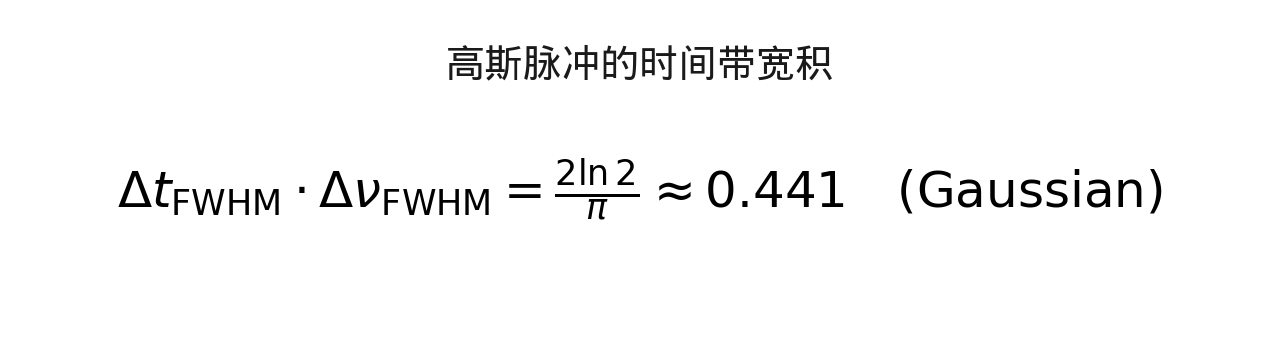
For a Gaussian pulse, if both pulse width and bandwidth are defined by full width at half maximum (FWHM), the time-bandwidth product is 2ln2/pi ≈ 0.441. This is a common benchmark for judging whether a pulse is near the transform limit – if the measured time-bandwidth product is close to 0.441, the pulse quality is good; if far larger, the pulse has significant chirp.
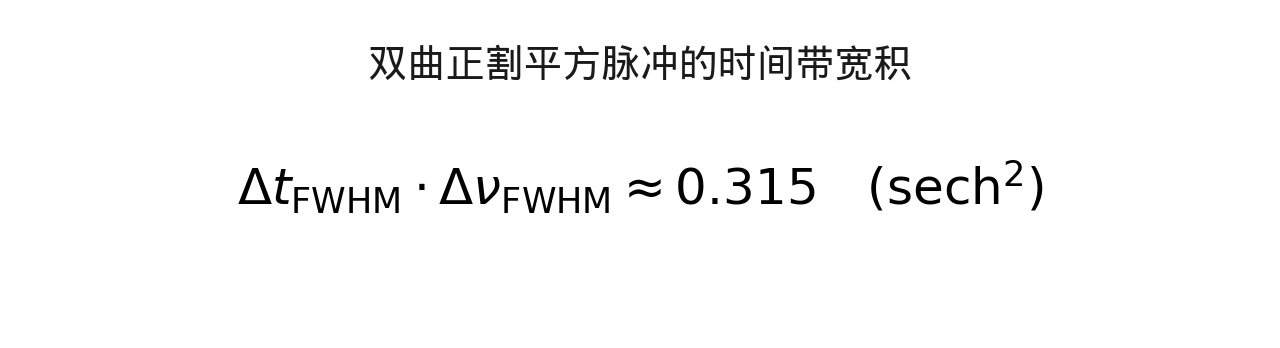
The more common pulse shape in mode-locked lasers is hyperbolic secant squared (sech2), whose time-bandwidth product is about 0.315 (FWHM definition), smaller than a Gaussian pulse. Pulses from Ti:sapphire femtosecond lasers, fibre mode-locked lasers, etc. are usually close to the sech2 shape.

Peak power Ppeak equals pulse energy Ep divided by pulse width τp, and also equals average power Pavg divided by (repetition rate frep × pulse width τp). This is one of the core advantages of ultrafast lasers: even with only a few watts of average power, as long as the pulse width is short enough (e.g. 100 fs), peak power can reach the megawatt or even gigawatt level, enough to trigger various nonlinear optical effects.
💡 Selection parameter trade-offs
The core parameters of ultrafast lasers have trade-off relationships; selection requires balanced consideration:
- Pulse width vs efficiency/cost: shorter pulse width demands higher gain bandwidth, a more complex system, and higher cost. For most metal processing, 10-30 ps picosecond lasers are already sufficient.
- Repetition rate vs single-pulse energy: average power = single-pulse energy × repetition rate. At fixed power, raising repetition rate lowers single-pulse energy, and vice versa. Deep-hole drilling/cutting needs high pulse energy (low repetition rate); surface treatment/marking suits high repetition rate.
- Average power vs beam quality: high-power amplifiers often have slightly degraded beam quality; choose according to machining precision requirements.
- Wavelength vs material absorption: different materials absorb different wavelengths very differently. 1030/1064 nm suits metals and most materials; 355 nm UV suits polymers and glass; green light suits semiconductor wafers.
IV. Types: Which Members Are in the Ultrafast Laser Family?
By pulse width
- Picosecond laser (ps laser): pulse width 1-100 ps, balancing machining quality and efficiency, the current mainstay of industrial micromachining. Relatively simple structure, high reliability.
- Femtosecond laser (fs laser): pulse width <1 ps (typically 100 fs to 800 fs), true “cold processing,” with a nearly zero heat-affected zone. Suited to hard and brittle materials such as glass, sapphire, and ceramics.
- Sub-femtosecond/attosecond laser: pulse width entering the attosecond (10^-18 s) realm, currently mainly for basic scientific research.
By gain medium
- Ti:sapphire laser (Ti:Sapphire): extremely wide gain bandwidth (about 200 nm), can produce pulses shorter than 10 fs, a classic scheme for research labs. But low efficiency and large size, with limited industrial use.
- Yb-doped solid-state/fiber laser: centre wavelength ~1030 nm, high efficiency, good power scalability, the current mainstream technology route for industrial ultrafast lasers.
- Er-doped fibre laser: centre wavelength ~1550 nm, eye-safe, mainly used for communication, sensing, and frequency combs.
- Thin-disk ultrafast laser: uses thin-sheet crystal as gain medium, good heat dissipation, high power, suited to high-average-power ultrafast applications.
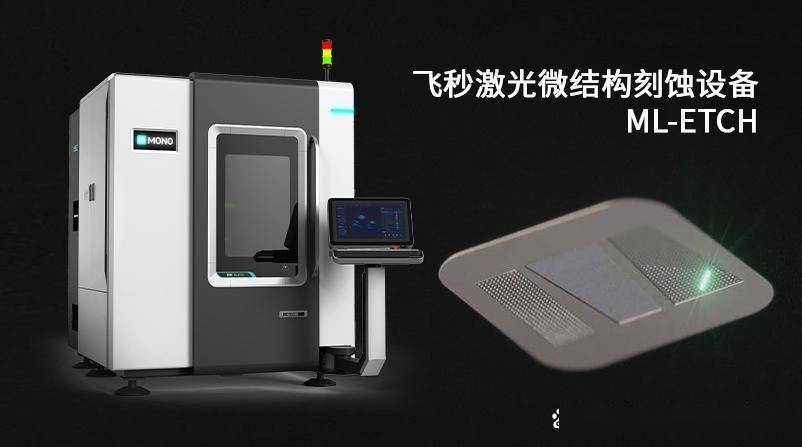
V. Applications: Where Are Ultrafast Lasers Used?
1. Precision Micromachining (“Cold Processing”)
The action time of an ultrashort pulse is far shorter than the heat-diffusion time (material heat diffusion is typically ps to ns), so under a single pulse the material is directly vaporized/ionized and removed before heat can spread out; thus at normal repetition rates the heat-affected zone is extremely small, often called “cold processing”. But note: at high repetition rates or high single-pulse energy, heat between pulses cannot fully dissipate, so heat accumulation still occurs and machining quality degrades. Practical applications need to balance processing efficiency and heat impact. Typical applications include:
- Sapphire/glass cutting (phone screens, watch crystals)
- Flexible OLED lift-off and cutting
- Solar cell etching (PERC cell grooving)
- Precision cutting of cardiac stents (medical)
- Wafer dicing and chip failure analysis
- Microstructure machining (microfluidic chips, MEMS)
2. Biomedicine and Multiphoton Imaging
Femtosecond near-infrared laser penetrates deep into biological tissue; using two-photon/three-photon absorption, it can excite fluorescence at the focus, enabling three-dimensional deep imaging without physical sectioning. Applications include brain science research, ophthalmic SMILE all-femtosecond surgery, skin aesthetics, etc.
3. Terahertz (THz) Technology
Femtosecond pulses generate 0.1-10 THz coherent terahertz radiation via photoconductive antennas or optical rectification, used for security imaging, nondestructive testing, and material characterisation.
4. Optical Frequency Combs and Precision Metrology
The spectrum of a mode-locked laser is an equally spaced comb of lines, i.e. an “optical frequency comb” (Nobel Prize in Physics 2005). A frequency comb is like an “optical ruler,” used for optical clocks, high-precision spectral analysis, and absolute distance measurement.
5. Ultrafast Spectroscopy and Fundamental Science
Using pump-probe techniques with time resolution down to tens of femtoseconds, ultrafast processes such as photosynthesis, semiconductor carrier dynamics, and chemical reaction intermediates are studied.
VI. Common Misconceptions: Beliefs That May Be Wrong
Myth 1: “An ultrafast laser is a femtosecond laser”
Wrong. Ultrafast laser is a broad category covering picosecond, sub-picosecond, femtosecond, and even attosecond pulses. Femtosecond is only a subclass of ultrafast lasers; picosecond lasers are also ultrafast. In practical selection, picosecond lasers offer better value in many metal-processing scenarios.
Myth 2: “The shorter the pulse width, the better the machining result”
Not necessarily. Shorter pulse width does mean a smaller heat-affected zone, but processing efficiency is usually lower, and femtosecond systems are more complex and expensive. For most metal processing, 10-30 ps picosecond lasers already give good quality. Only hard and brittle materials (glass, sapphire) or extremely high-precision scenarios require femtosecond.
Myth 3: “The ‘fast’ in ultrafast means fast processing speed”
Wrong. “Ultrafast” refers to the extremely short pulse duration, not fast processing speed. In fact, ultrafast laser processing with limited single-pulse energy may be slower than high-power nanosecond lasers. The core advantage of ultrafast lasers is processing quality (high precision, small heat impact), not processing speed.
Myth 4: “All ultrafast lasers need CPA technology”
Wrong. Low-energy mode-locked oscillators output femtosecond pulses directly and do not need CPA. CPA is only needed when amplifying pulse energy, to protect optics from damage by high peak power. Pulses from ordinary oscillators are usually only nan joule or even picojoule level.
Myth 5: “Ultrafast lasers can only process transparent materials”
Wrong. The high peak power of ultrafast lasers triggers nonlinear absorption (multiphoton absorption, tunneling ionization, etc.), so even transparent materials (glass, sapphire) absorb energy effectively and can be processed. But this does not mean they can only process transparent materials – metals, semiconductors, and polymers can also be processed with ultrafast lasers, with quality better than nanosecond lasers.
Myth 6: “The higher the repetition rate, the higher the processing efficiency”
Not entirely. Average power = pulse energy × repetition rate; at fixed power, raising repetition rate lowers single-pulse energy. If single-pulse energy falls below the material ablation threshold, no repetition rate can process effectively. An optimal balance between pulse energy and repetition rate must be found for the specific material and process.
References
- RP Photonics Encyclopedia – Mode Locking, Ultrashort Pulses (https://www.rp-photonics.com)
- Nature – Ultrafast lasers—reliable tools for advanced materials processing
- Scientific Reports – High-fidelity chip delayering using green femtosecond lasers
- Xiaoxiao Photonics – “Ultrafast Lasers: The Precision Manufacturing Revolution from Mode-Locked Pulses to Chirped Pulse Amplification”
Related Reading
- Q-Switching Technology Explained
- Mode-Locking Technology Principles
- Fibre Lasers Explained
- Solid-State Laser Starter Guide
Want to learn more about lasers? Browse the Soar Laser Encyclopedia to systematically study laser principles and applications.
Leave a Reply