


What Is Laser Cutting? Why It Is More Precise Than Traditional Cutting
Laser cutting is an important concept in laser technology, widely used in industrial manufacturing, scientific research and healthcare. This article systematically introduces the core concepts, working principles, key parameters, main types and typical applications of laser cutting, helping readers build a complete knowledge framework.
Table of Contents
- 1. What Is Laser Cutting? Understanding the Core Concepts
- 2. Working Principle: How Is Laser Cutting Achieved?
- 3. Key Parameters: Understanding the Performance Indicators of Laser Cutting
- 4. Main Types: What Kinds of Laser Cutting Exist?
- 5. Applications: Where Is Laser Cutting Used?
- 6. Common Misconceptions: Pitfalls to Avoid
1. Core Concepts: What Is Laser Cutting?
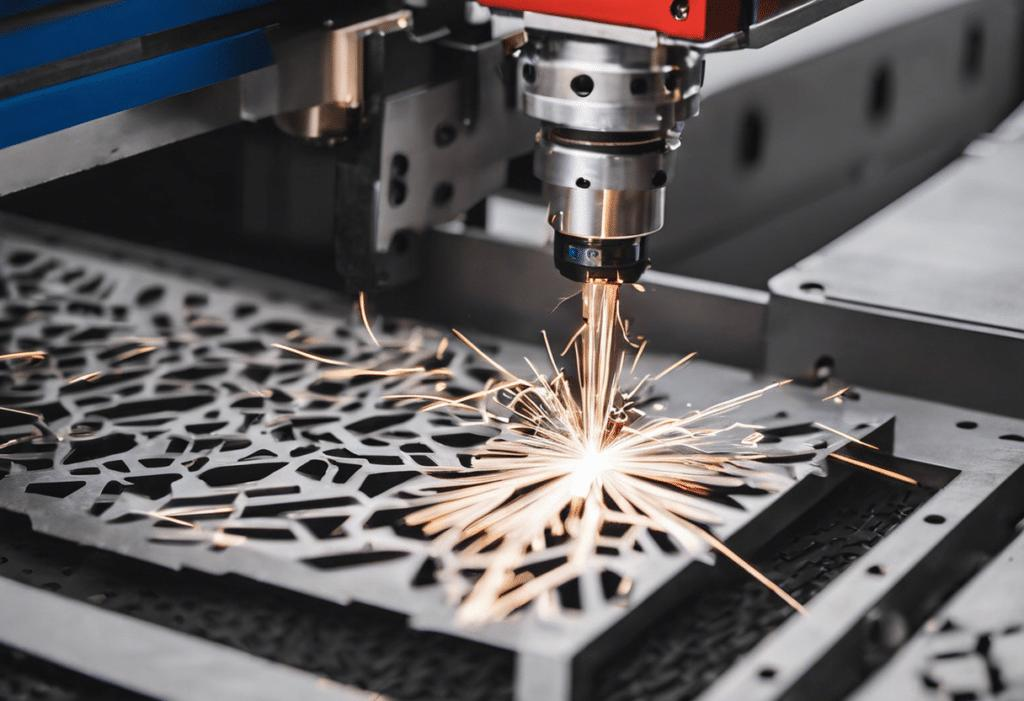
Laser cutting is a subtractive process that uses an intense focused laser beam to separate material, one of the most widely applied technologies in laser material processing. It separates parts by forming a narrow cut (kerf) in the material. Laser cutting can process almost all types of material—from various steels, aluminium alloys, copper and titanium alloys to non-metals such as ceramics, glass, semiconductors, plastics and wood. Compared with traditional stamping and plasma cutting, laser cutting gives a narrower kerf, higher precision, and is non-contact processing with no tool wear.
2. Working Principle: How Is Laser Cutting Achieved?
The basic process of laser cutting is: a high-power laser beam is focused by a lens onto an extremely small spot on the material surface; the material at the spot is rapidly heated, melted and even vaporized under extremely high energy density, while an assist gas blows the molten or vaporized material out of the kerf, achieving separation. Cutting usually starts from a pre-drilled hole (piercing), then the laser head or workpiece moves along a predetermined path, gradually forming the desired contour. The core of the whole process is precise control of laser energy input so that the material is removed exactly at the kerf while minimizing the thermal effect on the surrounding area.
💡 An analogy
Laser cutting is like a knife made of light—its edge can be as fine as 0.1 mm and never wears out. By melting or even vaporizing the material and using high-pressure gas to blow away the dross, it achieves precise cutting of various complex shapes, with a smooth cut and minimal deformation.
In summary, laser cutting involves the intersection of optics, materials science and precision manufacturing. Mastering its basic principles and key parameters is the foundation for properly selecting and using related products.
3. Key Parameters: Understanding the Performance Indicators of Laser Cutting
Understanding laser cutting requires mastering the following key parameters, which directly determine product performance and application scenarios:
| Parameter Name | Meaning | Why It Matters |
|---|---|---|
| Laser Power | Cutting thick plate needs several kilowatts or even over ten kilowatts, while thin plate can be cut at high speed with lower power. | Determines the maximum thickness that can be cut; higher power cuts thicker, and industrial cutting machines usually range from a few hundred watts to tens of kilowatts |
| Cutting Speed | Closely related to power, material thickness and process type; a steel plate a few millimetres thick can be cut at several metres per minute with a few kilowatts. | Affects production efficiency, closely related to power, material thickness and cutting process type |
| Kerf Width | Generally about 0.1–2 mm, depending on spot size and cutting method; precision cutting can have a very narrow kerf. | That is, the kerf width, usually about 0.1–2 mm; the narrower the kerf, the higher the material utilisation and precision |
| Beam Quality | Affects focused spot size and depth of focus; high-quality beams suit long-distance and precision cutting. | Affects focused spot size and depth of focus; a high-quality beam cuts thicker and straighter |
| Assist-Gas Pressure and Type | Oxygen for reactive cutting increases speed; nitrogen or argon for inert-gas cutting gives better cut quality. | Oxygen fluxing raises speed but leaves an oxide layer; inert nitrogen cutting gives a cleaner cut but costs more |
| Focal Position | The position of the focus at, inside or below the material surface greatly affects cut quality and efficiency. | Focal position greatly affects cut quality and efficiency; cutting thick plate usually puts the focus inside the material |
The above parameters are interrelated and mutually constrained. In actual selection, a comprehensive trade-off among performance, cost, reliability and other aspects is needed according to specific application requirements.
For more product parameters or selection advice, please contact the Soar Laser technical team.
4. Main Types: What Kinds of Laser Cutting Exist?
Laser cutting can be classified in many ways, and different dimensions help us understand its characteristics from different angles. The following introduces the common classification methods one by one:
Melt-Blow Cutting (Fusion Cutting)
The most common metal-cutting method: the laser melts the material and high-pressure gas blows away the dross; suitable for thick steel plate cutting.
Reactive Cutting (Oxygen-Flux Cutting)
Uses oxygen as the assist gas; the metal oxidation reaction releases extra heat for faster cutting, but an oxide layer tends to form on the cut.
Vaporization Cutting (Sublimation Cutting)
Uses a pulsed laser to directly vaporize the material, with almost no dross and extremely high cut quality, mainly for precision cutting of thin plate.
Water-Jet-Guided Laser Cutting
The laser beam is transmitted by total internal reflection inside a fine water jet; the water also cools and clears debris, giving an extremely small heat-affected zone.
Micro-Cutting
Uses picosecond or femtosecond ultrashort-pulse lasers for micrometre-level precision cutting, typically for cardiac-stent machining.
Remote Cutting
Uses scanning galvanometers to complete cutting at a relatively long working distance, suitable for high-speed processing of thin plate.
Different types of laser cutting have their own characteristics and suitable scenarios. Actual selection requires comprehensive consideration of specific application needs, performance requirements and budget constraints. If in doubt, you can contact the Soar Laser technical team for professional selection advice.
5. Applications: Where Is Laser Cutting Used?
Laser cutting has a very wide range of applications, covering industrial manufacturing, scientific research, healthcare, communications and information, and many other fields. The following introduces several main aspects:
- Laser cutting is everywhere in manufacturing. The automotive industry uses it to cut body steel sheets and various parts
- shipbuilding and heavy machinery use high-power laser cutting of thick steel plate
- electronics uses precision cutting of PCBs and semiconductor wafers
- the medical-device industry uses micro-cutting of precision devices such as vascular stents. In addition, laser cutting is widely used in sheet-metal fabrication, furniture manufacturing (cutting wood and acrylic), textiles (fabric cutting) and advertising. For hard-to-machine materials (such as high-strength steel and carbon-fibre composites), laser cutting is often the preferred or even the only feasible solution.
Typical Application Scenarios in Detail
Scenario 1: Automotive Manufacturing
used to cut body steel sheets, chassis parts and interior components, with high precision, high speed and small deformation, an important complement to automotive stamping lines.
Scenario 2: Sheet-Metal Fabrication
the largest application area of laser cutting: blanking of various metal sheets and cutting of shaped parts, flexible and efficient, especially suited to multi-variety small-batch production.
Scenario 3: Electronics and Semiconductors
PCB depaneling, wafer dicing and FPC cutting; UV and ultrafast lasers enable precision cutting with no thermal damage, ensuring device performance.
Scenario 4: Medical Devices
micro-cutting of precision medical devices such as surgical instruments, implants and vascular stents, with high precision and good cut quality and little follow-up processing.
6. Common Misconceptions
Many people have somewhat plausible but mistaken notions about laser cutting. See whether you fall into any of the following misconceptions:
Misconception 1: The thicker laser cutting can cut, the better.
in fact, each cutting process has its optimal thickness range; blindly pursuing large thickness often sacrifices cut quality and speed, and edge quality and heat-affected-zone problems are more pronounced for thick plates
Misconception 2: Cutting speed depends only on power.
cutting speed is affected by material type, thickness, gas type, beam quality and other factors; high power does not necessarily mean high speed—process matching is the key
Misconception 3: All metals are suitable for laser cutting.
highly reflective metals such as copper, silver and pure aluminium have high reflectivity to near-infrared lasers and are hard to cut, usually needing shorter wavelengths or special processes for good results
Misconception 4: Laser cutting has no burrs.
laser cutting also produces burrs and dross, just far less than traditional cutting. The amount of burr depends on material thickness, laser power, cutting speed, assist-gas pressure and other factors. High-quality cutting needs precise parameter matching and, if necessary, a subsequent deburring step.
The above are several common misconceptions about laser cutting. In practical applications, comprehensive judgment is needed based on specific product parameters and use conditions. If in doubt, it is recommended to consult a professional technician.
Leave a Reply