


What Is a Laser Mode? What Do Transverse and Longitudinal Modes Mean?
“Mode” is one of the most confusing concepts in laser physics — transverse modes, longitudinal modes, fundamental mode, higher-order modes, TEM₀₀, single mode, multimode… it sounds like a maze of jargon. But once you grasp one core idea: a mode is “a specific distribution of the electromagnetic field allowed to exist in the resonator,” everything becomes clear. Based on authoritative content from the RP Photonics Encyclopedia, this article explains laser modes in plain language: what transverse and longitudinal modes are, how they affect beam quality and spectrum, and how modes are selected.
Table of Contents
- I. What Is a Laser Mode? — The Resonator’s “Fingerprint”
- II. Transverse Modes: What Does the Beam Look Like?
- III. Longitudinal Modes: How Many “Colours” Does the Laser Have?
- IV. Modes and Beam Quality: What Is the M² Factor?
- V. Mode Selection: How to Obtain Single-Mode Output?
- VI. Common Misconceptions: 4 Ideas You May Have Got Wrong
- VII. Recommended Reading
I. What Is a Laser Mode? — The Resonator’s “Fingerprint”
Laser modes are specific electromagnetic field distributions that can exist stably inside a laser resonator. To use an analogy: a resonator is like the sound box of a musical instrument — not just any frequency can resonate, only specific frequencies (corresponding to specific standing-wave patterns) can be amplified. The same applies to a laser resonator: only field distributions satisfying “self-consistency of the electromagnetic field after one round trip” (unchanged shape, matched phase) can exist stably — these distributions are the modes [(RP Photonics)](https://www.rp-photonics.com/resonator_modes.html).
Modes can be understood from two dimensions:
- Transverse modes: describe the field distribution on the cross-section perpendicular to the propagation direction — that is, “what the beam looks like” (a neat round dot, or split into several lobes?).
- Longitudinal modes / Axial modes: describe the standing-wave pattern of the field along the propagation direction — that is, “how many oscillation frequencies the laser has” (a single frequency, or many frequencies at once?).
A complete mode must be described by both a transverse and a longitudinal index, written TEMmnq: m and n are the transverse mode indices (number of nodal lines in x and y), and q is the longitudinal mode index (number of half-wavelengths). When we say “single mode,” we must specify whether we mean single transverse or single longitudinal mode — these are completely different concepts [(RP Photonics)](https://www.rp-photonics.com/resonator_modes.html).
II. Transverse Modes: What Does the Beam Look Like?
The Fundamental Mode TEM₀₀
The simplest and “cleanest” transverse mode is the TEM₀₀ mode (fundamental mode), whose cross-sectional intensity distribution is a perfect Gaussian function — brightest at the centre, smoothly decaying toward the edge. This is what we commonly call a “Gaussian beam.” The spot of the fundamental mode is a uniform round dot with no dark fringes or splitting [(RP Photonics)](https://www.rp-photonics.com/resonator_modes.html).
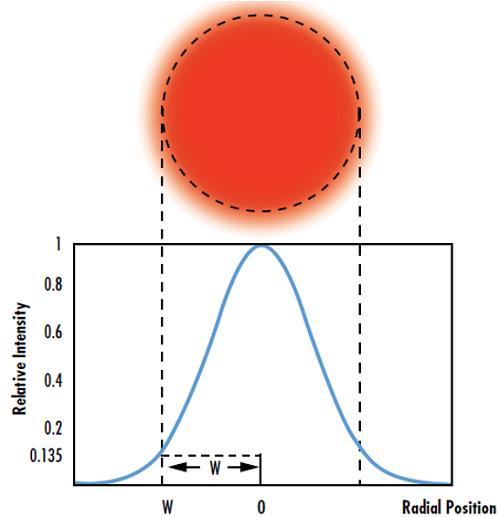
Figure 1: Radial intensity distribution of a Gaussian beam (TEM₀₀ mode). Above is the two-dimensional spot shape, below is the intensity profile; the spot radius w is defined where the intensity falls to 1/e² (about 13.5%) of the peak
The greatest advantage of the fundamental mode is the best beam quality — the smallest divergence angle, the ability to focus to the smallest spot (diffraction-limited), and the best coherence. The vast majority of applications needing high-quality beams (such as precision machining, measurement, holography and scientific research) require fundamental-mode output [(RP Photonics)](https://www.rp-photonics.com/resonator_modes.html).
Important Gaussian-beam formulas
The electric-field amplitude distribution of a fundamental Gaussian beam is:
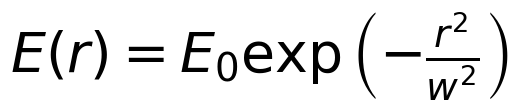
where  is the spot radius (the amplitude falls to 1/e of the centre, intensity to 1/e² ≈ 13.5%). The far-field divergence angle of a Gaussian beam is:
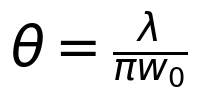
where  is the beam-waist radius and
 is the wavelength. The smaller the spot, the larger the divergence angle — a fundamental law of diffraction.
Higher-Order Transverse Modes
Besides the fundamental mode, a stable resonator can support many higher-order transverse modes. Their field distributions are more complex and can be described by Hermite-Gaussian functions, written TEMmn, where m is the number of nodal lines (dark lines) in x and n in y. The higher the transverse mode order, the more “spread out” and complex the spot [(RP Photonics)](https://www.rp-photonics.com/resonator_modes.html).
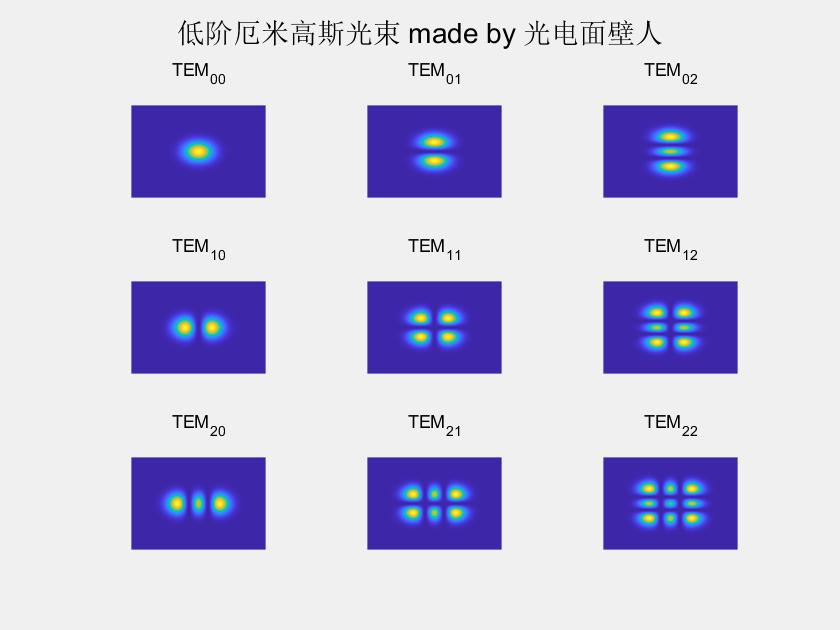
Figure 2: Intensity distributions of low-order Hermite-Gaussian transverse modes. m and n correspond to the numbers of nodal lines in the horizontal and vertical directions; higher orders give more complex spots
Here are some common low-order transverse modes:
- TEM₀₀: a single round spot, the fundamental mode, Gaussian distribution
- TEM₀₁ / TEM₁₀: two spots, separated vertically or horizontally
- TEM₀₂ / TEM₂₀: three spots in a row
- TEM₁₁: four spots in a 2×2 arrangement
- TEM₂₂: nine spots in a 3×3 arrangement
There are also Laguerre-Gaussian modes, with circularly symmetric distributions carrying orbital angular momentum — a hot research topic in recent years.
Multimode Transverse Operation and Beam Quality
When several transverse modes oscillate simultaneously in a laser (multimode output), the output beam is a superposition of these modes — an irregular spot shape, poor beam quality and a large divergence angle. The benefit of multiple transverse modes is higher output power (because more gain volume is used), at the cost of degraded beam quality. Many industrial high-power lasers are multimode — their applications do not need very high beam quality but do need high power [(RP Photonics)](https://www.rp-photonics.com/resonator_modes.html).
III. Longitudinal Modes: How Many “Colours” Does the Laser Have?
The Physical Nature of Longitudinal Modes
Longitudinal modes (also called axial modes) describe the standing-wave pattern along the optical axis. To form a stable oscillation in a resonator, the phase change of light after one round trip must be an integer multiple of 2π — that is, the cavity length must equal an integer multiple of half the wavelength:
Key Formula: Longitudinal Mode Resonance Condition

where  is the longitudinal mode index (a very large integer, typically ~10⁶),
 is the wavelength,
 is the refractive index,
 is the cavity length,
 is the speed of light, and
 is the frequency of the q-th longitudinal mode.
Longitudinal Mode Spacing (Free Spectral Range)
The frequency difference between adjacent longitudinal modes is called the longitudinal mode spacing (Free Spectral Range, FSR):
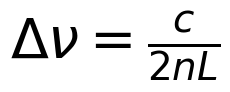
The longer the cavity, the smaller the mode spacing. For example: a small laser with a 15 cm cavity has a mode spacing of about 1 GHz; a long-cavity laser with a 1.5 m cavity has about 100 MHz; and a short cavity of a few centimetres can reach several GHz [(RP Photonics)](https://www.rp-photonics.com/resonator_modes.html).
Gain Bandwidth and Number of Longitudinal Modes
How many longitudinal modes can oscillate simultaneously in a laser? This depends on the gain medium’s gain bandwidth — any longitudinal mode falling within the gain bandwidth can potentially oscillate. For example:
- He-Ne laser: gain bandwidth about 1.5 GHz; with a 30 cm cavity (500 MHz mode spacing), about 3 longitudinal modes oscillate simultaneously
- Nd:YAG laser: gain bandwidth about 120 GHz (~0.5 nm); a long cavity can have over a thousand longitudinal modes oscillating at once
- Titanium-sapphire laser: gain bandwidth about 100 THz (~400 nm); over a million longitudinal modes can oscillate simultaneously — which is why it can produce femtosecond pulses
Transverse Modes Also Have Different Frequencies
It should be noted that transverse modes of different orders also have different oscillation frequencies! This is due to the Gouy phase shift — a beam acquires an extra phase change when passing through focus, and different transverse modes have different Gouy shifts and thus different frequencies. The transverse-mode frequency difference δν depends on the resonator design:
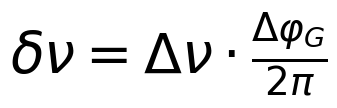
where 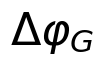 is the single-pass Gouy phase shift. When the frequencies of different transverse modes become degenerate (i.e. two different modes have the same frequency), mode coupling results, seriously degrading beam quality — this must be carefully avoided in resonator design [(RP Photonics)](https://www.rp-photonics.com/resonator_modes.html).
IV. Modes and Beam Quality: What Is the M² Factor?
Beam quality is the core metric of how “good” a laser beam is, and the most common quantitative parameter is the M² factor (also called the beam propagation factor). M² is defined as the ratio of (beam-waist radius × far-field divergence angle) of the actual beam to that of a fundamental Gaussian beam at the same wavelength. A fundamental Gaussian beam has M² = 1, the diffraction limit and the “ceiling” of beam quality. The larger the M², the poorer the beam quality [(RP Photonics)](https://www.rp-photonics.com/beam_quality.html).
| Beam Type | M² Factor | Characteristics and Applications |
|---|---|---|
| Fundamental Gaussian beam | ~1.0 | Diffraction-limited, smallest focus; used in precision machining, research and measurement |
| Near-fundamental / low-order mode | 1.1 ~ 3 | Good beam quality; used for welding and cutting medium-thickness materials |
| Multimode beam | 3 ~ 20+ | High power but mediocre beam quality; used for heat treatment, cladding and thick-plate cutting |
V. Mode Selection: How to Obtain Single-Mode Output?
Selecting a Single Transverse Mode
To obtain single-transverse-mode (fundamental mode) output, oscillation of higher-order transverse modes must be suppressed:
- Aperture stop: insert a small aperture in the cavity to pass the fundamental mode (small spot) and block higher-order modes (large spot). This is the simplest and most direct method.
- End pumping + pump-volume matching: in end-pumped solid-state lasers, if the pump volume matches the fundamental mode volume well, the fundamental mode gains far more than higher-order modes and single-transverse-mode operation occurs naturally.
- Mode-selecting cavity design: by properly designing the resonator parameters (curvature, cavity length), increase the loss or reduce the gain of higher-order modes.
- Use single-mode fibre: fibre lasers are naturally single-transverse-mode — as long as the core diameter and numerical aperture are small enough, only the fundamental mode is supported.
Selecting a Single Longitudinal Mode
To obtain single-longitudinal-mode (single-frequency) output, one mode must be selected from many:
- Short-cavity method: shorten the resonator to enlarge the mode spacing so that only one longitudinal mode lies within the gain bandwidth. But short cavities usually have lower output power.
- Intracavity etalon (F-P etalon): insert a thin glass or quartz plate, using multi-beam interference to give the lowest loss to just one longitudinal mode.
- Ring cavity + optical isolator: a ring cavity has no spatial hole burning, mode competition is more effective, and single-longitudinal-mode operation is easier to achieve.
- Distributed feedback (DFB) / distributed Bragg reflector (DBR): use Bragg gratings in fibre or waveguide for frequency selection — a common method for single-longitudinal-mode fibre and semiconductor lasers.
- Injection locking: inject a low-power single-frequency seed light into the main laser, “pulling” the main laser to oscillate at the same frequency.
VI. Common Misconceptions: 4 Ideas You May Have Got Wrong
Misconception 1: “Single mode” means only one mode is oscillating
Correction: When saying “single mode,” you must specify single transverse or single longitudinal mode — these are completely different concepts! Single transverse mode (usually TEM₀₀) describes the spatial distribution and may have many longitudinal modes (different frequencies) at once. Conversely, single longitudinal mode describes the spectral characteristic, but the beam may not be the fundamental mode. Strictly speaking, “single mode” should be called “single transverse mode” or “single longitudinal mode” to be accurate [(RP Photonics)](https://www.rp-photonics.com/single_mode_operation.html).
Misconception 2: A TEM₀₀ mode is a perfectly uniform spot
Correction: The intensity distribution of a TEM₀₀ mode is a Gaussian function — brightest at the centre, smoothly decreasing toward the edge, with no definite “boundary.” The “spot diameter” we speak of usually refers to the diameter where the intensity falls to 1/e² (about 13.5%) of the centre maximum — a conventional definition, not that light disappears entirely outside the spot. The “tail” of a Gaussian beam extends to infinity, only at very low intensity [(RP Photonics)](https://www.rp-photonics.com/resonator_modes.html).
Misconception 3: All transverse modes have the same resonant frequency
Correction: Transverse modes of different orders have different resonant frequencies! Because of the Gouy phase shift, higher-order transverse modes have different frequencies from the fundamental. The magnitude of the transverse-mode frequency difference depends on the resonator design (confocal, plano-concave, etc. differ greatly). In certain special cavity designs, the frequencies of different transverse modes become degenerate (identical), leading to mode coupling and beam-quality degradation [(RP Photonics)](https://www.rp-photonics.com/resonator_modes.html).
Misconception 4: Longitudinal mode spacing equals c/(2L), independent of wavelength
Correction: The exact formula for longitudinal mode spacing is Δν = c/(2nL), where n is the refractive index. For most transparent media, refractive index varies with wavelength (dispersion), so mode spacing differs slightly at different wavelengths. In lasers with narrow gain bandwidth this is usually negligible; but in broadband lasers (such as Ti:sapphire) the effect of dispersion on mode spacing is significant — and it is also directly related to the group-velocity dispersion of mode-locked pulses [(RP Photonics)](https://www.rp-photonics.com/resonator_modes.html).
VII. Recommended Reading
- What Is Mode Locking? How to Obtain Femtosecond Ultrashort Pulses — phase-locking of longitudinal modes is mode locking; fully understand the application of longitudinal modes
- What Is an Optical Resonator? How Do Two Mirrors Trap Light? — modes are the product of the resonator; understand the cavity before the modes
- RP Photonics Encyclopedia: Resonator Modes — the main reference for this article, the world’s most authoritative laser encyclopedia
Leave a Reply