


What Is a High-Reflection Coating? How to Achieve 99.999% Reflectivity
A high-reflection coating is an important concept in laser technology, widely used in industrial manufacturing, scientific research and healthcare. This article systematically introduces the core concepts, working principles, key parameters, main types and typical applications of high-reflection coatings, helping readers build a complete knowledge framework.
Table of Contents
- 1. What Is a High-Reflection Coating? Understanding the Core Concepts
- 2. Working Principle: How Is a High-Reflection Coating Applied?
- 3. Key Parameters: Understanding the Performance Indicators of High-Reflection Coatings
- 4. Main Types: What Kinds of High-Reflection Coating Exist?
- 5. Applications: Where Are High-Reflection Coatings Used?
- 6. Common Misconceptions: Pitfalls to Avoid
1. Core Concepts: What Is a High-Reflection Coating?
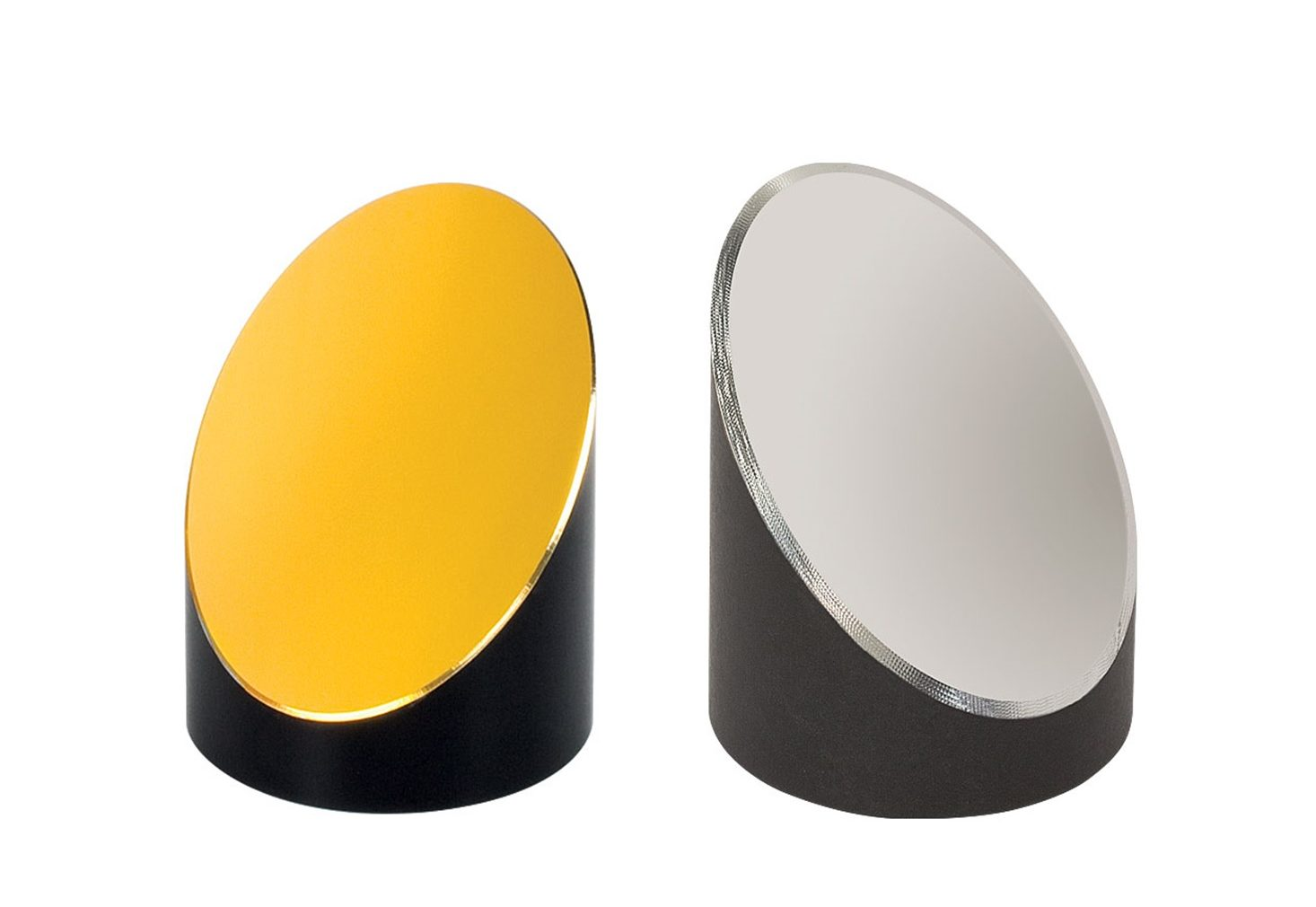
A high-reflection coating, also called an HR coating, is a type of optical coating that achieves extremely high reflectivity within a specific wavelength range. In the laser field, the ‘dielectric mirror’ we most often speak of is a high-reflection mirror made with dielectric materials. Unlike household mirrors, a dielectric mirror does not reflect by metal but by the interference effect of dozens of transparent film layers, so its reflectivity can be made very high—laser cavity mirrors typically exceed 99.9%, and in extreme cases can even reach over 99.9999% (called a ‘supermirror’). It can be said that the dielectric mirror is the ‘outer shell of the heart’ of a laser; without a high-reflection coating there is no laser resonator, and thus no laser output.
2. Working Principle: How Is a High-Reflection Coating Applied?
The core principle of a dielectric high-reflection coating is constructive interference. It is formed by stacking alternating layers of high- and low-refractive-index transparent dielectric materials, each with an optical thickness of about a quarter of the design wavelength. When light is incident on this multilayer structure, each interface reflects a small portion of light. Because each layer’s thickness is precisely controlled to a quarter wavelength, these reflected waves return exactly in phase, and their superposition makes the reflected light very strong—this is the ‘1+1>2’ magic of interference. The greater the refractive-index contrast of the materials, the fewer layers are needed to reach the same reflectivity and the wider the reflection bandwidth. The simplest and most classic design is called the Bragg mirror—alternating quarter-wave layer pairs of two materials. More complex designs can achieve broadband reflection, multi-wavelength reflection, special dispersion and other functions.
💡 An analogy
A high-reflection coating is like a super mirror—an ordinary mirror reflects about 90%, while a high-reflection coating for lasers can exceed 99.999%, leaking only a few out of every million photons. Without such a high-quality mirror, the laser resonator cannot build up laser oscillation, and the laser cannot emit light.
In summary, high-reflection coatings involve the intersection of multiple disciplines including optics, materials science and precision manufacturing. Mastering their basic principles and key parameters is the foundation for properly selecting and using related products.
3. Key Parameters: Understanding the Performance Indicators of High-Reflection Coatings
Understanding high-reflection coatings requires mastering the following key parameters, which directly determine product performance and application scenarios:
| Parameter Name | Meaning | Why It Matters |
|---|---|---|
| Reflectivity | — Whether it is the conventional 99.5% requirement or an ultra-low-loss cavity mirror at 99.999% | The core indicator of a high-reflection coating: ordinary types exceed 99.5%, ultra-high types can reach 99.999% or more |
| Reflection Bandwidth | — Whether it is a single-wavelength narrowband or a broadband of hundreds of nanometres | The wavelength range over which high reflectivity holds; a wider bandwidth means a more complex design, usually requiring more layers |
| Operating Wavelength | — Ultraviolet, visible or infrared; completely different material systems are used in different bands | Directly affects laser performance and the choice of application scenarios |
| Angle of Incidence | — Normal incidence at 0° or oblique incidence at 45°; changing the angle causes a blue shift of the reflection spectrum | The effective angle-of-incidence range of a high-reflection coating; at oblique incidence the reflection band blue-shifts and s/p polarisation splits |
| Transmittance Requirement | — Whether it is fully reflective or partially transmissive (such as an output coupler) | Directly affects laser performance and the choice of application scenarios |
| Laser-Induced Damage Threshold (LIDT) | — A core indicator for pulsed-laser applications | A key parameter for applications such as laser cavity mirrors, directly determining the maximum power a laser can reach |
The above parameters are interrelated and mutually constrained. In actual selection, a comprehensive trade-off among performance, cost, reliability and other aspects is needed according to specific application requirements.
For more product parameters or selection advice, please contact the Soar Laser technical team.
4. Main Types: What Kinds of High-Reflection Coating Exist?
High-reflection coatings can be classified in several ways. By structure and principle: Bragg mirrors—the simplest quarter-wave layer-pair structure, the basis of most high-reflection coatings; broadband high-reflection coatings—broadening the reflection bandwidth through optimised layer-thickness design; supermirrors—reflectivity as high as over 99.999%, used in ultra-high-finesse optical cavities; chirped mirrors—with gradually varying layer thickness, used for dispersion compensation in ultrafast lasers; dichroic mirrors—highly reflective at one wavelength and highly transmissive at another, such as pump mirrors. By substrate shape, they are divided into flat mirrors and curved mirrors (concave focusing mirrors, convex diverging mirrors). By coating material, they are also divided into different systems such as oxide dielectric films (visible/near-infrared) and fluoride dielectric films (deep ultraviolet/mid-to-far infrared).
5. Applications: Where Are High-Reflection Coatings Used?
High-reflection coatings have a very wide range of applications, covering industrial manufacturing, scientific research, healthcare, communications and information, and many other fields. The following introduces several main aspects:
- High-reflection coatings are found in every corner of lasers and optics. In laser resonators, two high-reflection mirrors form the ‘walls’ of the cavity, a necessary condition for laser generation—the rear cavity mirror is usually a full reflector (reflectivity >99.9%) and the front mirror is the output coupler (partly reflecting, partly transmitting). In ultrafast lasers, chirped mirrors compensate the dispersion of pulses and are one of the core components of femtosecond lasers. In optical communications, high-reflection mirrors are used to build fibre lasers and optical switches. In spectrometers and instruments, mirrors are key components of monochromators and spectrometers. In laser processing systems, various turning mirrors and focusing mirrors all require high-reflection coatings. A common rule in sales is: when a customer asks for laser optics, nine times out of ten they mean high-reflection-coated optics.
Typical Application Scenarios in Detail
Scenario 1: Laser Resonators
the front and rear cavity mirrors of a laser are the most typical application of high-reflection coatings, typically exceeding 99.5% reflectivity, directly affecting the laser’s threshold efficiency and output power.
Scenario 2: Optical Circulators and Isolators
these non-reciprocal devices use high-reflection coatings together with Faraday rotators to achieve one-way transmission of light, protecting the laser from reflected light.
Scenario 3: Folded Cavities and Beam Delivery
high-reflection mirrors fold the optical path in long-path systems to reduce system size, and are also used for beam steering in laser processing heads.
Scenario 4: Ultrafast Laser Systems
femtosecond and picosecond laser systems are extremely sensitive to dispersion and loss, requiring specially designed broadband high-reflection coatings to ensure the pulse width is not broadened.
6. Common Misconceptions
Many people have somewhat plausible but mistaken notions about high-reflection coatings. See whether you fall into any of the following misconceptions:
Misconception 1: The higher the reflectivity, the better.
for an output coupler, the reflectivity must be precisely matched to the laser’s gain characteristics; too high or too low will affect laser efficiency and stability.
Misconception 2: A dielectric mirror is a ‘mirror’ and should look silvery.
in fact, a dielectric mirror is usually highly reflective only at a specific wavelength and may be partly transparent to visible light, and can appear colored—this is normal, not a quality problem.
Misconception 3: High-reflection coatings are highly reflective at all wavelengths.
a dielectric high-reflection coating has a defined working band; beyond that range the reflectivity drops sharply and may even become ‘anti-reflective.’
Misconception 4: High-reflection coatings are not afraid of light.
in fact, the damage threshold of a high-reflection coating is limited; especially under pulsed lasers, the standing-wave electric field in the film layers creates a peak field intensity far higher than the incident intensity, an important cause of damage.
The above are several common misconceptions about high-reflection coatings. In practical applications, comprehensive judgment is needed based on specific product parameters and use conditions. If in doubt, it is recommended to consult a professional technician.
Leave a Reply