


What Is an Anti-Reflection Coating? How to Reduce Lens Reflections
An anti-reflection coating is an important concept in laser technology, widely used in industrial manufacturing, scientific research and healthcare. This article systematically introduces the core concepts, working principles, key parameters, main types and typical applications of anti-reflection coatings, helping readers build a complete knowledge framework.
Table of Contents
- 1. What Is an Anti-Reflection Coating? Understanding the Core Concepts
- 2. Working Principle: How Is an Anti-Reflection Coating Applied?
- 3. Key Parameters: Understanding the Performance Indicators of Anti-Reflection Coatings
- 4. Main Types: What Kinds of Anti-Reflection Coating Exist?
- 5. Applications: Where Are Anti-Reflection Coatings Used?
- 6. Common Misconceptions: Pitfalls to Avoid
1. Core Concepts: What Is an Anti-Reflection Coating?
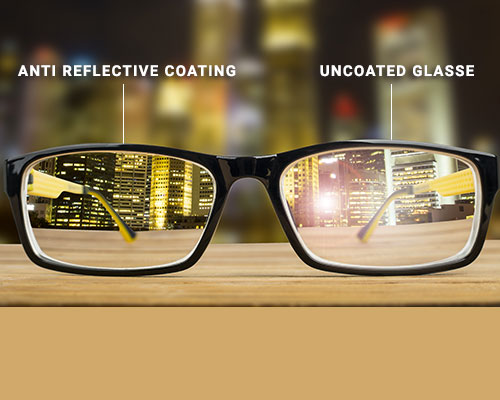
An anti-reflection coating, also called an AR coating, is the most widely used type of optical coating. Its function is to reduce the reflectivity of an optical surface and thereby increase transmittance. Imagine that a piece of ordinary glass in air reflects about 4% of incident light at each surface, with a transmittance of only about 92%; for a lens made of multiple elements, reflection losses add up, and in severe cases half the light is reflected away. Anti-reflection coatings were born to solve this problem. A good anti-reflection coating can reduce the reflectivity of a single surface to below 0.1%, greatly improving the efficiency and contrast of an optical system. For laser systems, anti-reflection coatings are even a necessity—unwanted reflection not only loses power but can also form stray light or even parasitic oscillation, affecting laser performance.
2. Working Principle: How Is an Anti-Reflection Coating Applied?
The core principle of an anti-reflection coating is destructive interference. Simply put, it makes the light waves reflected back from different interfaces of the film exactly ‘out of phase’; when they meet they cancel each other, reducing the total reflected light. The most basic single-layer anti-reflection coating is a quarter-wave-thick film whose refractive index is close to the geometric mean of the refractive indices of the media on both sides (that is, n_film = √(n_air × n_substrate)). Thus the two beams reflected from the upper and lower surfaces of the film have similar amplitudes and a 180° phase difference, canceling each other. For more demanding needs (wider bands, lower reflectivity), a multilayer film structure is used, precisely designing the thickness and refractive index of each layer to achieve reflection cancellation over a wider wavelength range. This is like a symphony, where multiple parts must cooperate precisely to produce a harmonious effect.
💡 An analogy
An anti-reflection coating is like removing the glare from glass—you must have seen the situation where reflections on a shop window make it hard to see inside; an anti-reflection coating uses the interference of light to cancel the reflected light at the glass surface, letting more light pass through. An anti-reflection coating on a pair of glasses reduces glare, while one in a laser significantly improves efficiency.
In summary, anti-reflection coatings involve the intersection of multiple disciplines including optics, materials science and precision manufacturing. Mastering their basic principles and key parameters is the foundation for properly selecting and using related products.
3. Key Parameters: Understanding the Performance Indicators of Anti-Reflection Coatings
Understanding anti-reflection coatings requires mastering the following key parameters, which directly determine product performance and application scenarios:
| Parameter Name | Meaning | Why It Matters |
|---|---|---|
| Residual Reflectance | — Whether it is the ordinary requirement of average <0.5% or the ultra-low reflection requirement of <0.01% | The core indicator of an anti-reflection coating: a single-layer film can be reduced to about 1%, a multilayer film to 0.1% or even below 0.01% |
| Operating Wavelength Range | — Single-wavelength V-coat, dual-wavelength (such as 532 + 1064 nm), or broadband over the whole visible range | The effective band of an anti-reflection coating; a broadband anti-reflection coating is more difficult to design than a single-wavelength one |
| Angle of Incidence Range | — Normal incidence or oblique incidence, and how large the angular tolerance is | Anti-reflection coating performance varies with the angle of incidence; use at large angles requires a special design |
| Substrate Material | — Glass, crystal or plastic; different substrates have different refractive indices and process compatibility | Directly affects laser performance and the choice of application scenarios |
| Laser-Induced Damage Threshold (LIDT) | — Under nanosecond pulses, whether it is a few J/cm² or tens of J/cm² | The LIDT of an anti-reflection coating is a key parameter in high-power systems, directly affecting system reliability |
| Environmental Stability | — Whether it needs to pass MIL or ISO reliability tests such as abrasion and damp-heat resistance | Directly affects laser performance and the choice of application scenarios |
The above parameters are interrelated and mutually constrained. In actual selection, a comprehensive trade-off among performance, cost, reliability and other aspects is needed according to specific application requirements.
For more product parameters or selection advice, please contact the Soar Laser technical team.
4. Main Types: What Kinds of Anti-Reflection Coating Exist?
Anti-reflection coatings come in several common types: single-layer anti-reflection coatings—the simplest structure, usually a single layer of magnesium fluoride (MgF₂), which can reduce visible reflectance to about 1.5%, low in cost and high in damage threshold, but limited in performance; V-coat anti-reflection coatings—a multilayer structure with extremely low reflectance at a specific wavelength (forming a V-shaped curve), suitable for single-wavelength laser applications; multi-wavelength anti-reflection coatings—low reflection at two or more discrete wavelengths simultaneously, such as satisfying both 532 nm and 1064 nm in a frequency-doubled laser system; broadband anti-reflection coatings (BBAR)—moderate anti-reflection over a wide wavelength range, suitable for broadband sources such as white light and multi-wavelength sources; gradient-index anti-reflection coatings—with a continuously varying refractive index that can theoretically achieve anti-reflection over ultra-wide angles and ultra-wide bands, of which the ‘moth-eye structure’ is a typical representative, using nanostructures to simulate a refractive-index gradient.
5. Applications: Where Are Anti-Reflection Coatings Used?
Anti-reflection coatings have a very wide range of applications, covering industrial manufacturing, scientific research, healthcare, communications and information, and many other fields. The following introduces several main aspects:
- Anti-reflection coatings are extremely widely used. In laser systems, the end faces of laser crystals and nonlinear crystals need anti-reflection coatings to reduce intracavity loss
- laser windows and lenses need anti-reflection coatings to increase transmittance. In imaging optics, every lens in a camera lens, telescope or microscope is coated with an anti-reflection coating, otherwise the image would be seriously grayish due to stray light. In consumer electronics, eyeglass lenses, mobile phone cameras and display screens all rely on anti-reflection coatings to enhance the visual experience. In optical fibre communications, anti-reflection coatings on fibre end faces can reduce connection loss. In solar photovoltaics, anti-reflection coatings on cell surfaces let more sunlight into the cell, improving power-generation efficiency. For salespeople, almost every inquiry about an optical component involves an anti-reflection coating requirement.
Typical Application Scenarios in Detail
Scenario 1: Photography and Imaging Optics
every lens surface in optical systems such as camera lenses, telescopes and microscopes is coated with an anti-reflection coating, greatly reducing reflection loss and glare.
Scenario 2: Laser Systems
components such as laser crystal end faces, windows and output couplers all need anti-reflection coatings to reduce reflection loss and improve laser efficiency and stability.
Scenario 3: Displays and Lighting
applying anti-reflection coatings to mobile phone screens, displays and eyeglass lenses reduces ambient-light reflection, improving clarity and visual comfort.
Scenario 4: Solar Cells
applying an anti-reflection coating to a solar cell surface increases the amount of transmitted light and improves photoelectric conversion efficiency, a common technology in the photovoltaic industry.
6. Common Misconceptions
Many people have somewhat plausible but mistaken notions about anti-reflection coatings. See whether you fall into any of the following misconceptions:
Misconception 1: An anti-reflection coating means ‘the more transparent the better.’
in fact, anti-reflection effect and bandwidth/angle range trade off against each other—a V-coat can achieve extremely low reflection at a single point but has a very narrow band; a broadband coating covers a wide range but has relatively higher single-point reflectance.
Misconception 2: An AR coating is the same on both sides.
many people do not know that the anti-reflection coating designs on the two surfaces of a substrate may differ, because the media in contact with the two sides have different refractive indices (one side air and one side glass, or one side air and one side crystal).
Misconception 3: Anti-reflection coatings do not affect the laser damage threshold.
in fact, the damage threshold of an anti-reflection coating may be lower or higher than that of the substrate, depending on material and process; high-power applications must confirm the LIDT separately.
Misconception 4: An anti-reflection coating is just one layer of film.
high-performance anti-reflection coatings often have a dozen or even dozens of film layers, with process complexity and cost far beyond what one imagines.
The above are several common misconceptions about anti-reflection coatings. In practical applications, comprehensive judgment is needed based on specific product parameters and use conditions. If in doubt, it is recommended to consult a professional technician.
Leave a Reply