


What Is the Laser-Induced Damage Threshold (LIDT)? The Damage Threshold of Optical Components
The laser-induced damage threshold (LIDT) is an important concept in laser technology, widely used in industrial manufacturing, scientific research and healthcare. This article systematically introduces the core concepts, working principles, key parameters, main types and typical applications of LIDT, helping readers build a complete knowledge framework.
Table of Contents
- 1. What Is the Laser-Induced Damage Threshold (LIDT)? Understanding the Core Concepts
- 2. Working Principle: How Is the Laser Damage Threshold Achieved?
- 3. Key Parameters: Understanding the Performance Indicators of LIDT
- 4. Main Types: What Kinds of Laser Damage Threshold Exist?
- 5. Applications: Where Is the Laser Damage Threshold Used?
- 6. Common Misconceptions: Pitfalls to Avoid
1. Core Concepts: What Is the Laser-Induced Damage Threshold (LIDT)?
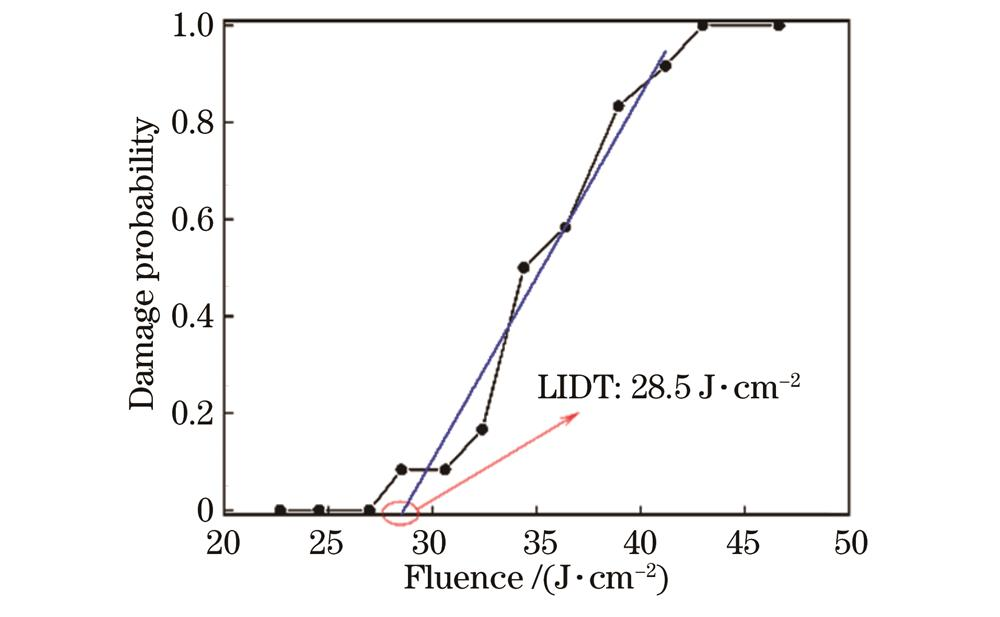
The laser-induced damage threshold, or LIDT, refers to the maximum laser energy density or intensity that an optical component (including its coating and substrate) can withstand without permanent damage. It is one of the most critical parameters in high-power and high-energy laser applications—if the LIDT is insufficient, at best the coating performance degrades, at worst the component is directly destroyed, and it may even cause the entire laser system to be scrapped. LIDT is usually expressed as energy density (J/cm², joules per square centimetre) for pulsed lasers, and as intensity (W/cm² or MW/cm²) for continuous-wave lasers. For salespeople, once a customer provides laser power/energy parameters, the first thing to do is make a mental calculation—under this requirement, is the damage threshold of a standard coating sufficient? Is a specially made high-threshold coating needed?
Some may ask, why devote an entire article to the laser damage threshold (LIDT)? Because it is extremely important—whether a laser performs well, whether the power is high enough, whether the beam quality is good enough and whether the efficiency is high are all largely directly related to LIDT. By understanding LIDT, you can not only understand how a laser works, but also why some lasers are expensive and others cheap, and why some are suitable for cutting metal while others are used for medical aesthetics.
The laser-induced damage threshold (LIDT) describes not the laser itself but how much light an optical component can withstand without damage—a key metric for judging whether a component suits a given power or pulse width, directly affecting system reliability and lifetime.
2. Working Principle: How Is the Laser Damage Threshold Achieved?
Understanding the working principle of the laser damage threshold (LIDT) can actually be broken down into several key steps or key mechanisms.
There are various physical mechanisms of laser damage, depending on the laser pulse width and material properties. For long pulses (nanoseconds and above), damage is mainly caused by thermal effects: after the material absorbs laser energy, its temperature rises sharply, leading to melting, vaporization, thermal-stress cracking and so on. For ultrashort pulses (femtosecond, picosecond), the damage mechanism is mainly field-induced breakdown or multiphoton ionization: an extremely high peak electric field directly strips electrons from the material, generating plasma, which then absorbs energy and destroys the material—this process is so fast that heat has no time to diffuse, so it is also called ‘cold ablation.’ For coatings, damage often originates from tiny defects in the film (such as impurity particles, nodules and pores)—light absorption or field enhancement at these defects is far higher than in a perfect film, making them ‘preferential damage sites.’ Therefore, the damage threshold of a coating depends not only on the material, but even more closely on the process quality.
💡 An analogy
The laser damage threshold is like the withstand voltage of electrical equipment—when the voltage exceeds the withstand value, the equipment breaks down and is damaged. LIDT is the maximum laser energy density an optical component can withstand; above this value, the coating or substrate will be burned, at best degrading performance and at worst causing complete failure.
Overall, although the working principle of LIDT involves some physical concepts, the core logic is actually quite simple: through specific physical mechanisms, light is amplified, confined and utilised in the way we want. Once you understand this, the later sections on parameters, types and applications will be much easier to follow.
It is worth noting that during the operation of LIDT, the various parameters are interrelated and mutually constrained. For example, high gain may mean narrow bandwidth, and high efficiency may mean poor beam quality. A truly excellent design finds the optimal balance point under various constraints. This is why laser engineering is both a science and an art.
3. Key Parameters: Understanding the Performance Indicators of LIDT
To understand LIDT, knowing the concepts and principles alone is not enough—you also need to understand its key parameters. When many people choose a laser, they look at a pile of parameter tables without knowing where to start. There is no need to worry, though; the following table sorts out all the core parameters for you:
| Parameter Name | Meaning | Why It Matters |
|---|---|---|
| Laser Wavelength | — The shorter the wavelength (higher the photon energy), the lower the damage threshold generally is | Directly affects laser performance and the choice of application scenarios |
| Pulse Width | — The shorter the pulse width, the higher the peak intensity and the lower the damage threshold (in energy density) generally is, but the relationship with pulse width is not simply linear (the ‘square root of pulse width’ empirical rule is often used) | Different pulse durations involve different damage mechanisms: nanosecond pulses mainly cause thermal damage, while femtosecond pulses mainly cause multiphoton and avalanche ionization; the units cannot be directly converted |
| Repetition Rate | — Heat accumulation at high repetition rates may lower the damage threshold | At high repetition rates, heat accumulation is significant, and thermal overlap between pulses lowers the damage threshold |
| Polarisation State | — The damage thresholds of s-polarisation and p-polarisation may differ | Directly affects laser performance and the choice of application scenarios |
| Test Method | — 1-on-1 (one shot per site), S-on-1 (multiple shots on the same site) and R-on-1 (increasing energy); different methods give different values | Different test methods such as 1-on-1, S-on-1 and R-on-1 give different results, so pay attention to the test conditions when comparing |
| Damage Criterion | — Whether damage is judged by microscope observation, scatter measurement or performance change | Using a differential interference microscope or a scatter method to judge damage yields different threshold results; the ISO 21254 standard should be followed |
These parameters are not isolated; they are interrelated and mutually constrained. For example, there is often a trade-off between the laser-induced damage threshold and other properties of an optical component: coatings or materials designed for a higher damage threshold may involve compromises in transmission, cost or manufacturability. So to evaluate quality, you must consider the parameters together rather than one alone.
For more product parameters or selection advice, please contact the Soar Laser technical team.
4. Main Types: What Kinds of Laser Damage Threshold Exist?
By damage mechanism, it can be divided into: thermal damage—caused by heat generated from light absorption, common in long-pulse and continuous-wave lasers; avalanche ionization damage—electron multiplication under a strong field leading to material breakdown, common in ultrashort pulses; multiphoton ionization damage—multiple photons acting simultaneously to excite electrons, a typical damage mechanism of femtosecond lasers; cumulative damage (fatigue effect)—the cumulative effect of multiple pulses, where damage may appear after many shots even if the single-shot energy is below the threshold. By damage location, it can be divided into: film damage—the most common type, including nodule explosions, film delamination (layer separation), film melting and so on; interface damage—damage at the interface between the film and the substrate; substrate damage—damage caused inside the substrate after the laser passes through the film. By appearance, damage can be classified into point damage, crater-like damage, cracks, delamination and other forms.
5. Applications: Where Is the Laser Damage Threshold Used?
The laser damage threshold (LIDT) has a very wide range of applications, from industrial manufacturing to medical health and from communication networks to scientific research—almost everywhere lasers are used, LIDT is indispensable. Let us look at a few fields briefly:
- LIDT is the ‘lifeline’ parameter for high-power laser applications. In high-power solid-state lasers, the LIDT of cavity mirrors, output couplers and gain media directly determines the maximum output capability of the laser. In ultrafast lasers, the peak intensity of femtosecond pulses is extremely high, so the damage threshold is a key bottleneck, requiring specially designed low-dispersion, high-threshold coatings. In laser processing equipment, the damage thresholds of focusing lenses, mirrors and windows determine the processing capability and service life of the equipment. In defence and aerospace laser systems, high-threshold coatings are one of the core technologies. In the semiconductor industry, excimer laser (UV) lithography systems place extremely high demands on the LIDT of optical components. An important sales tip is: when a customer says ‘high power,’ be sure to ask clearly whether it means continuous power or pulse energy, what the pulse width is and what the repetition rate is—only after converting these parameters can the LIDT requirement be correctly assessed.
Typical Application Scenarios in Detail
Scenario 1: High-Power Laser Design
When designing a high-power laser, you must ensure that the LIDT of all optical components is higher than the actual working power density, otherwise the components will be damaged.
Scenario 2: Coating Process Optimisation
Coating manufacturers improve LIDT by optimising the deposition process and increasing film density and purity; it is an important indicator of the coating technology level.
Scenario 3: Component Selection and Procurement
When users purchase optical components, LIDT is one of the key parameters and should be selected according to actual use conditions (wavelength, pulse width, repetition rate).
Scenario 4: Quality Testing and Certification
Testing the LIDT of optical components according to the ISO 21254 standard is a necessary part of quality control and safety certification for high-power laser systems.
6. Common Misconceptions
Many people have somewhat plausible but mistaken notions about LIDT. See whether you fall into any of the following misconceptions:
Misconception 1: The damage threshold is a fixed value.
In fact, LIDT is closely related to wavelength, pulse width, repetition rate and test method; talking about LIDT without these conditions is meaningless. A common pitfall is that values reported by different manufacturers using different test methods cannot be directly compared.
Misconception 2: The thicker the coating, the higher the damage threshold.
Quite the opposite: the more layers and the more complex the structure, the higher the peak of the standing electric field inside the film may be, and the damage threshold may actually be lower—the damage threshold of dispersive mirrors is usually lower than that of simple Bragg mirrors.
Misconception 3: The substrate has a higher damage threshold than the coating.
Not necessarily—the defect density of surfaces and films is usually higher than that of the bulk material, so the damage threshold of a surface/coating is often lower than that of the substrate, although a high-quality coating may also exceed the threshold of a polished surface.
Misconception 4: Exceeding the LIDT will definitely cause damage.
LIDT is a threshold in the statistical sense—the energy density at which the probability of damage reaches a certain criterion. Below the threshold there may still be a very low probability of damage, and above the threshold it is not ‘broken in a single shot.’
Of course, there are far more misconceptions about LIDT than these. Laser technology is developing rapidly, with new materials and new processes constantly emerging, so some previous ‘common knowledge’ may already be outdated. If you have other questions, please leave a comment and we will answer them one by one.
Leave a Reply