


In the large family of nonlinear optical crystals, two “Chinese contenders” hold a position of great importance on the world stage — BBO and LBO. Both were invented by the Fujian Institute of Research on the Structure of Matter, Chinese Academy of Sciences, and are known as “Chinese-brand crystals,” a major contribution by Chinese researchers to the world of lasers.
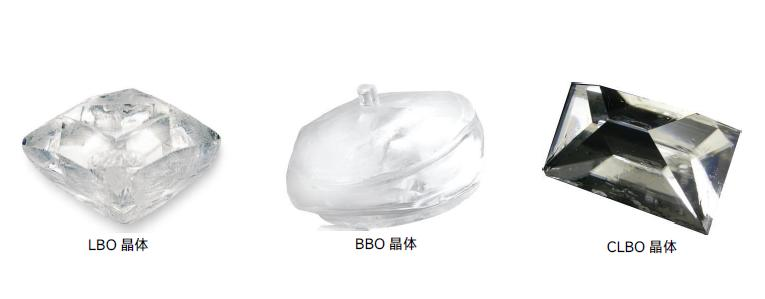
From green laser pointers to high-power UV lasers, from optical parametric oscillators to ultrafast laser systems, BBO and LBO are almost everywhere. But what exactly is the difference between these two “star crystals”? Which is suited to which application? Why is LBO the first choice for high-power frequency doubling? Why is BBO often used for deep UV? In this article we explain BBO and LBO thoroughly.
📋 Table of Contents
- I. Core Concepts: What Are BBO and LBO?
- II. Working Principle: Structure, Properties and Phase Matching
- III. Key Parameters: BBO vs LBO Full Comparison
- IV. Classification: Specifications, Grades and Coatings
- V. Applications: Where Are BBO and LBO Used?
- VI. Common Misconceptions: 6 Misunderstandings About BBO/LBO
I. Core Concepts: What Are BBO and LBO?
BBO and LBO are the two most widely used nonlinear optical crystals today. Both belong to the borate nonlinear crystal family and were both invented by the Fujian Institute of Research on the Structure of Matter, Chinese Academy of Sciences.
BBO(β-BaB₂O₄)
- Full name: beta-phase barium metaborate (β-Barium Borate)
- Invented in the 1980s by the team of Academician Chen Chuangtian at the Fujian Institute
- Once won the National Invention First Prize, known as a “Chinese-brand crystal”
- Features: good UV transmission, wide phase-matching range, balanced overall performance
- Status: the “all-rounder” among nonlinear optical crystals
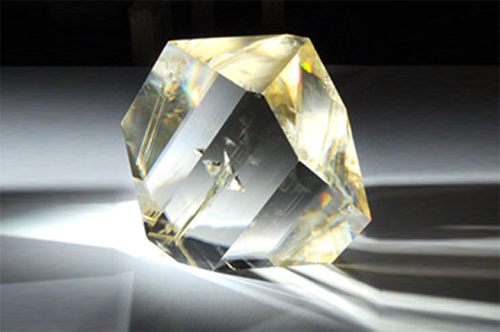
LBO(LiB₃O₅)
- Full name: lithium triborate (Lithium Triborate)
- Also invented by the Fujian Institute (late 1980s)
- Features: extremely high damage threshold, small walk-off angle, good chemical stability
- Status: the crystal of choice for high-power laser frequency conversion
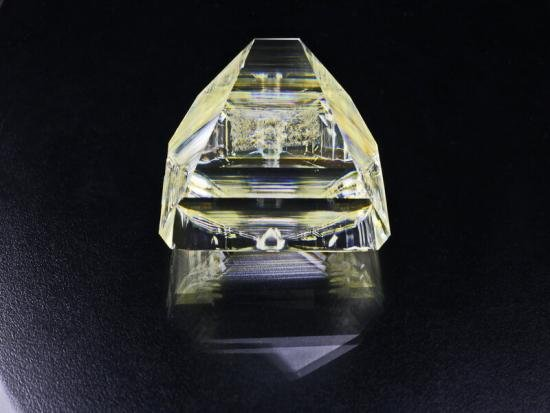
To use an analogy: if BBO is the “all-round player” among nonlinear crystals — able to do everything and do it well — then LBO is the “high-power specialist” — exceptionally able to withstand high power and performing excellently in high-power situations.
II. Working Principle: Structure, Properties and Phase Matching
1. Properties of BBO
BBO has the chemical formula β-BaB₂O₄, belongs to the trigonal crystal system and is a negative uniaxial crystal (n_e < n_o). Its basic structural unit is the (B₃O₆)³⁻ borate ring; these rings arrange in a specific way in space, forming a non-centrosymmetric crystal structure that gives rise to second-order nonlinear effects.
BBO’s main nonlinear coefficient is d₂₂ (about 2.2 pm/V), upper-middle level among common nonlinear crystals. BBO’s most prominent advantage is its extremely wide phase-matching range:
- Second-harmonic generation (SHG): phase matching possible from about 200 nm all the way to about 1800 nm
- Sum-frequency generation (SFG): can produce deep UV down to about 190 nm
- OPO: tuning range from visible to near-infrared
This ultra-wide phase-matching range, combined with good UV transmission, makes BBO one of the crystals of choice for UV and deep-UV frequency conversion.
2. Properties of LBO
LBO has the chemical formula LiB₃O₅, belongs to the orthorhombic crystal system and is a positive biaxial crystal. Its structure contains a three-dimensional network of borate tetrahedra and triangular borate planes, with lithium ions located in the network interstices.
LBO’s nonlinear coefficient is not large (d₃₂ about 1.0 pm/V), even somewhat smaller than BBO. But it has several very prominent advantages:
- Extremely high laser damage threshold: above about 20 J/cm², 3–5 times KTP and about twice BBO
- Wide transmission range: from about 160 nm deep UV to about 2.6 μm near-infrared
- Small walk-off angle and large acceptance angle: easier to use
- Good chemical stability: non-hygroscopic, moderate hardness
3. Phase-Matching Methods
BBO is a negative uniaxial crystal, mainly using type-I and type-II angle phase matching. For example, doubling 1064 nm to 532 nm, the type-I phase-matching angle is about 22.8°, with doubling efficiency reaching 40–60%.
LBO is a biaxial crystal with a richer variety of phase-matching methods. Its biggest highlight is that under certain conditions it can achieve non-critical phase matching (NCPM) — zero walk-off angle and a very large acceptance angle, ideal for high-power applications. For example, for 1064 nm doubling, LBO can achieve NCPM at about 150 °C.
III. Key Parameters: BBO vs LBO Full Comparison
| Parameter | BBO (β-BaB₂O₄) | LBO (LiB₃O₅) |
|---|---|---|
| Chemical formula | β-BaB₂O₄ | LiB₃O₅ |
| Crystal system | trigonal | orthorhombic |
| Crystal type | negative uniaxial | positive biaxial |
| Density | 3.85 g/cm³ | 2.47 g/cm³ |
| Mohs hardness | 4 | 6 |
| Transmission range | 189nm ~ 3.5μm | 160nm ~ 2.6μm |
| Nonlinear coefficient d_ij | d₂₂ ≈ 2.2 pm/V | d₃₂ ≈ 1.0 pm/V |
| Max 1064 nm SHG efficiency | 50-60% | 40-50% |
| Damage threshold (@1064 nm, 10 ns) | ~5-10 J/cm² | ~15-25 J/cm² |
| 1064 nm SHG walk-off angle (type I) | ~3.2° | ~0.5° (critical) / 0° (NCPM) |
| Hygroscopicity | slightly moisture-absorbing | non-hygroscopic |
| Price | medium | fairly high |
The difference in damage threshold: LBO’s damage threshold is clearly higher than BBO’s, one of the most significant performance differences between the two. In high-power applications BBO may be limited by thermal effects and damage issues, while LBO withstands higher power densities.
Birefringence and walk-off angle: BBO has large birefringence (Δn≈0.11) and a fairly large walk-off angle. A large walk-off angle limits usable crystal length and beam quality. LBO has moderate birefringence, a smaller walk-off angle, and can achieve NCPM (zero walk-off).
Chemical stability: BBO is slightly hygroscopic, so long-term use in high-humidity environments requires moisture protection. LBO is completely non-hygroscopic with very good chemical stability.
IV. Classification: Specifications, Grades and Coatings
Main Types and Specifications of BBO
- BBO for frequency doubling: cut at different phase-matching angles for 1064 nm doubling, 532 nm doubling, etc.
- BBO for sum-frequency: used to produce 355 nm, 266 nm and other UV/deep-UV light
- BBO for OPO: broadly tunable optical parametric oscillators, with dedicated cut angles
- BBO for electro-optic modulation: using the electro-optic effect for Pockels cells, etc.
By quality grade: standard grade (low-to-medium power), high-power grade (higher uniformity), deep-UV grade (extremely low UV absorption).
Main Types and Specifications of LBO
- Critical phase-matching (CPM) LBO: has some walk-off angle, angle-tuned
- Non-critical phase-matching (NCPM) LBO: zero walk-off angle, requires temperature tuning, first choice for high power
- LBO for OPO/OPA: broadly tunable light sources
- LBO for harmonic generation: second, third and fourth harmonic generation
Coating Types
- Dual-wavelength AR coating (e.g. 1064/532 nm): for frequency doubling
- Triple-wavelength AR coating (e.g. 1064/532/355 nm): for third-harmonic generation
- Both end faces + side faces protected against damage
V. Applications: Where Are BBO and LBO Used?
1. Green Lasers (the Main Application)
Both BBO and LBO are core doubling crystals for green lasers, converting 1064 nm infrared light into 532 nm green light:
- Low-to-medium-power green: BBO or KTP commonly used
- High-power green: LBO preferred (especially NCPM-LBO) for its high damage threshold and small walk-off
- Ultrafast green: doubling with BBO or LBO
2. UV and Deep-UV Lasers
BBO and LBO are key materials for producing UV laser (355 nm) and deep-UV laser (266 nm):
- 355 nm UV: 1064 nm first doubled to 532 nm, then sum-frequency to 355 nm (third harmonic)
- 266 nm deep UV: 532 nm doubled to 266 nm (fourth harmonic); BBO performs excellently in the deep UV
3. Optical Parametric Oscillators (OPO)
BBO-OPO is currently one of the most mature and widely used tunable OPO schemes: wide tuning range (from about 400 nm to beyond about 2 μm), high output power and high pulse energy. LBO-OPO is also used, especially in high-power OPO where LBO’s high damage threshold is an advantage.
4. Ultrafast Laser Frequency Conversion
- Femtosecond laser doubling / sum-frequency: BBO is often used for femtosecond pulses due to its wide phase-matching bandwidth
- Optical parametric amplification (OPA/NOPA): BBO is the mainstay crystal for OPA
- Difference-frequency generation (DFG): used to produce mid-infrared femtosecond pulses
5. Industrial and Research
- Laser marking, micromachining (UV lasers)
- Spectroscopy (tunable OPO)
- Medical lasers (dermatology, ophthalmology)
- Laser rangefinding, LiDAR
VI. Common Misconceptions: 6 Misunderstandings About BBO/LBO
Misconception 1: BBO and LBO are both borates, so their performance is similar
Although both are borates, their performance differs considerably. BBO has a larger nonlinear coefficient (about 2.2 vs 1.0 pm/V) and higher conversion efficiency; but LBO has a higher damage threshold (about 2–3 times), better chemical stability (non-hygroscopic) and a smaller walk-off angle. Choose LBO first for high power, BBO first for high efficiency or deep UV.
Misconception 2: BBO is hygroscopic and cannot be used at room temperature
BBO is indeed slightly hygroscopic, but far less so than KDP. In normal laboratory and industrial environments BBO can be used stably for long periods. Only under high humidity (relative humidity >70–80%) with long-term storage is moisture protection needed. BBO crystals in many lasers have worked for over a decade without problems.
Misconception 3: LBO has a small nonlinear coefficient, so its doubling efficiency is low
LBO’s nonlinear coefficient is indeed smaller than BBO’s, but under high-power conditions LBO often performs better overall. Because LBO withstands higher power densities — you can use a longer crystal and higher pump power, and the final output power is actually higher than BBO. Moreover, under non-critical phase matching LBO has no walk-off effect, giving better beam quality.
Misconception 4: The phase-matching angle is fixed and unrelated to temperature
No. The phase-matching angle is calculated from specific refractive indices, and refractive indices change with temperature. When temperature changes, the optimal phase-matching angle changes too. In practice, a temperature deviation of a few degrees can noticeably reduce conversion efficiency. This is why many nonlinear crystals need precise temperature control (LBO’s NCPM absolutely requires it).
Misconception 5: BBO and LBO can only do frequency doubling
Besides doubling, they can also do third-harmonic generation (sum-frequency), fourth-harmonic generation, optical parametric oscillation (OPO), optical parametric amplification (OPA), difference-frequency generation (DFG) and more. BBO-OPO is one of the most common broadband tunable light-source schemes and is widely used in research. Change a crystal’s cut angle and it serves a completely different application.
Misconception 6: The longer the crystal, the higher the conversion efficiency
Under ideal theoretical conditions that is true. But in practice, because of walk-off, absorption, thermal effects, beam divergence and other factors, longer is not always better. An overly long crystal may actually let the fundamental and doubled light “separate” due to walk-off, keeping efficiency low and increasing thermal-effect risk. Real selection requires comprehensive optimization based on beam diameter, power density, walk-off angle and so on.
📚 References
- RP Photonics Encyclopedia – BBO Crystal, LBO Crystal
- Crystal Technology BBO/LBO Datasheet
- Fujian Institute crystal-material parameter tables
- Nonlinear Optical Crystal Materials Science
- Laser Frequency Conversion Technology Handbook
👉 To learn more about lasers, browse other sections of the Laser Encyclopedia.
Leave a Reply