


Having discussed BBO and LBO — the two “borate stars” — let us meet several other important members of the nonlinear optical crystal family: KDP/KD*P, KTP, LiNbO₃ (lithium niobate), as well as promising contenders such as BIBO, CBO and RTP. Each has its own special skill, excelling in fields as varied as electro-optic Q-switching, green lasers, optical communication and mid-infrared OPO.
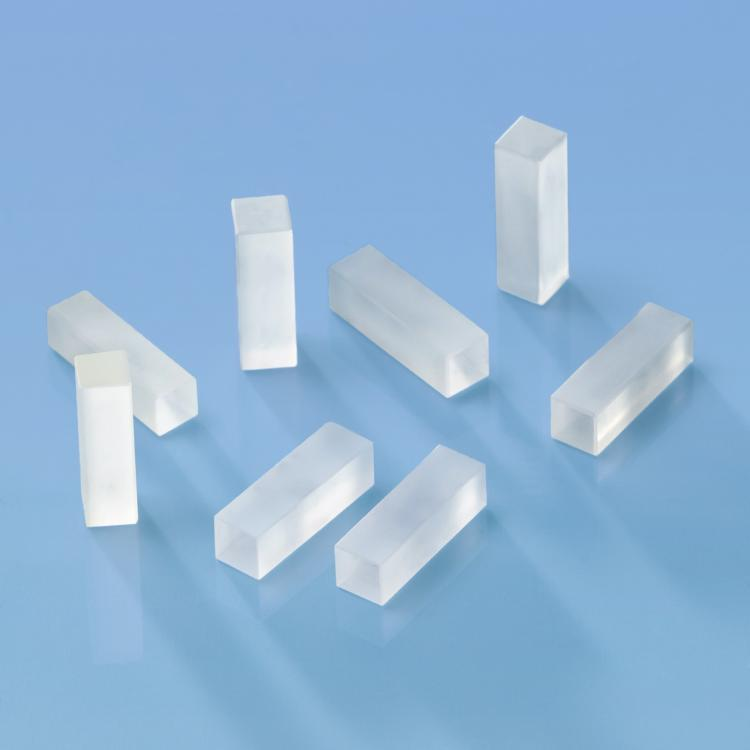
Why is the KD*P Pockels cell the “standard answer” for electro-optic Q-switching? Why do most commercial green lasers use KTP? Why is lithium niobate called “optical silicon”? And what exactly is PPLN? In this article we clarify the characteristics, applications and selection points of these crystals once and for all.
📋 Table of Contents
- I. Core Concepts: What Are KDP, KTP and LiNbO₃?
- II. Working Principle: Properties and Advantages of Each Crystal
- III. Key Parameters: A Full Comparison of 9 Nonlinear Crystals (Including BBO/LBO)
- IV. Classification: Material Families and Application Categories
- V. Applications: EO Q-Switching, Green Lasers, PPLN, IR OPO…
- VI. Common Misconceptions: 6 Misunderstandings About These Crystals
I. Core Concepts: What Are KDP, KTP and LiNbO₃?
In the nonlinear optical crystal family, besides BBO and LBO there are several other important members with distinct characteristics:
KDP/KD*P (potassium dihydrogen phosphate / deuterated)
- the most classic and oldest nonlinear optical crystal
- biggest feature: can be grown as metre-scale large single crystals
- also has excellent nonlinear and electro-optic properties
- status: the “standard” for high-power lasers (fusion facilities), mainstay of electro-optic Q-switching
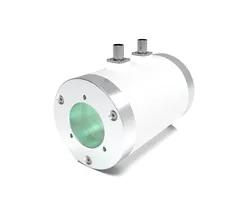
KTP (potassium titanyl phosphate)
- fairly large nonlinear coefficient, excellent overall performance
- biggest feature: high green second-harmonic efficiency, suited to low- and medium-power green lasers
- status: the “workhorse” of commercial green lasers
LiNbO₃ (lithium niobate)
- one of the common nonlinear crystals with the largest nonlinear coefficient
- has electro-optic, acousto-optic, piezoelectric and nonlinear effects all at once — called “optical silicon”
- biggest feature: periodic poling (PPLN) technology gives it new life
- status: core material for integrated photonics and optical communication
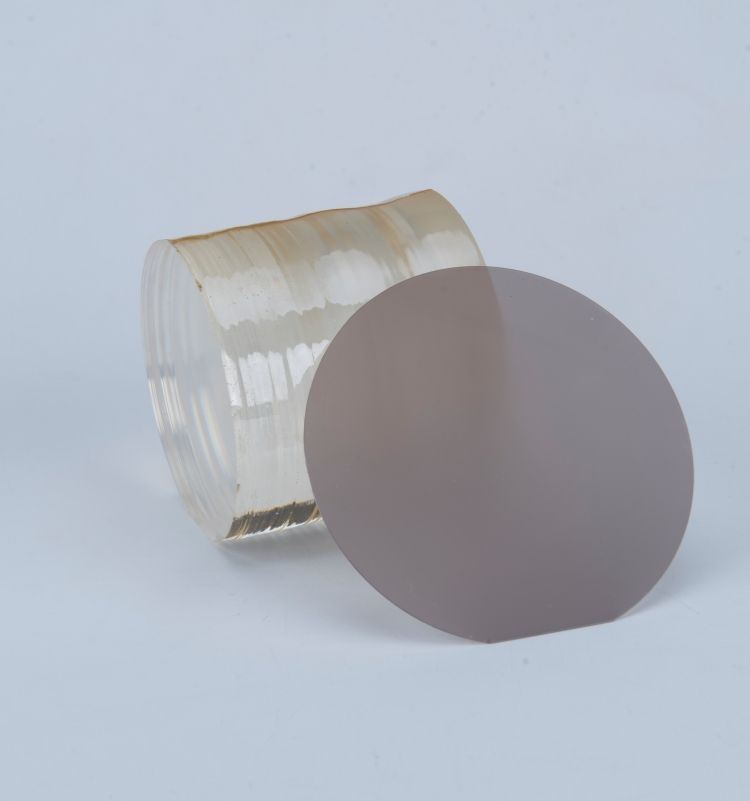
To use an analogy: if BBO and LBO are “star players,” then KDP is the “veteran centre” (large size, high power), KTP the “efficiency forward” (high frequency-doubling efficiency), and LiNbO₃ the “all-round free agent” (every effect, usable in every field).
II. Working Principle: Properties and Advantages of Each Crystal
1. KDP/KD*P: Large Size and the Electro-Optic Effect
KDP has the chemical formula KH₂PO₄ (potassium dihydrogen phosphate), belongs to the tetragonal crystal system and is a negative uniaxial crystal. KD*P is the deuterated version of KDP — replacing hydrogen with deuterium reduces absorption near 1 μm, making it better suited to 1064 nm applications.
KDP has two very prominent features:
- Easy to grow as large single crystals — the aqueous-solution method can grow crystals tens of centimetres or even over a metre across, extremely rare among nonlinear crystals. Precisely for this reason, KDP is the natural choice for very-large-aperture optical systems such as laser fusion (ICF).
- Significant electro-optic effect — the KD*P Pockels cell is the most classic electro-optic Q-switching scheme in high-power lasers.
Disadvantages: small nonlinear coefficient (d₃₆ ≈ 0.4 pm/V), highly hygroscopic (must be used sealed), medium damage threshold per unit area. It is irreplaceable in very-large-aperture systems such as fusion not because of an exceptionally high per-unit threshold, but because it is the only crystal growable to metre-scale size, its threshold can be raised by laser conditioning, and its cost is controllable.
2. KTP: The “Workhorse” of Green Frequency Doubling
KTP has the chemical formula KTiOPO₄ (potassium titanyl phosphate), belongs to the orthorhombic crystal system and is a positive biaxial crystal. It was invented by DuPont in the 1970s.
KTP’s main feature is a large nonlinear coefficient and high frequency-doubling efficiency. The effective nonlinear coefficient d_eff is about 3–4 pm/V, larger than BBO and nearly ten times KDP. It is especially suited to doubling 1064 nm to 532 nm green, with intracavity doubling efficiencies above 50%.
Disadvantages: medium damage threshold (typically about 5–10 J/cm² @1064 nm, 10 ns for coated samples, about 3 J/cm² @532 nm), type-II doubling phase-matching range about 497–1800 nm (cannot produce 355 nm, 266 nm and other UV by doubling), and a “grey-tracking effect” at high average power.
3. LiNbO₃: The Most Versatile “Optical Silicon”
Lithium niobate has almost “collected” every optical effect: nonlinear optics, electro-optic, acousto-optic, piezoelectric, pyroelectric, photorefractive… Its nonlinear coefficient d₃₃ is about 25 pm/V, one of the largest among common nonlinear crystals.
The biggest limiting factor is the photorefractive effect — under visible-light illumination, carrier migration inside the crystal changes the refractive index, seriously degrading beam quality and efficiency. Magnesium doping (MgO:LiNbO₃) significantly raises the photorefractive-damage threshold.
Despite the photorefractive limitation, LiNbO₃ shines in the field of periodic poling (PPLN). Through quasi-phase-matching (QPM) technology, PPLN exploits the largest nonlinear coefficient d₃₃ and is extremely important in mid-IR OPO, optical communication and quantum optics.
4. Other Important Crystals
- MgO:LiNbO₃: magnesium-doped, resistant to photorefraction; PPMgLN is the mainstay of high-power QPM
- BIBO: high nonlinearity + good UV transmission, suited to blue/UV doubling
- CBO: excellent deep-UV sum-frequency performance
- RTP: same family as KTP, better electro-optic performance, non-hygroscopic
- ZGP / AgGaS₂: mid-infrared nonlinear crystals
III. Key Parameters: A Full Comparison of 9 Nonlinear Crystals (Including BBO/LBO)
| Parameter | KDP | KD*P | KTP | LiNbO₃ | MgO:LN | BIBO | BBO | LBO |
|---|---|---|---|---|---|---|---|---|
| Chemical formula | KH₂PO₄ | KD₂PO₄ | KTiOPO₄ | LiNbO₃ | MgO:LiNbO₃ | BiB₃O₆ | β-BaB₂O₄ | LiB₃O₅ |
| Crystal system | tetragonal | tetragonal | orthorhombic | trigonal | trigonal | monoclinic | trigonal | orthorhombic |
| Transmission range | 180-1500nm | 180-2500nm | 350-4500nm | 400-5000nm | 400-5000nm | 260-2500nm | 189-3500nm | 160-2600nm |
| Nonlinear coefficient (pm/V) | d₃₆≈0.4 | d₃₆≈0.4 | effective d ~3–4 | d₃₃≈25 | d₃₃≈20 | d₁₁≈3.1 | d₂₂≈2.2 | d₃₂≈1.0 |
| 1064 nm SHG efficiency | low | low | high | very high | high | high | high (50–60%) | fairly high (40–50%) |
| Damage threshold @1064 nm, 10 ns (J/cm²) | ~3-5 | ~5-10 | ~5-10 | ~0.5-1 | ~2-5 | ~3-5 | ~5-10 | ~15-25 |
| Hygroscopicity | severely hygroscopic | severely hygroscopic | non-hygroscopic | non-hygroscopic | non-hygroscopic | non-hygroscopic | slightly moisture-absorbing | non-hygroscopic |
| Mohs hardness | 2.5 | 2.5 | 5 | 5 | 5.5 | 5 | 4 | 6 |
| Price | low | medium | medium | medium | medium-high | high | medium | fairly high |
Nonlinear coefficients vary enormously: from KDP’s 0.4 pm/V to LiNbO₃’s 25 pm/V — a difference of over 60 times. But a large nonlinear coefficient does not necessarily mean “easy to use” — damage threshold, photorefraction, transmission range and other factors must be considered together.
Damage threshold and nonlinear coefficient are usually inversely related: this is a general rule of nonlinear crystals. The stronger the interaction, the more easily the material is “damaged.” Selection requires finding a balance between efficiency and power handling.
Note on table data: transmission ranges and nonlinear coefficients are typical manufacturer values; damage thresholds, unless otherwise noted, are typical magnitudes under @1064 nm, 10 ns, coated-sample conditions, and vary in practice with coating quality, wavelength, pulse width and beam aperture — for engineering selection please refer to the crystal manufacturer’s specification sheet. The BBO and LBO columns are consistent with this site’s BBO/LBO Nonlinear Crystal Encyclopedia, which gives a complete discussion of BBO/LBO properties, phase matching and high-power/deep-UV selection.
IV. Classification: Material Families and Application Categories
1. Phosphate Series
- KDP: the most classic nonlinear/electro-optic crystal, large size, low cost
- KD*P: deuterated KDP, better IR transmission, mainstay of electro-optic Q-switching
- KTP: high-efficiency doubling, standard for green lasers
- RTP: same family as KTP, better electro-optic performance, non-hygroscopic
2. Niobate Series
- LiNbO₃: multifunctional crystal — nonlinear + electro-optic + acousto-optic + piezoelectric
- MgO:LiNbO₃: magnesium doping improves resistance to photorefraction
- PPLN / PPMgLN: periodically poled lithium niobate, quasi-phase matching
- LiTaO₃: similar to LiNbO₃, with better performance in some respects
3. By Function
| Function | Representative crystals | Features |
|---|---|---|
| Second-harmonic generation (SHG) | KTP, BIBO | high efficiency, low-to-medium power |
| Electro-optic modulation / Q-switching | KD*P, RTP, LiNbO₃ | high-speed response |
| OPO | PPLN, ZGP, KTP | broad tunability |
| large-aperture high power | KDP/KD*P | metre-scale large size |
| mid-IR OPO | ZGP, AgGaS₂, PPLN | 2–12 μm coverage |
| Quasi-phase matching (QPM) | PPLN, PPMgLN, PPKTP | flexible tuning |
V. Applications: EO Q-Switching, Green Lasers, PPLN, IR OPO…
1. Electro-Optic Q-Switching (KD*P / RTP)
This is one of the largest application areas for the KDP family. Nearly all nanosecond pulsed solid-state lasers need a Q-switch to produce short pulses, and the KD*P Pockels cell is the most classic electro-optic Q-switching scheme. Applying a voltage changes the crystal’s birefringence, controlling resonator loss; by switching the voltage rapidly, Q-switching is achieved, producing nanosecond high-peak-power pulses.
As a new-generation electro-optic crystal, RTP offers non-hygroscopicity, low half-wave voltage and high repetition rate, and is increasingly replacing KD*P in many situations.
2. Green Lasers (KTP)
KTP is the “standard” doubling crystal for commercial low- and medium-power green lasers. Most small green laser pointers, green alignment lasers and low-to-medium-power industrial green lasers use KTP crystals inside. Intracavity doubling efficiency can exceed 50%, giving excellent value for money.
Note: high-power green lasers (tens of watts and above) usually do not use KTP but LBO — because KTP’s damage threshold is insufficient and it tends to develop “grey tracks.”
3. Periodically Poled Lithium Niobate (PPLN)
PPLN is one of the most important advances in nonlinear optics over the past two decades. Through quasi-phase-matching technology, PPLN exploits LiNbO₃’s largest nonlinear coefficient d₃₃ and offers flexible tuning. Main applications:
- Mid-IR OPO: pumped at 1 μm to produce 2–5 μm mid-infrared laser light
- Frequency conversion: wavelength conversion in optical-communication bands
- Quantum optics: generating entangled photon pairs
- Terahertz generation: difference-frequency generation of THz waves
4. Inertial-Confinement Fusion (KDP)
In giant laser-fusion facilities such as the National Ignition Facility (NIF), very-large-aperture nonlinear crystals are needed for frequency conversion. KDP, which can be grown as metre-scale large single crystals, is almost the only choice. The NIF uses over a hundred large KDP and KD*P crystals.
5. Optical Communication and Integrated Photonics (LiNbO₃)
Thanks to its excellent electro-optic effect, lithium niobate is the traditional core material for optical-communication modulators. Lithium-niobate modulators in high-speed optical-communication systems achieve modulation rates of tens or even hundreds of GHz.
In recent years, breakthroughs in lithium-niobate-on-insulator (LNOI) technology have given lithium niobate new life — various photonic chips can be fabricated on thin-film lithium niobate, known as the “next-generation photonic integration platform.”
VI. Common Misconceptions: 6 Misunderstandings About These Crystals
Misconception 1: The larger the nonlinear coefficient, the better the crystal
This is the mistake beginners most often make. LiNbO₃’s nonlinear coefficient is over 10 times BBO’s, but because of photorefraction and damage-threshold issues it is rarely used in high-power frequency doubling. Real selection must consider damage threshold, transmission range, phase-matching range, walk-off angle, chemical stability, cost and other factors together.
Misconception 2: KDP is hygroscopic, so it is hard to use
KDP’s hygroscopicity is indeed a drawback, but as long as it is properly sealed (for example packaged in a box filled with dry nitrogen), KDP can operate stably for many years. Moreover, KDP has irreplaceable advantages — it can be grown in extremely large sizes. In applications like laser fusion that need metre-scale apertures, KDP is almost the only choice.
Misconception 3: LiNbO₃ is just for making electro-optic modulators
LiNbO₃ is indeed the most classic electro-optic modulation material, but its applications go far beyond that. Nonlinear optics (doubling, OPO, difference frequency), acousto-optic devices, acoustic-wave devices, optical waveguides, periodic poling (PPLN), integrated photonics, quantum optics… LiNbO₃ covers almost every optoelectronics field.
Misconception 4: PPLN is a new kind of crystal
No. PPLN (periodically poled lithium niobate) is not a new crystal material — it is made from LiNbO₃ crystal, just with the ferroelectric domain orientation periodically reversed by an applied electric field (equivalent to periodically changing the sign of the nonlinear coefficient). This structure achieves quasi-phase matching (QPM), exploiting the largest nonlinear coefficient d₃₃. In essence, PPLN is a form of “structural engineering,” not a “new material.”
Misconception 5: KTP can only do green frequency doubling
KTP’s best-known application is indeed green doubling, but it goes far beyond that. KTP can also do sum-frequency generation, OPO (optical parametric oscillation), electro-optic modulation and more. KTP-OPO is one of the practical schemes for tunable near-IR. In addition, KTP’s fellow material RTP is used mainly as an electro-optic crystal (Q-switches, modulators).
Misconception 6: The photorefractive effect is all bad
The photorefractive effect is indeed a “trouble” when LiNbO₃ is used for frequency conversion, but it is also useful in its own right. Using the photorefractive effect, one can make holographic memories, phase-conjugate mirrors, photorefractive waveguides, spatial-soliton devices and more. In some fields (such as holographic data storage), photorefraction is the core operating principle. The effect itself is neither good nor bad — it depends on how it is used.
📚 References
- RP Photonics Encyclopedia – KTP, KDP, Lithium Niobate
- Nonlinear Optical Crystal Materials Science
- Nonlinear Optics (Robert W. Boyd)
- Lithium Niobate Crystals and Their Applications
- EKSMA Optics / Quantum Technology crystal data sheets
👉 To learn more about lasers, browse other sections of the Laser Encyclopedia.
Leave a Reply