


If the UV laser is a “light knife that can cut molecular bonds,” then the deep ultraviolet laser (DUV) is an even sharper “nanoscale light knife” – with shorter wavelength and higher photon energy, it can etch nanometre-scale chip circuitry and probe inside materials to reveal the motion of electrons.
From the 193 nm ArF lithography that underpins global chip manufacturing to cutting-edge angle-resolved photoemission spectrometers, deep ultraviolet lasers play an irreplaceable role in the microscopic world. Today we take a comprehensive look at deep ultraviolet lasers.
Table of Contents
I. Core Concepts: What Is Deep Ultraviolet Laser?
A deep ultraviolet laser (Deep Ultraviolet Laser, abbreviated DUV laser) is a laser whose output wavelength lies in the deep ultraviolet band. Internationally, the deep UV band is generally defined as 100 nm to 280 nm, covering two parts: the UVC band (200-280 nm) and vacuum ultraviolet VUV (100-200 nm). Deep UV sits at the short-wavelength end of the ultraviolet band, with extremely high photon energy (4.4 eV to 12.4 eV).
Several key wavelengths in the deep UV band:
- 266 nm: fourth harmonic of 1064 nm, the most commonly used all-solid-state deep UV wavelength
- 248 nm: KrF excimer laser, the workhorse of previous-generation DUV lithography
- 193 nm: ArF excimer laser, the core wavelength of current mainstream DUV lithography
- 157 nm: F2 excimer laser, in the vacuum ultraviolet band
- ~177.3 nm: KBBF crystal frequency-doubled output, the signature wavelength of China’s solid-state deep UV lasers
The core value of deep UV lasers:
- Ultra-high resolution: short wavelength means a small diffraction limit, allowing finer lines in lithography
- Ultra-high photon energy: photon energy can reach 6-10 eV, enough to break nearly any chemical bond and excite internal electrons in materials
- Strong absorption characteristic: most materials absorb strongly in the deep UV band, ideal for “cold processing” and surface detection
💡 Material challenge: why are DUV optics expensive?
Ordinary optical glass absorbs strongly in the deep UV band and simply cannot be used. DUV system optics must use special materials:
- Fused Silica: the most common optical material for DUV above 200 nm, with high transmission and moderate cost
- Calcium Fluoride (CaF2): usable at 193 nm and shorter, with low birefringence, suited to deep and vacuum UV
- Magnesium Fluoride (MgF2): shorter transmission range (~120 nm), commonly used in the VUV band
These materials are far harder to process and coat than ordinary optical glass, which is one reason DUV equipment is costly.
II. How It Works: How Is Deep UV Light “Made”?
Generating deep UV laser light is far more difficult than ordinary UV – the shorter the wavelength, the higher the photon energy, and the more demanding the material requirements. There are currently three major technology routes, each suited to different power levels and applications: 1. Excimer lasers (mainstay of industrial lithography, high power), 2. all-solid-state deep UV lasers (research and precision instruments, good beam quality), and 3. AlGaN semiconductor deep UV lasers (emerging direction, miniaturization). Each is described in detail below.
Route One: Excimer Lasers (Mainstream Industrial Lithography)
Excimer lasers are currently the most mature and highest-power deep UV light sources in industry, and the mainstay solution for 193 nm DUV lithography.
Working principle: a mixture of rare gas (Ar, Kr, Xe) and halogen gas (F, Cl) is filled into a high-voltage gas chamber and excited by a high-voltage pulsed discharge, causing gas atoms to briefly combine into an “excimer” (excited-state dimer). When the excimer transitions from the excited state back to the ground state, it releases a deep UV photon, then rapidly dissociates into individual atoms.
The name “excimer” is apt – a molecule that exists only in the excited state; in the ground state it is not a molecule at all.
Typical excimer laser wavelengths:
- ArF (argon fluoride): 193 nm – the absolute mainstay of current DUV lithography
- KrF (krypton fluoride): 248 nm – previous-generation DUV lithography
- XeCl (xenon chloride): 308 nm – belongs to near UV (UVA/UVB boundary), outside the deep UV (DUV, <280 nm) range, commonly used in dermatology to treat vitiligo and psoriasis
- F2 (fluorine molecule): 157 nm – vacuum ultraviolet
Features: high power (tens to hundreds of watts), mature technology, but bulky, requires high-pressure gas, and has high maintenance cost.
Route Two: All-Solid-State Deep UV Lasers (Research and Precision Instruments)
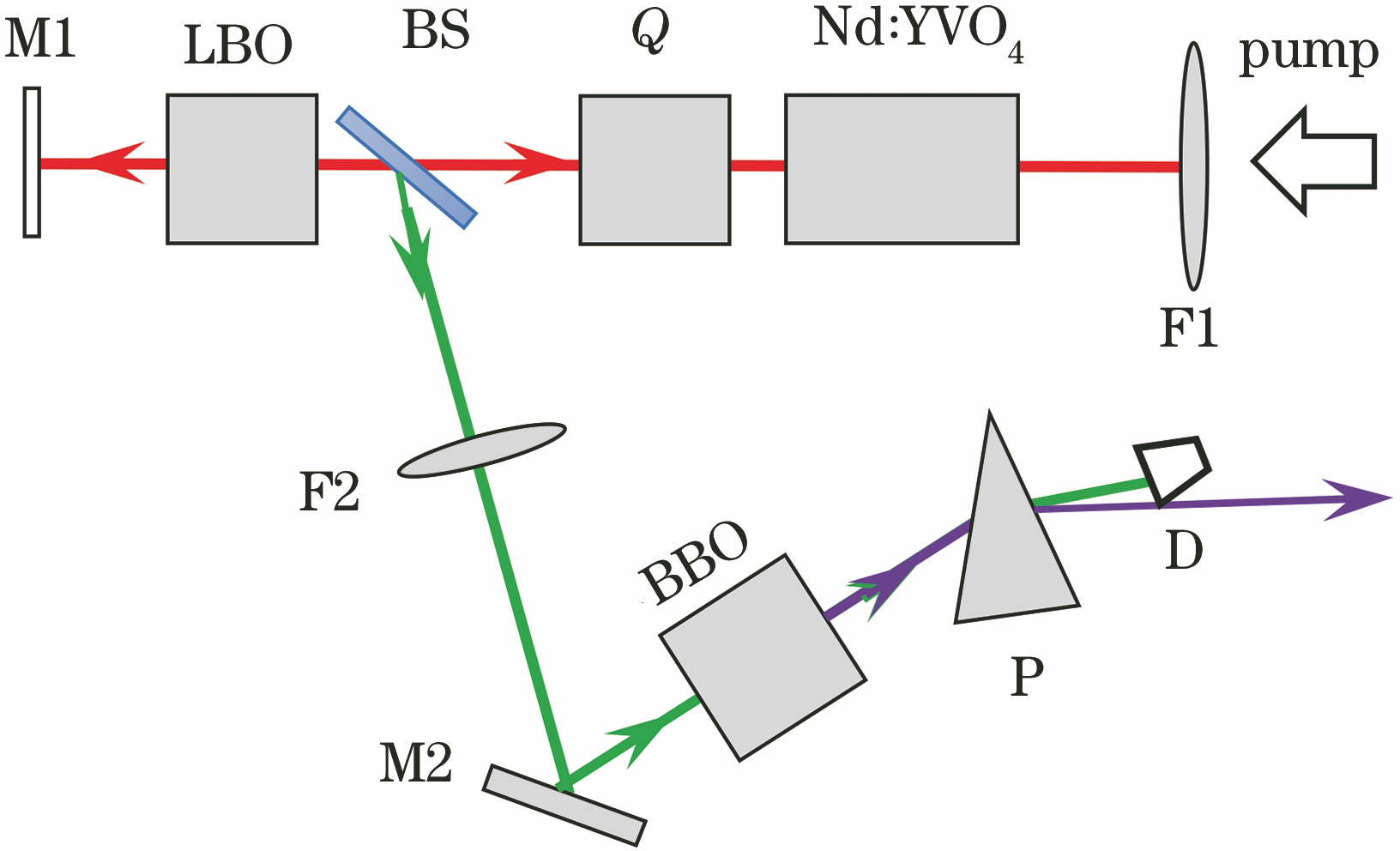
Nonlinear optical crystals are used to perform multistage frequency conversion (frequency doubling, sum-frequency generation) on a solid-state laser output to obtain deep UV wavelengths. This is one of the most active research directions today.
Classic path: 266 nm (fourth harmonic)
1064 nm infrared → KTP doubling → 532 nm green; 532 nm green → BBO doubling → 266 nm deep UV (fourth harmonic)
193 nm all-solid-state path (multistage sum frequency):
1030 nm → 515 nm → 258 nm; 258 nm + 1553 nm sum frequency → 221 nm; 221 nm + 1553 nm sum frequency → 193 nm
Core crystal: KBBF (potassium beryllium fluoroborate)
invented by the team of Academician Chen Chuangtian of China, it is currently the world’s only practical nonlinear optical crystal that can directly frequency-double to produce deep UV laser light (down to 177.3 nm). China has long led the world in this field.
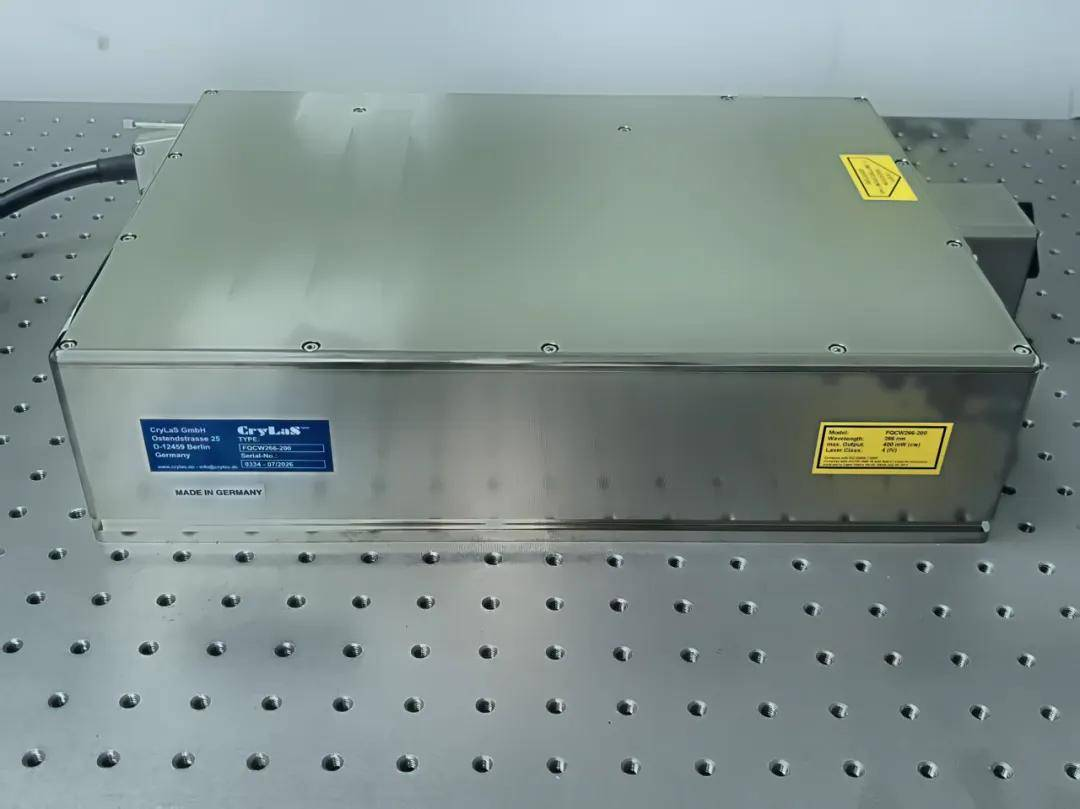
Features: good beam quality, narrow linewidth, high stability, no high-pressure gas, long lifetime, but low conversion efficiency and generally low power.
Route Three: AlGaN Semiconductor Deep UV Lasers (Emerging Direction)
Based on the gallium nitride (GaN) material system, the bandgap is tuned with aluminium gallium nitride (AlGaN) alloy to directly generate deep UV laser light by electrical injection. This is one of the most active research directions in deep UV lasers.
- Wavelength range: 210-365 nm (higher Al content gives shorter wavelength)
- Advantages: small size, high efficiency, long lifetime, direct electrical drive, with the prospect of chip-scale DUV light sources
- Challenges: difficult p-type doping, crystal quality needs improvement, and deep UV end power is still low (mW level)
- Application prospects: water purification and disinfection, biochemical detection, UV curing, optical communications, etc.
Other Methods
- High harmonic generation (HHG): an ultraintense femtosecond laser plus inert gas produces extremely short-wavelength deep UV/extreme UV coherent light, mainly for research
- Free-electron laser: tunable to any wavelength, high power, but enormous in size and extremely costly
III. Key Parameters
| Parameter | Meaning | Typical Value |
|---|---|---|
| Centre wavelength | Deep UV output wavelength | 193/248/266/177.3 nm |
| Average power | Energy output per unit time | mW to W class (solid-state); W to hundred-W class (excimer) |
| Pulse energy | Single-pulse energy | uJ to mJ to J class |
| Beam quality M2 | Closeness to a Gaussian beam | solid-state <1.5; excimer poorer |
| Linewidth | Spectral linewidth | excimer: ~pm level (after linewidth narrowing); solid-state: can be as narrow as fm level |
| Gas lifetime (excimer) | Duration of one gas fill | Millions to tens of millions of pulses |
IV. Types
By technology route
- Excimer deep UV laser: gas-discharge route, 193/248 nm, mainstay of industrial lithography and medicine
- All-solid-state deep UV laser: nonlinear frequency-conversion route, 266/193/177.3 nm, for research and precision instruments
- Deep UV ultrafast laser: femtosecond/picosecond plus deep UV, for time-resolved spectroscopy and attosecond physics
- High-harmonic deep UV source (HHG): ultraintense laser plus gas, for frontier research
- Free-electron deep UV laser: tunable high power, but large and costly
By wavelength
- 200-280 nm (UVC): transmits normally in air (e.g. 266 nm, 248 nm); nitrogen purge is recommended to reduce absorption and ozone generation
- 190-200 nm: air absorption increases markedly (e.g. 193 nm ArF excimer laser), cannot travel long distances in air; the optical path usually needs nitrogen purge or a sealed nitrogen-filled enclosure
- 100-190 nm (VUV): vacuum ultraviolet band, extremely strong air absorption, must be used in vacuum or inert gas (e.g. 157 nm F2 excimer laser)
V. Applications
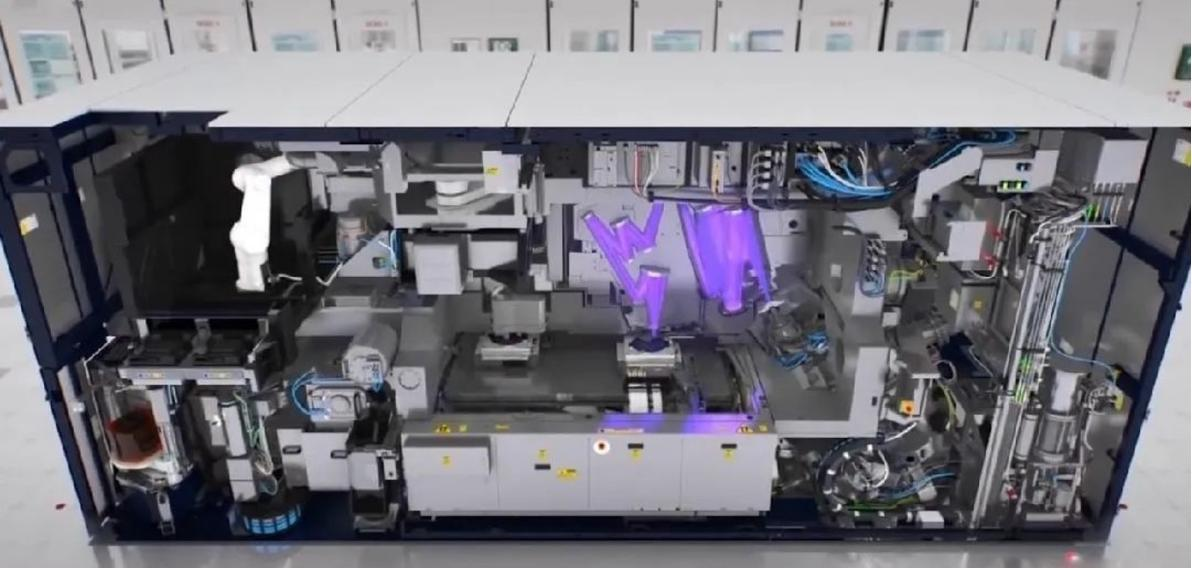
1. Semiconductor Lithography (Largest and Most Important)
The deep UV laser is the “soul” of chip manufacturing:
- 193 nm ArF lithography: still the mainstay production technology for 7 nm to 14 nm nodes (with immersion and multiple patterning)
- 248 nm KrF lithography: used for 250 nm to 90 nm nodes and mature processes
- DUV lithography supports the manufacture of the vast majority of chips worldwide and is the foundation of the entire information industry
2. Frontier Scientific Research
Deep UV lasers are the core light source of many advanced scientific instruments:
- Angle-resolved photoemission spectroscopy (ARPES): probes the electronic structure of materials; China’s deep UV solid-state laser sources lead the world in this field
- Photoemission electron microscopy (PEEM): ultrahigh-spatial-resolution surface imaging
- Deep UV Raman spectroscopy and fluorescence spectroscopy: higher sensitivity and resolution
- Condensed-matter physics, high-temperature superconductivity, and two-dimensional materials research
3. Precision Micro- and Nanofabrication
- Stealth dicing and scribing of semiconductor wafers
- LED chip scribing, microhole drilling
- Ultraprecision machining of sapphire, glass, and ceramics
- Nanoscale etching of polymer films and photoresists
4. Medical and Health
- Ophthalmic surgery: 193 nm ArF excimer laser for LASIK/PRK myopia correction
- Dermatology: 308 nm XeCl excimer laser for vitiligo and psoriasis
- Biomolecule detection: deep UV excites natural fluorescence (proteins, nucleic acids, etc.)
5. Others
Wafer defect inspection, environmental monitoring, sterilization and disinfection, MEMS manufacturing, etc.
VI. Common Misconceptions
Myth 1: Deep UV is the same as extreme UV (EUV)
Correction: They are completely different! Deep UV (DUV) is 100-280 nm, while extreme UV (EUV) is 13.5 nm – an order of magnitude apart. DUV lithography uses an ArF excimer laser (193 nm), while EUV lithography uses a laser-plasma source (13.5 nm); the technology routes are entirely different. DUV is today’s mass-production mainstay, EUV is the more advanced next generation. The two are complementary.
Myth 2: Deep UV lasers must be used in a vacuum
Correction: It depends on the wavelength. Deep UV above 200 nm (e.g. 266 nm, 248 nm) transmits normally in air, usually with nitrogen purge to reduce absorption and ozone. Although the 193 nm ArF excimer laser is near 200 nm, oxygen absorption is already strong and it cannot travel long distances in air; the optical path in lithography equipment needs nitrogen purge or a sealed nitrogen fill. Vacuum UV below 200 nm (VUV, e.g. 157 nm), because of extremely strong air absorption, must be used in a vacuum or inert gas.
Myth 3: All deep UV lasers are excimer lasers
Correction: Excimer is an important DUV route, but not the only one. All-solid-state deep UV lasers (nonlinear crystal frequency conversion) are another important route, especially suited to research and precision instruments. There are also high-harmonic generation and free-electron lasers. The choice depends on specific needs such as power, beam quality, and maintenance cost.
Myth 4: 266 nm and 355 nm are similar, just slightly shorter
Correction: A big difference! The photon energy of 266 nm (4.66 eV) is 34% higher than 355 nm (3.49 eV). 266 nm can break more chemical bonds and gives higher processing precision (40% smaller diffraction limit), but is far harder, less efficient, costlier, and more damaging to optics. In industry 355 nm is the mainstream; 266 nm serves special high-end needs.
Myth 5: KBBF crystal is a “universal” deep UV crystal
Correction: KBBF is indeed excellent – currently the only practical crystal that can directly frequency-double to 177.3 nm deep UV – but it has drawbacks: its layered structure cleaves very easily, making thick large crystals hard to grow; natural growth thickness is only on the order of 0.1 mm; it requires prism coupling technique (PCT) to be practical; and growth takes a long time at high cost. Different wavelengths and power needs call for different crystal solutions.
Myth 6: Now that EUV is here, DUV should be phased out
Correction: Not at all. Although EUV represents more advanced nodes (5 nm and below), DUV lithography remains the absolute mainstay of global chip manufacturing – the vast majority of chips do not need 5 nm-class processes. DUV costs far less than EUV and offers excellent value; 193 nm immersion plus multiple patterning keeps evolving. For a long time to come, DUV will remain one of the core pieces of equipment in semiconductor manufacturing.
Myth 7: Deep UV laser safety is the same as ordinary UV
Correction: Deep UV is far more dangerous than ordinary UV! The shorter the wavelength, the higher the photon energy and the stronger the damage to biological tissue:
- DNA damage and cancer risk: deep UV photons have high energy and can directly break DNA bonds, causing genetic mutations and skin cancer
- Eye injury: deep UV is mostly absorbed by the cornea and lens, causing photokeratitis (UV keratitis) and cataracts; DUV laser exposure to the eye can cause permanent vision damage
- Skin burns and accelerated aging: brief exposure can cause severe skin burns; long-term exposure accelerates skin aging
- Ozone generation: deep UV below 240 nm splits O2 in air into ozone (O3), which irritates and damages the human respiratory tract; good ventilation or nitrogen purge is essential
Special protective glasses and clothing for the deep UV wavelength must be used, and the work environment must be well ventilated.
References
- RP Photonics Encyclopedia – Ultraviolet Lasers
- Xu Zuyan, Deep UV All-Solid-State Laser Sources | China Laser
- Electronics Fans – Deep UV Solid-State Laser Sources / Deep UV Lasers
- Chinese Academy of Sciences, “Light Chasers in the Deep UV World” | Chinese Science Daily
- Advanced Photonics Nexus – LBO crystal enables high-power, narrow-linewidth solid-state deep UV laser
- Huajin Securities – In-depth report on the lithography industry
Leave a Reply