


When it comes to solid-state lasers, you cannot avoid Nd:YAG. Neodymium-doped yttrium aluminium garnet (Nd:YAG) is the most widely used and most mature laser crystal — from ten-kilowatt industrial cutting machines to precision instruments in eye surgery, and even the green laser pointer in your hand, it may be behind them all. In this article we systematically discuss what Nd:YAG and the various neodymium-doped laser crystals actually are, how they work, what characteristics each has and how to select them.
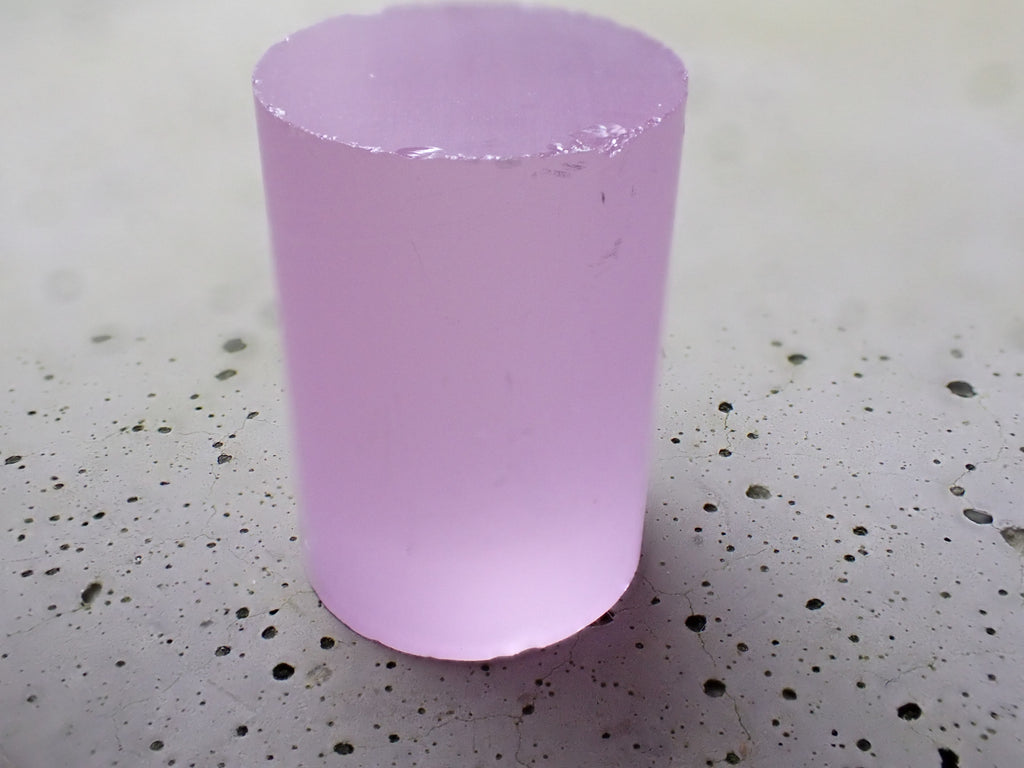
Table of Contents
- I. Core Concepts: What Is a Neodymium-Doped Laser Crystal
- II. Working Principle: Nd³⁺ Energy Levels and Laser Transitions
- III. Key Parameters Explained
- IV. Main Types Compared (YAG/YVO₄/YLF/Glass)
- V. Application Scenarios
- VI. Common Misconceptions
- References
I. Core Concepts: What Is a Neodymium-Doped Laser Crystal
A neodymium-doped laser crystal is a laser crystal that uses the trivalent neodymium ion (Nd³⁺) as the active ion. The most famous and most widely used of these is Nd:YAG (neodymium-doped yttrium aluminium garnet) — one might say Nd:YAG is the “beloved icon” of the solid-state laser world, with the largest usage, the most mature technology and the broadest applications.
An interesting figure: of all laser crystals consumed worldwide each year, by weight Nd:YAG alone may account for more than half. From industrial cutting to medical aesthetics, from research experiments to military equipment, it is everywhere.
Nd³⁺ is a rare-earth ion whose energy-level structure is ideally suited to lasing: a four-level system, long fluorescence lifetime, high quantum efficiency and strong absorption peaks that exactly match the output wavelengths of diode lasers. More than sixty years have passed since Bell Labs first demonstrated Nd:YAG laser output in 1964, and it remains the “top star” of solid-state lasers.
| Quick Look at Basic Nd:YAG Parameters | |
|---|---|
| Chemical formula | Nd³⁺:Y₃Al₅O₁₂ (neodymium-doped yttrium aluminium garnet) |
| Active ion | Nd³⁺ (neodymium ion) |
| Host crystal | YAG (yttrium aluminium garnet) |
| Main laser wavelength | 1064 nm (near-infrared) |
| Other wavelengths | 1319 nm, 946 nm, 1123 nm, etc. |
| Common pump wavelength | 808 nm (main absorption peak) |
| Fluorescence lifetime | about 230 μs (at room temperature) |
| Thermal conductivity | about 14 W/m·K |
| Mohs hardness | 8.5 (very hard) |
Besides Nd:YAG, common neodymium-doped laser crystals include Nd:YVO₄ (yttrium vanadate), Nd:YLF (lithium yttrium fluoride), Nd:Glass (neodymium glass), Nd:GdVO₄, Nd:LuAG and others, each with its own characteristics and suitable applications.
II. Working Principle: Nd³⁺ Energy Levels and Laser Transitions
1. The Energy-Level Structure of Nd³⁺
The laser transition in Nd:YAG occurs within the 4f electron configuration of the Nd³⁺ ion. Because the 4f electrons are shielded by the outer 5s and 5p electrons, the host has relatively little influence on the energy-level structure — which is why neodymium-doped crystals, regardless of host, all lase near 1064 nm.
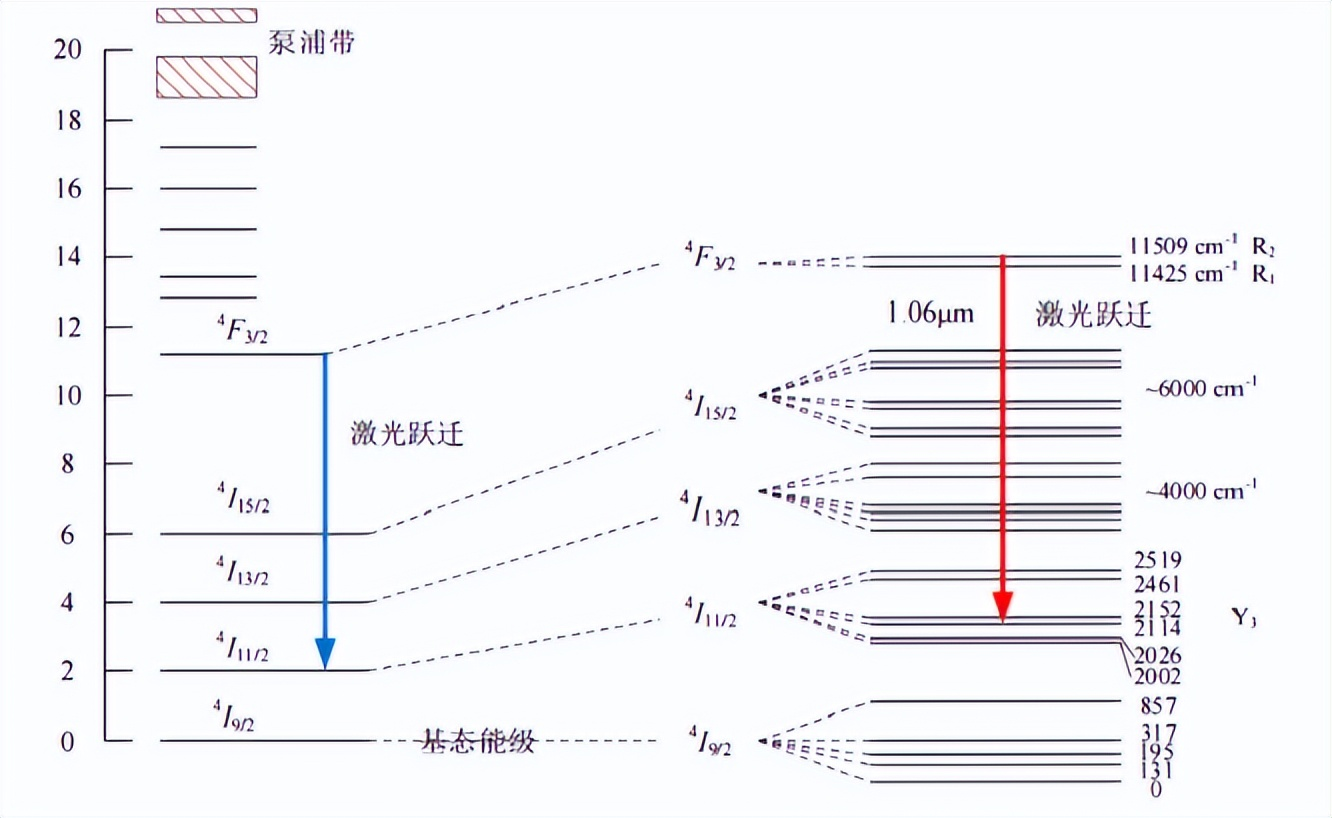
The main energy levels of Nd³⁺ (from low to high):
- ⁴I₉/₂: ground state, the lower level of the 946 nm transition
- ⁴I₁₁/₂: first excited multiplet, the lower level of the main laser transition (1064 nm)
- ⁴I₁₃/₂: lower level of the 1319 nm transition
- ⁴F₃/₂: metastable state, the upper laser level, with a fluorescence lifetime of about 230 μs
- ⁴F₅/₂ + ²H₉/₂: pump absorption band, the level corresponding to 808 nm pumping
2. The 1064 nm Main Laser Transition Process
- Pump absorption: 808 nm pump light is absorbed by Nd³⁺, exciting particles from the ground state (⁴I₉/₂) to the ⁴F₅/₂ / ²H₉/₂ pump band
- Fast non-radiative relaxation: particles relax rapidly from the pump band to the metastable ⁴F₃/₂ level, releasing excess energy as heat (quantum defect about 24%)
- Population inversion: the ⁴F₃/₂ level has a long fluorescence lifetime (about 230 μs), so particles accumulate there, forming a population inversion relative to the lower level ⁴I₁₁/₂
- Stimulated emission (1064 nm): the ⁴F₃/₂ → ⁴I₁₁/₂ transition releases 1064 nm photons, continuously amplified by feedback in the resonator
- Lower-level relaxation: particles falling to ⁴I₁₁/₂ relax quickly back to the ground state to rejoin the cycle
3. Why a Four-Level System?
Because the lower laser level (⁴I₁₁/₂) lies far above the thermal energy at room temperature (kT ≈ 200 cm⁻¹, while ⁴I₁₁/₂ is about 2000 cm⁻¹), there are almost no particles in ⁴I₁₁/₂ at thermal equilibrium. Precisely because the lower level is essentially “empty,” only a small number of particles need to be pumped to the upper level to achieve population inversion — the threshold is very low.
4. Multi-Wavelength Output
| Transition | Wavelength | Upper level | Lower level | Relative intensity |
|---|---|---|---|---|
| ⁴F₃/₂ → ⁴I₉/₂ | 946 nm | ⁴F₃/₂ | ⁴I₉/₂ | weak (quasi-three-level) |
| ⁴F₃/₂ → ⁴I₁₁/₂ | 1064 nm | ⁴F₃/₂ | ⁴I₁₁/₂ | strongest |
| ⁴F₃/₂ → ⁴I₁₃/₂ | 1319 nm | ⁴F₃/₂ | ⁴I₁₃/₂ | fairly strong |
| ⁴F₃/₂ → ⁴I₁₅/₂ | 1833 nm | ⁴F₃/₂ | ⁴I₁₅/₂ | very weak |
The 1064 nm line has the highest gain. To obtain 1319 nm or 946 nm output, coatings must selectively suppress 1064 nm; otherwise its high gain will lase first.
5. Pumping Methods
- Lamp pumping: xenon/krypton lamps, low efficiency (2–3%) and short lifetime, but large single-pulse energy
- LD end pumping: 808 nm LD pumping from the end face, high efficiency (>30%) and good beam quality, suitable for low-to-medium power
- LD side pumping: LD arrays pumping from the side, good power scalability, suitable for medium-to-high power
- In-band pumping (885 nm / 869 nm): pumping directly into the ⁴F₃/₂ level, with a smaller quantum defect, less heat and higher efficiency
III. Key Parameters Explained
| Parameter | Value | Notes |
|---|---|---|
| Main laser wavelength | 1064 nm | near-infrared, invisible |
| Pump peak wavelength | 808 nm | the most commonly used LD pump wavelength |
| Emission cross-section | ~2.8×10⁻¹⁹ cm² | medium to large |
| Fluorescence lifetime | ~230 μs | at room temperature, low doping concentration |
| Quantum efficiency | ~99.9% | extremely high (almost no quenching) |
| Thermal conductivity | ~14 W/m·K | first tier among laser crystals |
| Refractive index | ~1.82 | isotropic (cubic crystal system) |
| Mohs hardness | 8.5 | very hard, resistant to scratching |
| Melting point | ~1970 ℃ | very high |
| Common doping concentration | 0.6 ~ 1.1 at.% | too high causes concentration quenching |
In-Depth Interpretation of Key Parameters
What does a 230 μs fluorescence lifetime mean? A long fluorescence lifetime means enough energy can be stored, suitable for Q-switched pulse output. But for femtosecond ultrafast lasers, a long lifetime is not essential.
What level is 14 W/m·K thermal conductivity? It is first tier among laser crystals. YVO₄ is about 5 W/m·K and KTP about 1.5 W/m·K. High thermal conductivity means smaller thermal lensing and better beam quality at high power.
Isotropic (cubic crystal system): YAG is cubic with no birefringence, making coating and processing easier, but it also means phase matching is impossible (nonlinear optics requires birefringent crystals).
IV. Main Types Compared
1. Nd:YAG — the “big brother” with the largest usage
Neodymium-doped yttrium aluminium garnet, the benchmark of the entire laser-crystal field. High thermal conductivity, good mechanical strength, good optical uniformity, chemically stable, can be grown in large sizes and moderately priced. It is used in almost every area of solid-state lasers.
2. Nd:YVO₄ — the favorite of compact DPSS lasers
Neodymium-doped yttrium vanadate. Large absorption cross-section (about 4 times YAG’s), large emission cross-section (about 3 times YAG’s), high gain and low pump threshold. But low thermal conductivity (about 5 W/m·K) and mediocre mechanical strength. Commonly used in small green lasers (laser pointers, small marking machines).
3. Nd:YLF — a specialised tool for special situations
Neodymium-doped lithium yttrium fluoride. Long fluorescence lifetime (about 480 μs, twice YAG’s), low nonlinear refractive index (small thermal lens) and natural birefringence (stable polarised output). But low hardness (Mohs 4–5), low thermal conductivity and hygroscopicity. Suitable for high-energy Q-switched pulses, mode-locked lasers and UV lasers.
4. Nd:Glass — the “giant” of high energy
Neodymium-doped glass. Can be made in very large sizes (the neodymium glass plates used in the US NIF reach 40 cm in diameter), but thermal conductivity is extremely low (about 1 W/m·K), so it can only operate in pulsed mode and the repetition rate cannot be too high. Used in high-energy pulsed lasers (laser fusion).
5. Comparison Table of Several Neodymium-Doped Crystals
| Property | Nd:YAG | Nd:YVO₄ | Nd:YLF | Nd:Glass |
|---|---|---|---|---|
| Main wavelength | 1064nm | 1064nm | 1047/1053nm | ~1053nm |
| Emission cross-section | medium | large | medium | small |
| Fluorescence lifetime | 230μs | 90μs | 480μs | 300-400μs |
| Thermal conductivity | high (14) | low (5) | low (6) | very low (~1) |
| Mechanical strength | high | medium | low | high |
| Typical applications | low to extremely high power | low-power compact DPSS | high-energy pulses | ultra-high-energy pulses |
V. Application Scenarios
1. Industrial Laser Processing (the Largest Market)
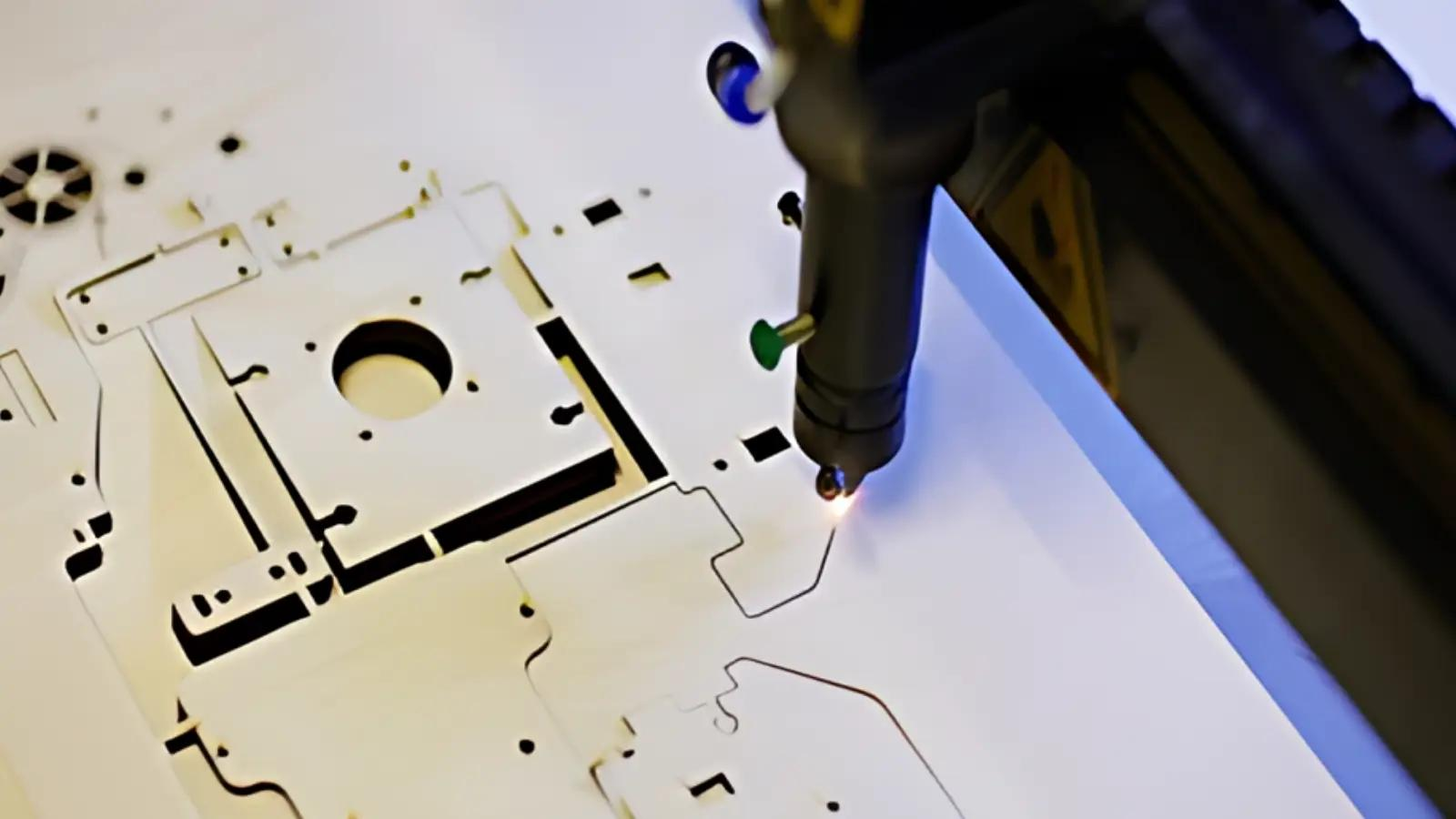
- Laser cutting: from kilowatt to ten-kilowatt class, cutting metal sheet
- Laser welding: precision welding of car bodies and electronic components
- Laser marking: permanent marking on metal, plastic and ceramic
- Laser drilling: film-cooling holes in turbine blades, micro-holes in fuel injectors
- Laser cladding / hardening: surface heat treatment and additive repair
2. Medical Applications
- Ophthalmology: posterior capsulotomy, peripheral iridotomy (glaucoma)
- Dermatology: tattoo removal, pigmented lesion removal, hair removal (with frequency-doubled 532 nm)
- Surgery: soft-tissue cutting, coagulation and hemostasis
- Dentistry: hard-tissue processing, periodontal treatment
- Aesthetics: skin rejuvenation, wrinkle removal
3. Military and Defence
Laser rangefinding, target designation, laser guidance, electro-optical countermeasures and laser fuzing — the military has great demand for Nd:YAG because it is mature, reliable and environmentally robust.
4. Research and Experimentation
Nonlinear-optics pump sources (frequency-doubled 532 nm, tripled 355 nm, quadrupled 266 nm), Raman spectroscopy, pumping dye/Ti:sapphire lasers, laser spectroscopy and more.
VI. Common Misconceptions
Misconception 1: Nd:YAG can only emit 1064 nm
No. Nd:YAG can output multiple wavelengths: 1064 nm (strongest), 1319 nm (second strongest), 946 nm, 1123 nm, 1112 nm, 1833 nm and others. As long as the coating design is appropriate and the strong 1064 nm gain is suppressed, the other wavelengths can also lase stably. For example, 1319 nm Nd:YAG lasers have many applications in medicine and optical communication.
Misconception 2: All neodymium-doped crystals lase at 1064 nm
Also wrong. Although Nd³⁺’s energy-level structure is little affected by the host, the crystal-field environment of different hosts still causes small wavelength shifts. For example, Nd:YLF is 1047 nm (o-ray) / 1053 nm (e-ray), and neodymium glass about 1053 nm. These differences matter in precision applications.
Misconception 3: Nd:YAG is the best laser crystal
There is no “best,” only “most suitable.” For miniaturization and low threshold choose Nd:YVO₄; for high-energy pulses choose Nd:YLF; for ultrafast lasers choose Ti:Sapphire or Yb-series; for high efficiency and high power choose Yb:YAG. Selection is a process of comprehensive trade-offs.
Misconception 4: 808 nm is Nd:YAG’s only pump wavelength
808 nm is the most common but not the only one. Nd³⁺ has several absorption bands: 750 nm, 808 nm (strongest), 869 nm, 885 nm and others. In particular 885 nm in-band pumping has a smaller quantum defect (about 17% vs 24%), less heat and higher efficiency, and is receiving increasing attention in the high-power field.
Misconception 5: Nd:YAG’s thermal conductivity is always 14 W/m·K
14 W/m·K is the value for pure YAG host. After doping with neodymium, thermal conductivity drops — the higher the doping concentration, the lower the conductivity, because the masses of Nd³⁺ and Y³⁺ differ, causing lattice distortion and increased phonon scattering. Highly doped (>1 at.%) Nd:YAG may have thermal conductivity below 10 W/m·K.
Misconception 6: The higher the doping concentration, the better
Higher doping increases pump-light absorption, but the side effects are obvious: concentration quenching (cross-relaxation between adjacent Nd³⁺, reducing efficiency and fluorescence lifetime), lower thermal conductivity, stronger thermal lensing and poorer optical uniformity. The optimal doping range for Nd:YAG is 0.6–1.1 at.%; end-pumped low-power lasers use higher doping to shorten absorption length, while side-pumped high-power lasers use lower doping for better thermal performance.
References
- Solid-State Laser Engineering (W. Koechner)
- RP Photonics Encyclopedia – Nd:YAG Laser
- Principles and Technology of Lasers
- Laser Materials Science
Related Reading:
Leave a Reply