


A wavefront is the surface formed by all points of a light wave with the same phase—it describes the shape traced by crests and troughs as light propagates and determines whether a beam can focus to the diffraction limit. This article covers the principles, key parameters, main types and typical applications.
Table of Contents
- 1. What Is a Wavefront? Understanding the Core Concepts
- 2. Working Principle: How Is a Wavefront Formed?
- 3. Key Parameters: Understanding Wavefront Performance Indicators
- 4. Main Types: What Kinds of Wavefront Exist?
- 5. Applications: Where Are Wavefronts Used?
- 6. Common Misconceptions: Pitfalls to Avoid
1. Core Concepts: What Is a Wavefront?
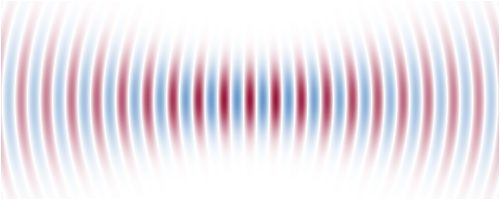
< A wavefront is the surface formed by connecting all points of a light wave with the same phase, also called a phase surface. Pictorially, it is the ‘equal-phase surface’ of light, describing the shape traced by crests or troughs as light propagates in space. For an ideal plane wave the wavefront is a perfect plane; for an ideal Gaussian beam it is planar at the waist and becomes spherical away from it. The shape of the wavefront directly determines a beam’s focusing ability and is the physical essence of beam quality.
A wavefront is not a component but a description of the phase structure of the light itself—shaped by the source, cavity and optics, and in turn determining how the beam propagates and focuses. Understanding wavefronts is key to understanding why some lasers can be focused more tightly.
2. Working Principle: How Is a Wavefront Formed?
Understanding how a wavefront forms can be broken down into several key steps or mechanisms. Let us look at them one by one:
The direction of light propagation is always perpendicular to the wavefront; in an isotropic medium the direction of energy flow is also perpendicular to it. Optical elements such as lenses essentially change the curvature of the wavefront—a plano-convex lens turns a plane wavefront into a spherical one, achieving focus. If the wavefront is perfectly smooth and spherical or planar, the beam can focus to a diffraction-limited spot; if it is distorted (uneven), focusing degrades. Wavefront distortion arises from many sources, including aberrations of optical components, thermal lensing in the gain medium and atmospheric turbulence.
3. Key Parameters: Understanding Wavefront Performance Indicators
| Parameter Name | Meaning | Why It Matters |
|---|---|---|
| Wavefront Radius of Curvature | Describes how strongly the wavefront is curved; infinite at the waist (planar) | The degree of wavefront curvature determines whether a beam converges, diverges or is collimated—a key basis for judging its focusing state. |
| Wavefront Aberration (Wavefront Error) | Deviation of the actual wavefront from the ideal, often expressed as peak-to-valley (PV) or root-mean-square (RMS) | Deviation from the ideal sphere or plane directly affects focused-spot quality and Strehl ratio—the essence of beam quality. |
| Zernike Polynomial Coefficients | A mathematical expression decomposing wavefront aberration into spherical, astigmatic, comatic and other modes | A standard way to decompose aberration into orders (spherical, coma, astigmatism, etc.), facilitating analysis and correction. |
| Strehl Ratio | Ratio of far-field peak intensity to the diffraction-limited peak, reflecting the effect of wavefront quality on focusing | The ratio of actual peak intensity to ideal peak intensity—an important comprehensive indicator of how aberration affects focusing performance. |
These parameters are not isolated; they are interrelated and mutually constrained. For example, there is often a trade-off between wavefront error and focusing ability—the closer the wavefront is to an ideal sphere or plane, the smaller the focused spot and the higher the Strehl ratio, and vice versa. So to evaluate quality, you must consider the parameters together rather than one alone.
If you are not familiar with these parameters, that is fine—Soar Laser’s product pages have detailed descriptions, and you can also consult our technical engineers directly to help you select.
4. Main Types: What Kinds of Wavefront Exist?
Wavefronts can be classified in many ways, and different dimensions help us understand their characteristics from different angles. The common classification methods are introduced below:
By Type
Planar Wavefront
The wavefront of ideal collimated light, approximated by a spherical wave after long propagation
Spherical Wavefront
The wavefront shape of a point source or a focused beam
Astigmatic Wavefront
A wavefront with different curvature in horizontal and vertical directions, common in semiconductor lasers
Distorted Wavefront
An irregular wavefront containing higher-order aberrations, which degrades beam quality
By Aberration Type
Spherical aberration, coma, astigmatism, field curvature, distortion, etc.—each affects beam quality differently
Different wavefront types have their own advantages and disadvantages; there is no absolute ‘best,’ only ‘most suitable.’ Selection should consider your specific application, power requirements, budget and other factors. For example, for high-power industrial applications fibre lasers may be more suitable; for research with ultrashort-pulse needs, Ti:sapphire may be preferable.
5. Applications: Where Are Wavefronts Used?
Wavefronts have a very wide range of applications, from industrial manufacturing to healthcare, from communication networks to scientific research—almost everywhere lasers are used. A few fields are briefly described below:
- Beam Quality Evaluation: wavefront measurement is a key way to assess beam quality; Shack-Hartmann sensors can measure the wavefront directly
- Adaptive Optics: measure distortion in real time and correct it with a deformable mirror, used in telescopes and laser propagation
- Optical Component Testing: check the surface figure of lenses, mirrors and other components by wavefront measurement
- Laser System Alignment: use wavefront diagnostics to find the cause of beam-quality degradation
- Ophthalmology: wavefront aberrometers for measuring aberrations of the human eye and personalized prescription
Typical Application Scenarios in Detail
Scenario 1: Beam Quality Evaluation
Wavefront measurement is central to beam-quality evaluation; Shack-Hartmann and other sensors map aberrations and quantify spherical, astigmatic and other terms to guide improvement.
Scenario 2: Adaptive Optics
Adaptive optics measures distortion in real time and drives a deformable mirror to compensate it—key to keeping focus in astronomy, atmospheric propagation and high-power lasers.
Scenario 3: Optical Component Testing
Wavefront interferometry checks the surface figure of lenses and mirrors, catching surface errors during fabrication and alignment so components meet design specs.
Scenario 4: Laser System Alignment
During laser system alignment, wavefront diagnostics locate the root cause of quality loss—thermal lensing, mount stress or cavity misalignment—for targeted correction.
Scenario 5: Ophthalmology
Ophthalmic wavefront aberrometers map aberrations of the human eye for personalized refraction and refractive surgery planning, markedly improving visual quality.
👉 Want to learn more about practical applications of wavefronts? Please visit Soar Laser’s application-case page, or contact our technical team directly for professional advice.
6. Common Misconceptions
Many people have somewhat plausible but mistaken notions about wavefronts. See whether you fall into any of the following:
Misconception 1: ‘Wavefront and intensity distribution are the same thing.’
a wavefront describes only phase, not amplitude; the two are independent, and high beam quality needs a good wavefront together with a smooth intensity profile
Misconception 2: ‘A small RMS wavefront error always means a small M².’
the effect of wavefront error on beam quality also depends on the spatial frequency of the aberration; rapidly varying aberrations affect M² more
Misconception 3: ‘A wavefront sensor can fully replace M² measurement.’
a wavefront sensor needs only a single-plane measurement, but for complex aberrations it may be less accurate than the caustic method, and the ISO M² standard still uses the caustic method
Misconception 4: ‘A wavefront is meaningful only for monochromatic light.’
strictly, wavefront is defined for monochromatic light; for ultrashort pulses (broad spectrum) different wavelength components may have different wavefronts, so dispersion must be considered
Misconception 5: ‘Wavefront distortion cannot be corrected.’
adaptive optics with a deformable mirror or spatial light modulator can measure and compensate distortion in real time; static distortion can also be corrected with fixed compensating elements
Of course, there are far more misconceptions about wavefronts than these. Laser technology develops rapidly, with new materials and processes constantly emerging, so some previous ‘common knowledge’ may already be outdated. If you have other questions, please leave a comment and we will answer them one by one.
Leave a Reply