


What Is a Fibre Bragg Grating? The Reflective Grating Inside a Fibre
In the field of fibre optics, a fibre Bragg grating is one of the most fundamental and widely used components. Whether you are building a fibre laser, designing an optical communication link or carrying out a fibre sensing experiment, you need to understand how it works and what it can do. This article sets out the mechanism, the key parameters, the main types and the practical applications of the fibre Bragg grating.
Table of contents
- 1. What is a fibre Bragg grating? Getting the core concept straight
- 2. Working principle: how a fibre Bragg grating is achieved
- 3. Key parameters: reading the specifications of a fibre Bragg grating
- 4. Main types: what kinds of fibre Bragg grating are there
- 5. Applications: where is a fibre Bragg grating used?
- 6. Common misconceptions: pitfalls to avoid
1. Core concept: what is a fibre Bragg grating?
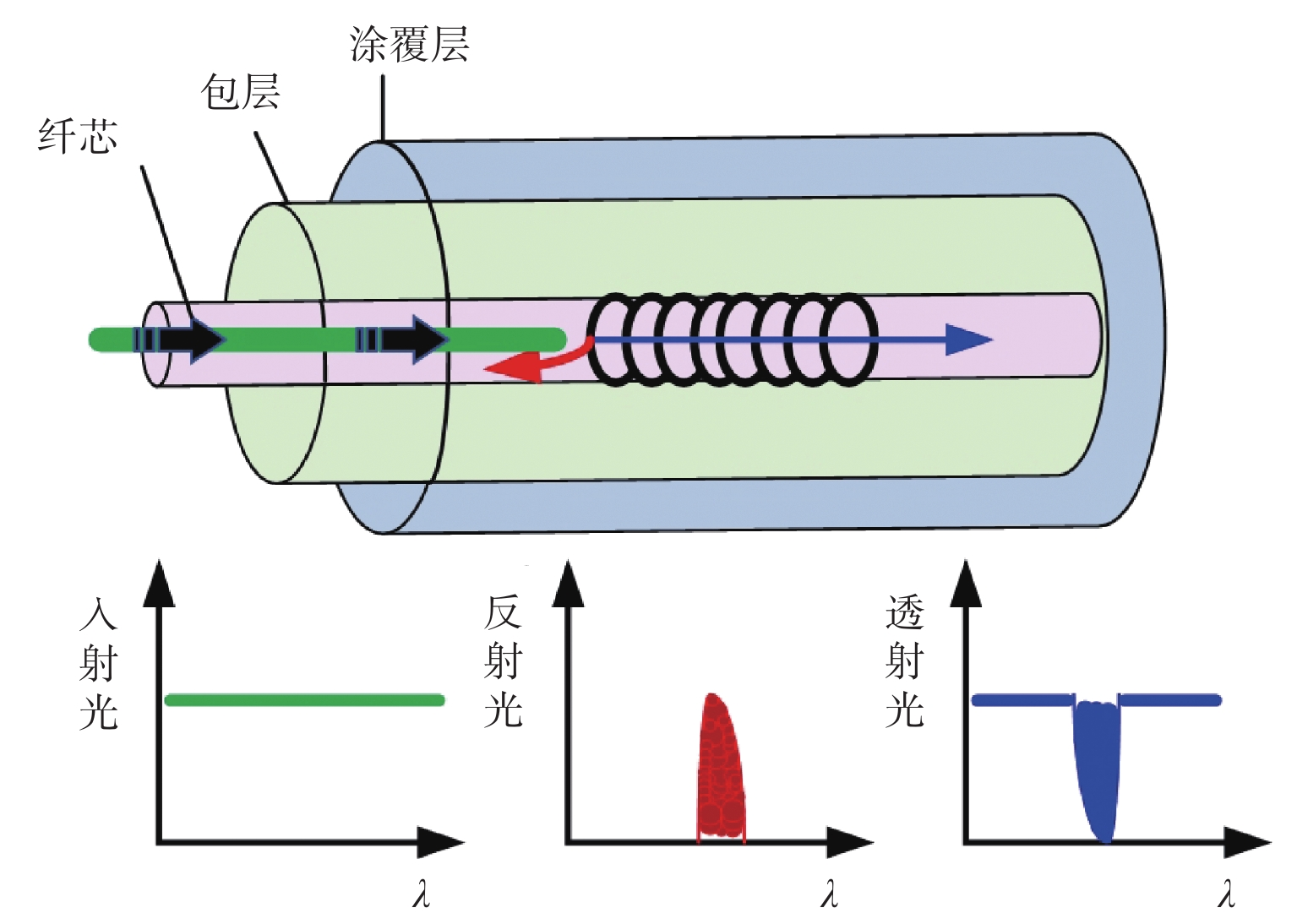
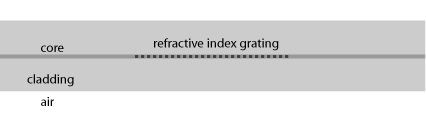
A fibre Bragg grating (FBG) is a periodic index modulation written into the core of an optical fibre. It reflects light strongly at a particular wavelength and therefore acts as a wavelength-selective mirror. Its operation rests on Bragg diffraction: when light propagates through a structure whose refractive index varies periodically, the wavelengths that satisfy the Bragg condition interfere constructively and are reflected, while other wavelengths pass through almost unaffected. An FBG is an all-fibre structure with low insertion loss, good wavelength selectivity, a small footprint and high reliability, which is why it is used so widely in fibre lasers, optical communication and fibre sensing.
2. Working principle: how is a fibre Bragg grating achieved?

The Bragg condition is the core equation of an FBG: when light travels through the grating, the wavelength satisfying λ_B = 2·n_eff·Λ is reflected strongly, while other wavelengths are transmitted. Where:
- λ_B: the Bragg wavelength, that is, the centre wavelength of the reflection
- n_eff: the effective refractive index of the guided mode in the core
- Λ: the grating period
💡 Why effective index rather than core index?
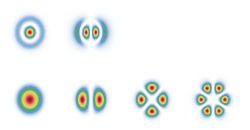
The optical field in a single-mode fibre is not confined entirely to the core; part of the energy exists in the cladding as an evanescent field. The “average refractive index” that the light therefore sees — the effective index n_eff — lies between the core index n₁ and the cladding index n₂. n_eff varies with wavelength (the longer the wavelength, the larger the fraction of energy in the cladding and the lower n_eff).
λ_B = 2 × n_eff × Λ
Here λ_B is the Bragg wavelength (that is, the centre reflection wavelength), n_eff is the effective refractive index of the core and Λ is the period of the grating. The formula makes two points clear. First, changing the grating period changes the reflection wavelength. Second, any physical quantity that alters the refractive index or the period (such as temperature or strain) shifts the reflection wavelength — and that is precisely the physical basis for using an FBG as a sensor.
The reflection spectrum of an FBG is determined by the grating length and by the distribution of the index modulation:
- The longer the grating, the narrower the reflection bandwidth and the higher the side-mode suppression ratio
- The reflection spectrum of a uniform grating has side lobes on both sides, much like the Fourier transform of a rectangular window
- Through apodisation — making the index modulation taper from the two ends towards the centre — the side lobes can be effectively suppressed
Writing methods
The main methods are:
- UV laser holographic method: the fringes formed by the interference of two UV laser beams are used to expose photosensitive fibre; this is the classic method
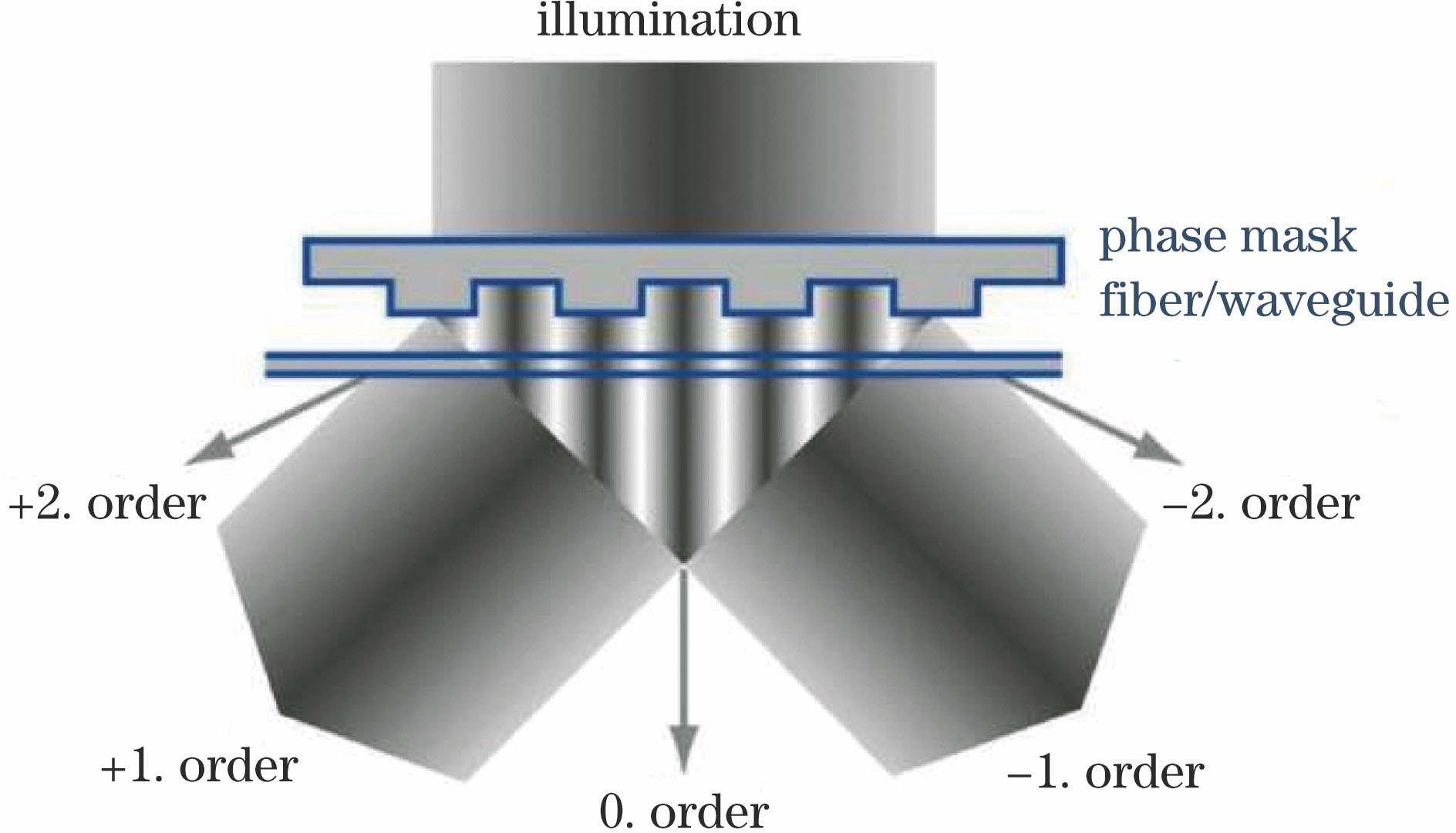
- Phase-mask method: UV light passes through a phase mask to produce ±1 order interference; this is the mainstream method in industrial production today
- Femtosecond laser direct writing: point-by-point writing using the multiphoton absorption of femtosecond pulses; no photosensitive fibre is needed and the grating can be written straight into a coated fibre
By grating characteristics and by writing method, FBGs are classified as:
- Type I grating: the most common type, written by UV exposure, with a positive index change
- Type II grating: a damage-type grating in which higher-energy laser pulses damage the glass structure, giving better high-temperature performance
- Regenerated grating: an ultra-stable grating formed after high-temperature annealing, which operates above 1000 °C
3. Key parameters: reading the specifications of a fibre Bragg grating
Reflectivity and reflection bandwidth
The reflectivity and the reflection bandwidth of an FBG are the two key performance figures, and they are determined mainly by the following factors:
Reflectivity: it depends on the depth of the index modulation (Δn) and on the grating length (L). The deeper the modulation and the longer the grating, the higher the reflectivity. The maximum reflectivity is R_max = tanh²(κL), where κ is the coupling coefficient and is proportional to the amplitude of the index modulation.
Reflection bandwidth: the width of the reflection spectrum (usually defined as the width at which the reflectivity falls to half its peak value, that is the FWHM). For a grating of uniform period the bandwidth is approximately:
Δλ_B ≈ (λ_B² / (n_eff · L)) × √((Δn·L/λ_B)² + 1)
The shorter the grating, the wider the bandwidth; the greater the modulation depth, the slightly wider the bandwidth becomes. Narrow-band FBGs (reflection bandwidth < 0.1 nm) are used for WDM and for sensing, while wide-band FBGs (a few nm) serve as the cavity mirrors of fibre lasers.
Chirped FBG
The period of a chirped grating varies progressively along the fibre axis (that is, it is “chirped”), so different wavelengths satisfy the Bragg condition at different positions along the grating and are reflected there. The main application of a chirped FBG is dispersion compensation — the longer wavelengths are reflected first (at the end where the grating period is larger) and the shorter wavelengths later, so a time delay difference is produced that compensates for the dispersion accumulated over the fibre link.
Besides the chirped grating there are several other types: tilted gratings (for mode coupling), phase-shifted gratings (for DFB lasers) and superstructured gratings (multi-channel filtering).
Key formulas
Bragg condition: a fibre grating reflects a particular wavelength most strongly, given by:
λ_B = 2 · n_eff · Λ
where λ_B is the Bragg wavelength, n_eff is the effective refractive index of the core and Λ is the grating period.
Reflectivity of a uniform FBG (coupled-mode theory):
R_max = tanh²(κL)
where κ is the coupling coefficient (proportional to the amplitude of the index modulation) and L is the grating length. The reflection bandwidth is approximately:
Δλ / λ_B ≈ Δn/n_eff
A typical uniform FBG has a reflection bandwidth of about 0.1–1 nm (weak modulation) up to a few nm (strong modulation).
Sensing sensitivity: temperature and strain change the grating period and the refractive index, which shifts the Bragg wavelength:
Δλ/λ = (1-P_e)·ε + (α_n + α_Λ)·ΔT
In silica fibre the temperature sensitivity is about 10 pm/°C and the strain sensitivity about 1 pm/με.
Evaluating an FBG means understanding its key parameters. The table below sets out each of the main specifications and what it means:
| Parameter | Meaning | Engineering significance |
|---|---|---|
| Centre wavelength (Bragg wavelength) | The centre wavelength of the reflection peak, set by the grating period and the effective refractive index | Sets the operating wavelength range of the FBG and therefore affects how well it matches the system and which application it suits |
| Reflectivity / peak reflectivity | The ratio of reflected optical power to incident optical power, reaching 99.9 % or more | Sets the efficiency of the laser cavity mirror and the performance of the filter; insufficient reflectivity increases the system loss |
| Reflection bandwidth (3 dB bandwidth) | The wavelength range over which the reflected power falls by 3 dB, typically from a few pm to a few nm | Sets the wavelength selectivity: narrow band for WDM and sensing, wide band for cavity mirrors and dispersion compensation |
| Side-mode suppression ratio (SMSR) | The ratio of the main reflection peak to the highest side lobe, usually > 20 dB for an apodised grating | Indicates the spectral purity; high side lobes reduce the signal-to-noise ratio of filters and lasers |
| Grating length | Anything from a few millimetres to a few metres, directly affecting the reflectivity and the bandwidth | The longer the grating, the higher the reflectivity and the narrower the bandwidth, so the choice has to be made against the application |
| Insertion loss | The insertion loss in the transmitted direction, typically < 0.1 dB | Counts against the overall loss budget of the system; excessive insertion loss reduces signal quality and output power |
| Temperature coefficient | The rate at which the reflection wavelength changes with temperature, about 10 pm/°C in silica fibre | Sets the size of the temperature drift; it is a core figure for sensing applications, while lasers need active temperature control |
| Strain coefficient | The rate at which the reflection wavelength changes with strain, about 1 pm/με | A core parameter for sensing applications; it determines the sensitivity and the resolution of strain measurement |
4. Main types: what kinds of fibre Bragg grating are there?
Comparison of the main FBG writing methods
| Writing method | Principle | Advantages | Disadvantages | Temperature rating |
|---|---|---|---|---|
| UV holographic interference method | Two UV laser beams interfere to form fringes | Adjustable period, high grating quality | Requires photosensitive fibre; the optical path of the equipment is complex | Type I, ~100 °C |
| Phase-mask method | ±1 order diffraction interference from the phase mask | Stable process, suitable for batch production | The mask is expensive and the period is fixed | Type I, ~100 °C |
| Femtosecond laser direct writing | Point-by-point writing by multiphoton absorption of femtosecond pulses | No photosensitive fibre needed; can be written into coated fibre | Point-by-point writing, slow | Type II, ~1000 °C and above |
| Regenerated grating | A Type I grating regenerated after high-temperature annealing | Extremely heat resistant, excellent long-term stability | Requires a high-temperature annealing process | Above 1000 °C |
A fibre Bragg grating can be classified in several ways, and each classification brings out a different angle on its characteristics. Here are the most common ones:
By distribution of the index modulation
Uniform grating
Constant period and constant modulation depth; the reflection spectrum has side lobes
Apodised grating
The modulation strength tapers, which suppresses the side lobes
Chirped grating
The grating period varies continuously along its length, giving a broad reflection bandwidth for dispersion compensation
Tilted grating
The plane of the grating sits at an angle to the fibre axis, which allows coupling into cladding modes
Phase-shifted grating
There is a phase jump in the middle of the grating, which puts an extremely narrow transmission peak into the reflection spectrum
By writing method / temperature rating
Type I standard grating
Written by UV exposure; the long-term service temperature is usually below 200 °C
Type II damage grating
Written at high energy; serviceable up to 500–800 °C
Regenerated grating
Formed by high-temperature treatment; serviceable above 1000 °C
Femtosecond laser written grating
Can be written into any type of fibre, with good temperature resistance
By function
Reflector-type FBG
High reflectivity, used as a laser cavity mirror
Filter-type FBG
Medium reflectivity or a special spectral shape, used for filtering
Sensor-type FBG
Specifically optimised for the measurement of physical quantities such as temperature and strain
Long-period grating (LPG)
A period of a few hundred micrometres, coupling co-propagating modes and forming a loss peak
5. Applications: where is a fibre Bragg grating used?
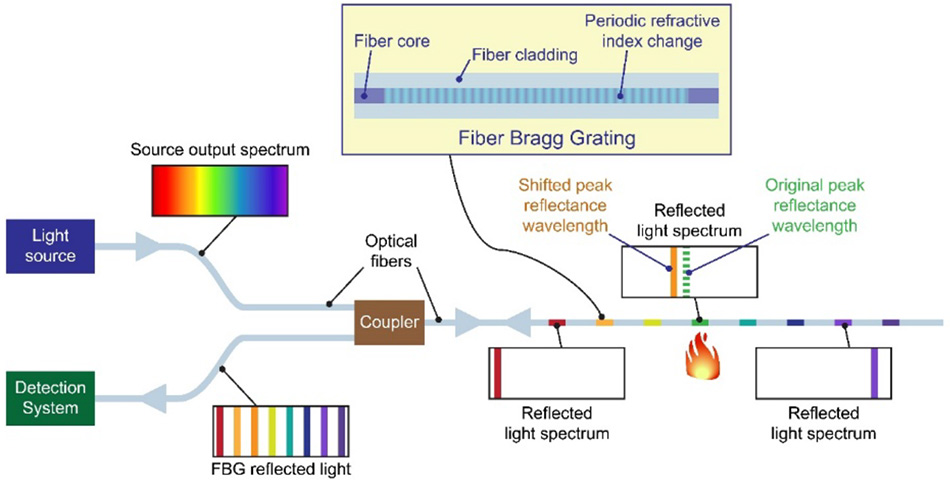
The applications of FBGs cover several fields, the main ones being:
- Fibre lasers: used as the cavity mirror of the laser (a DBR fibre laser), fixing the lasing wavelength and delivering narrow-linewidth output. Combined with active fibre it forms a single-frequency fibre laser
- Distributed feedback (DFB) laser: a phase-shifted FBG is written into the gain fibre to form a distributed feedback structure, giving an extremely narrow-linewidth single-frequency laser
- Optical communication filtering: used as an add-drop multiplexer in wavelength division multiplexing (WDM) systems to select a particular wavelength channel
- Dispersion compensation: a chirped FBG can compensate for the dispersion accumulated in fibre transmission, and can also be used for pulse broadening or compression (chirped pulse amplification systems)
- Wavelength stabilisation: acts as a wavelength reference to hold the output wavelength of a laser steady, as in a wavelength-stabilised laser diode
- Fibre sensing: the FBG is one of the most important fibre sensing devices, using the wavelength drift to measure temperature, strain, pressure and acceleration precisely. Several FBGs can be chained into a distributed sensing array, which is widely used in structural health monitoring, the oil and gas industry, and aerospace
- Gain flattening filter: an FBG with a special spectral shape flattens the gain spectrum of a fibre amplifier
👉 Want to see more real application cases? Visit the application case page of Soar Laser, or contact our technical team directly for professional advice.
6. Common misconceptions
Misconception 1: an FBG reflects only one specific wavelength and its bandwidth is fixed
The reflection bandwidth of an FBG is not fixed; it depends on several parameters. The longer the grating, the narrower the reflection bandwidth (for a uniform grating); the greater the depth of the index modulation, the wider the bandwidth; and apodisation changes the envelope of the index modulation, suppressing the side lobes at the cost of a slightly broader main lobe. Special grating designs (such as chirped gratings and phase-shifted gratings) can also produce broad-band reflection, multi-peak reflection and other spectral responses.
Misconception 2: an FBG sensor can only measure temperature and strain
Temperature and strain are the most direct quantities for an FBG, because both shift the Bragg wavelength. With a well-chosen package and a suitable transducer, however, an FBG can measure many other physical quantities indirectly: pressure (through diaphragm strain), displacement (through a lever or a cantilever), acceleration (through a mass block on a cantilever), magnetic field (through magnetostrictive material), current (through the thermal effect) and chemical quantities (through sensitive coatings). The advantages of FBG sensing are that they can be cascaded, that they are immune to electromagnetic interference, and that they suit distributed or quasi-distributed measurement.
Misconception 3: a written grating is permanent and never fades
The long-term stability of an FBG depends on the type of grating and on the working temperature. A Type I grating is very stable at room temperature but gradually fades (is erased) at high temperature (above 300 °C); a Type II grating is formed by damaging the fibre core and therefore performs better at high temperature (up to 800–1000 °C); a regenerated FBG, after high-temperature annealing, works stably above 1000 °C. The working temperature range must therefore be taken into account when choosing an FBG, and no single rule covers them all.
Misconception 4: all FBGs have a uniform period
A uniform period is only the most basic FBG. There are many variants in practice: chirped gratings (the period tapers along the fibre axis) for dispersion compensation and pulse broadening; phase-shifted gratings (a half-period phase shift is inserted in the middle) that produce an extremely narrow transmission peak and can serve as narrow-band filters; and superstructured gratings (superstructured FBG), which have a periodic modulation envelope and produce a comb-like reflection spectrum for wavelength division multiplexing. These special structures have greatly widened the range of applications open to the FBG.
7. Recommended reading
- What is an optical fibre? How light travels thousands of kilometres in a glass thread
- What is polarisation-maintaining fibre? How to stop the polarisation drifting
- What is active fibre? The fibre that amplifies light
- Narrow-linewidth fibre lasers: principles, linewidth metrics, classification and 6 common misconceptions
- Laser coherence and coherence length
- What is an optical spectrum analyser? How to analyse the colour content of a laser
- What is a wavemeter? How laser wavelengths are measured precisely
Leave a Reply