


Have you ever wondered why a good camera lens costs thousands or even tens of thousands? The answer lies largely in optical glass. Those seemingly ordinary transparent lenses are made of specialty glass with precise formulations and complex processes. From phone cameras to laser cutters, from astronomical telescopes to the glasses you wear, almost every device dealing with “light” relies on optical glass.
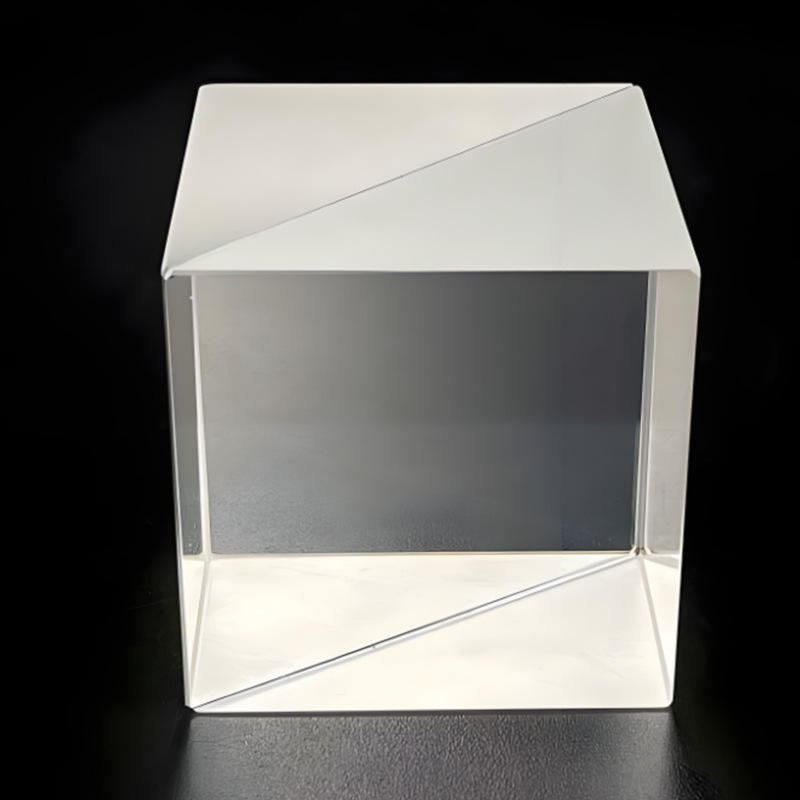
In this article we systematically discuss optical glass and window materials — what they are, how they are classified, how to read the key parameters, their applications in lasers and optical systems, and the most common misconceptions.
References
Recommended Reading
Table of Contents
- I. Core Concepts: What Are Optical Glass and Window Materials?
- II. Working Principle: How Does Light Travel Through Glass?
- III. Key Parameters: What Metrics Matter When Choosing Optical Glass?
- IV. Classification: Crown Glass, Flint Glass and Window Materials
- V. Applications: Where Is Optical Glass Used?
- VI. Common Misconceptions: 6 Misunderstandings About Optical Glass
I. Core Concepts: What Are Optical Glass and Window Materials?
Optical glass is a class of glass materials made with special formulations and precision manufacturing, with highly uniform optical properties, capable of transmitting, refracting and reflecting light with high accuracy. It is the base material for making all kinds of optical components.
Compared with architectural or everyday glass, optical glass has four core requirements:
- Optical homogeneity: the refractive index varies extremely little from point to point within one piece (usually below the 10⁻⁵ level), otherwise wavefront distortion occurs and imaging quality suffers
- Precise refractive index: each batch’s refractive index must be strictly controlled within a very small tolerance of the design value
- High transparency: very low absorption and scattering losses in the wavelength range of use
- Good chemical and thermal stability: can be used long-term in various environments without performance degradation
Optical window materials are an important application direction of optical glass — usually a flat parallel plate serving as a “transparent barrier” between the optical system and the outside environment, allowing light through while protecting delicate internal components from dust, moisture, temperature changes and so on.
To use an analogy: if an optical system is an eye, the window is like a “contact lens behind the eyelid” — it looks like just a transparent plate, but quietly guards the delicate optics inside.
II. Working Principle: How Does Light Travel Through Glass?
1. The Structure of Glass: An Amorphous Solid
Glass is essentially an amorphous (non-crystalline) solid. Unlike crystals, whose atoms are arranged in a long-range ordered periodic structure, glass is short-range ordered but long-range disordered — the arrangement of a few neighbors around each atom is regular, but at the macroscopic scale there is no pattern.
It is precisely this amorphous structure that gives glass a key property: isotropy — the refractive index is the same measured from any direction, and no birefringence occurs (unless there is residual stress inside the glass).
2. Refractive Index and Dispersion
When light enters glass from air, its speed decreases and the ray bends toward the normal — this is refraction. The refractive index n is defined as the ratio of the speed of light in vacuum to that in the medium. Ordinary glass has a refractive index roughly between 1.45 and 1.95.
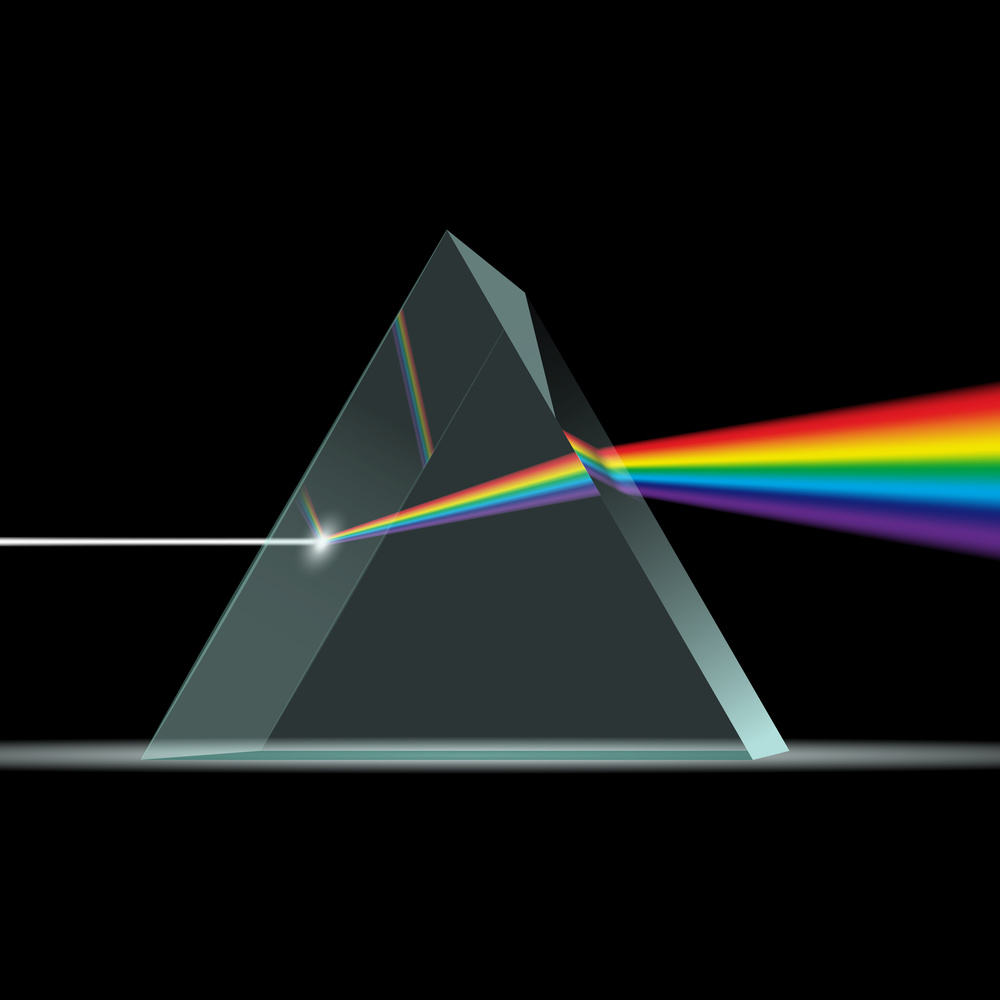
Refractive index is not a constant — light of different wavelengths (colours) has different refractive indices in the same glass; this is dispersion. Dispersion is why a prism splits white light into a rainbow, and the root cause of lens chromatic aberration.
The core parameter measuring the magnitude of dispersion is the Abbe number (Vd):
Vd = (nd – 1) / (nF – nC)
- The larger the Abbe number, the smaller the dispersion (crown glass typically Vd > 50)
- The smaller the Abbe number, the larger the dispersion (flint glass typically Vd < 50)
An achromatic lens combines a high-dispersion glass and a low-dispersion glass to focus different wavelengths at the same point.
3. Absorption and Transmission Range
Glass absorbs light mainly through two mechanisms:
- Electronic-transition absorption: in the UV band, photon energy is sufficient to excite electronic transitions, causing strong absorption
- Phonon (vibrational) absorption: in the IR band, photons interact with lattice vibrations, producing absorption
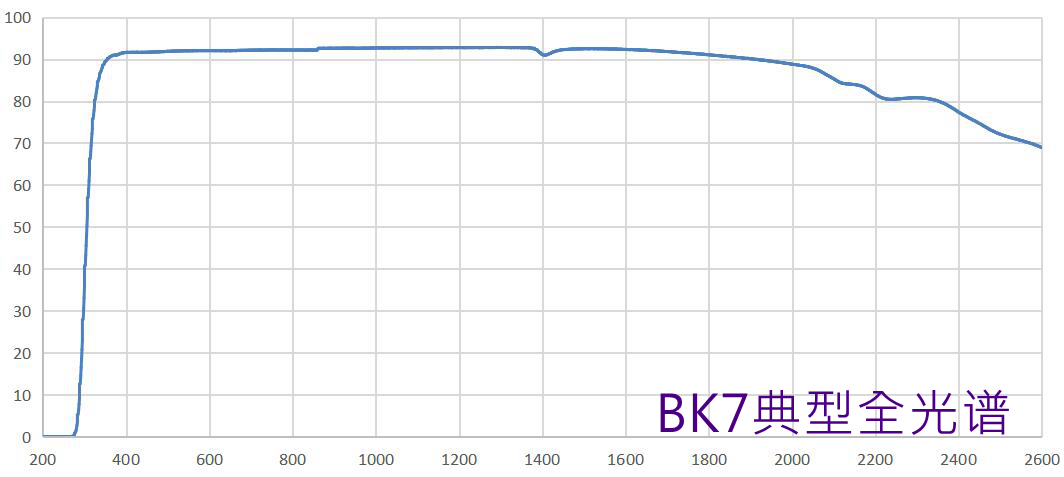
Therefore every glass has a specific transmission wavelength range; light outside it is strongly absorbed. For example, ordinary crown glass is opaque in the UV (<350 nm), while fused silica stays transparent into the deep UV.
III. Key Parameters: What Metrics Matter When Choosing Optical Glass?
| Parameter name | Symbol | Meaning | Typical value range |
|---|---|---|---|
| Refractive index | nd | refractive index at the d-line (587.6 nm) | 1.45~1.95 |
| Abbe number | Vd | measure of dispersion; larger means less dispersion | 20~85 |
| Transmission range | – | wavelength interval with high transmittance | varies by material |
| Thermal expansion coefficient | α | relative linear expansion per 1 °C temperature change | 10⁻⁷~10⁻⁵ /℃ |
| Refractive-index temperature coefficient | dn/dT | rate of change of refractive index with temperature | 10⁻⁶~10⁻⁵ /℃ |
| Optical homogeneity | Δn | refractive-index uniformity within one piece of glass | < 10⁻⁵ |
| Laser damage threshold | LIDT | maximum laser power/energy density the glass withstands | varies by material and wavelength |
Several parameters deserve special attention:
- Transmission range: the first gate in choosing a window material — it must match the working wavelength
- Thermal expansion coefficient: in environments with large temperature swings, low-expansion materials reduce deformation and the risk of thermal-stress cracking
- Laser damage threshold (LIDT): the key parameter for high-power laser systems, determining how much laser the material can withstand without damage
IV. Classification: Crown Glass, Flint Glass and Window Materials
1. Crown Glass
Features: relatively low refractive index (nd ≈ 1.5–1.6), high Abbe number (Vd > 50), small dispersion.
The most typical representative is BK7/K9 borosilicate crown glass — the “standard material” of optics. It has balanced overall performance, moderate price and good visible/near-IR transmission, making it the first-choice substrate for conventional optical components such as lenses, prisms, windows and beamsplitters.
- nd = 1.5168, Vd = 64.17
- Transmission range: about 350 nm – 2.1 μm
- Applications: almost all conventional optical components
2. Flint Glass
Features: relatively high refractive index (nd ≈ 1.6–1.95), low Abbe number (Vd < 50), large dispersion.
Flint glass is often paired with crown glass to make achromatic lenses. Advanced lenses also use specialty flint glasses such as lanthanum flint (LaF), which have high refractive index and moderate dispersion and are key materials for high-performance lens design.
3. Window Material Selection by Wavelength Band
| Wavelength band | Common window materials | Features |
|---|---|---|
| UV (200–400 nm) | fused silica, CaF₂, MgF₂ | high UV transmission |
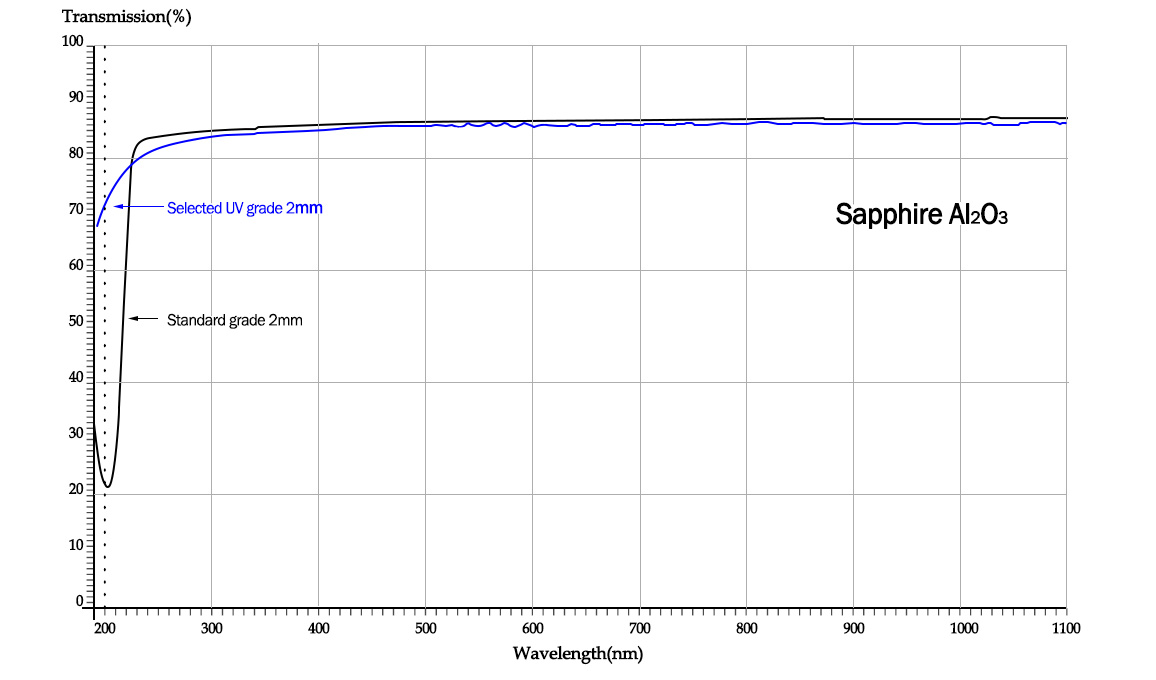
| Visible (400–700 nm) | BK7/K9 glass, sapphire | good value for money |
| Near-IR (700–2500 nm) | BK7/K9, fused silica, sapphire | high transmission |
| Mid-IR (3–5 μm) | sapphire, CaF₂, BaF₂, ZnS | mid-IR transmission |
| Far-IR (8–14 μm) | ZnSe, Ge, Si | far-IR transmission |
V. Applications: Where Is Optical Glass Used?
1. Optical Lenses and Lens Groups
The main use of optical glass is making all kinds of lenses. From a simple magnifier to complex camera lenses (dozens of glass elements combined), all are carefully designed and processed from different grades of optical glass. Achromatic lenses usually combine one crown and one flint element.
2. Optical Prisms
Prisms use refraction and total internal reflection to change the light path direction or split light. Common prisms such as right-angle, penta, roof and beamsplitter prisms are all precision-ground from optical glass.
3. Optical Windows
Windows are among the simplest yet most widely used optical components: laser windows protect the internal resonator from contamination; observation windows for industrial equipment and vacuum chambers; front protective plates for IR thermometers and photoelectric sensors, etc.
4. Other Applications
- Beamsplitters: coated on a glass substrate to split one beam into several in given proportions
- Filter substrates: all kinds of band-pass and cut-off filters use optical glass as substrate
- Photomask substrates: high-precision quartz substrates for semiconductor lithography
- Astronomical telescope mirror blanks: high-homogeneity glass for large-aperture astronomical optics
VI. Common Misconceptions: 6 Misunderstandings About Optical Glass
Misconception 1: The more transparent the glass, the higher the refractive index
These are completely different concepts. Transparency (transmittance) describes how much light is absorbed/scattered passing through, while refractive index describes the speed of light in the medium. Some high-index glasses (such as heavy flint) may actually absorb more in the UV and be less transparent because they contain high-atomic-weight elements such as lead.
Misconception 2: BK7 glass can be used in all optical scenarios
BK7/K9 is indeed the most common general-purpose optical glass, but it has limits: transmission drops sharply in the UV (<350 nm); its thermal expansion coefficient is fairly large (about 7.1×10⁻⁶/°C), prone to thermal lensing under high-power lasers; and its laser damage threshold is lower than fused silica. So material must be chosen for the specific scenario.
Misconception 3: All glass is isotropic with no birefringence
Ideal stress-free glass is indeed isotropic. But in real production, if cooling is uneven, glass develops residual internal stress, causing stress birefringence. This is why high-precision optical components need “annealing” before use — a slow, precisely controlled cooling process that removes internal stress.
Misconception 4: A window is just a flat piece of glass with no technology
Windows look simple but demand a lot in high-precision applications: high-power laser windows require λ/10 or even λ/20 surface figure; excessive parallelism error causes beam deviation; surface scratches and pits cause scattering and lower the damage threshold. An uncoated ordinary glass has about 4% reflection loss per surface (Fresnel reflection), about 8% for both; a laser window with a good anti-reflection (AR) coating can bring single-surface reflectivity below 0.1%, over 40 times less than the single-surface reflection loss of ordinary glass.
Misconception 5: An IR window can be replaced with ordinary glass
Absolutely not. Ordinary glass (including BK7) drops rapidly in transmission beyond about 2.5 μm and is essentially opaque in the mid-IR. IR systems must use dedicated IR window materials such as ZnSe, Ge, Si and sapphire — and these materials may in turn be opaque in the visible band.
Misconception 6: K9 and BK7 are exactly the same thing
China’s K9 glass and Schott’s BK7 glass have very similar compositions (both borosilicate crown glass) and basically equivalent performance parameters, interchangeable in many cases. But strictly speaking they may differ slightly in certain trace-element contents, impurity levels and optical-homogeneity grades, so there is a difference in extremely high-precision applications.
References
- RP Photonics Encyclopedia – Optical Glass
- Schott Optical Glass Catalogue technical manual
- Principles of Optics (Born & Wolf)
- Modern Optical Engineering (Warren J. Smith)
- Edmund Optics technical documents
👉 To learn more about lasers, browse other sections of the Laser Encyclopedia.
📖 Further Reading:
- Fused Silica Glass — the material of choice for high-power/UV lasers
- Sapphire Crystal — window material for extreme environments
- Optical Windows — selection and application of window components
🔗 Related Products: Optical Resonators and Components
Leave a Reply